
Editor’s Note: The following is in response to Yvonne Taylor’s “Allowing SMI to grow is wrong choice, but solving NYS waste issues needs to be a priority.”
It is not often that Seneca Lake Guardian agrees with Seneca Meadows. In fact, this may be a first.
But after reading its recent essay, we appear to agree on something fundamental: New York and its stakeholders have a serious waste problem, and the state needs a realistic plan to solve it.
Seneca Lake Guardian agrees that New York cannot simply make its garbage disappear. It agrees that reducing waste will take time and that the state needs more recycling, organics diversion, waste reduction, and producer responsibility.
So do we.
Where we part ways is what happens between today and the cleaner, more circular waste system we all want.
Seneca Lake Guardian points to remaining landfill capacity elsewhere in New York as evidence that Seneca Meadows can close. But moving waste from Seneca Meadows to other disposal facilities does not reduce the amount of waste New York produces. It simply changes where that waste goes.
That is geography, not waste reduction.
The real question is not whether New York should recycle more, compost more, reduce packaging, and divert more material from disposal. It absolutely should.
The question is whether those changes can happen quickly enough, and at sufficient scale, to replace disposal capacity before we eliminate it.
That is where Seneca Lake Guardian is halfway toward our commonsense position.
They have identified the same problem we have: New York and its stakeholders must build and maintain reliable environmentally responsible infrastructure to achieve the waste reductions envisioned in its own policies. They also acknowledge that the transition will take time.

Until those alternatives exist at the necessary scale, New York still needs safe and reliable disposal capacity.
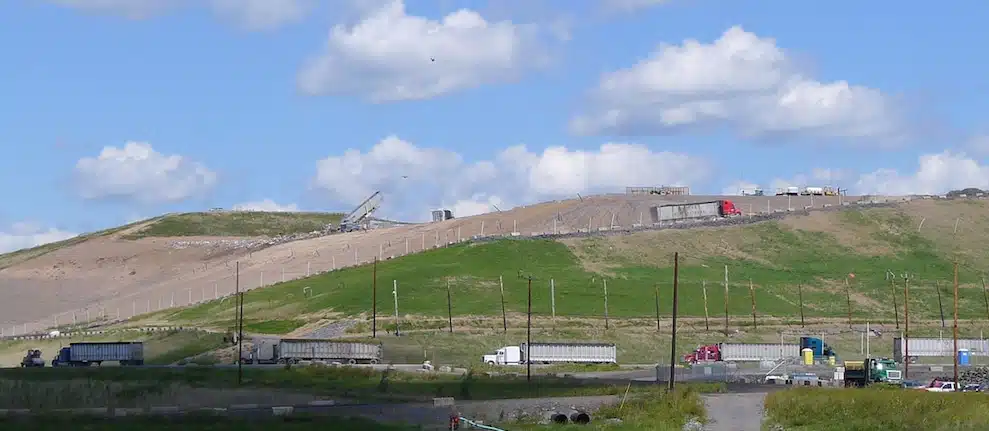
Seneca Meadows is part of that capacity.
The danger is not setting ambitious goals. It is treating those goals as though they have already been achieved. Plans, legislation, and targets are important, but they do not process a single ton of waste.
Eliminating existing disposal capacity on the assumption that future policies will eventually replace it is not a waste-management strategy.
It is optimism with trucks attached.
If New York wants Seneca Meadows and other landfills to become less necessary, the answer is straightforward: reduce the waste requiring disposal. Build the infrastructure. Expand organics processing. Improve recycling markets. Reduce waste generation. And demonstrate, with actual results, that today’s disposal capacity is no longer needed.
We agree New York needs a realistic waste-management strategy. We agree the transition cannot happen overnight. And we agree the state and its stakeholders must do more to create realistic alternatives.
Now Seneca Lake Guardian needs to follow that reasoning to its logical conclusion: until New York has built those alternatives, the waste still has to go somewhere. That is why Seneca Meadows remains necessary during the transition.
The real measure of success is reaching the point where New York can close a landfill because its capacity is no longer needed, not closing it while the need for that responsible waste exists more so than ever.
On that, perhaps we agree more than either side expected.

Kyle Black is the District Manager at Seneca Meadows Landfill located in Seneca Falls, New York.