

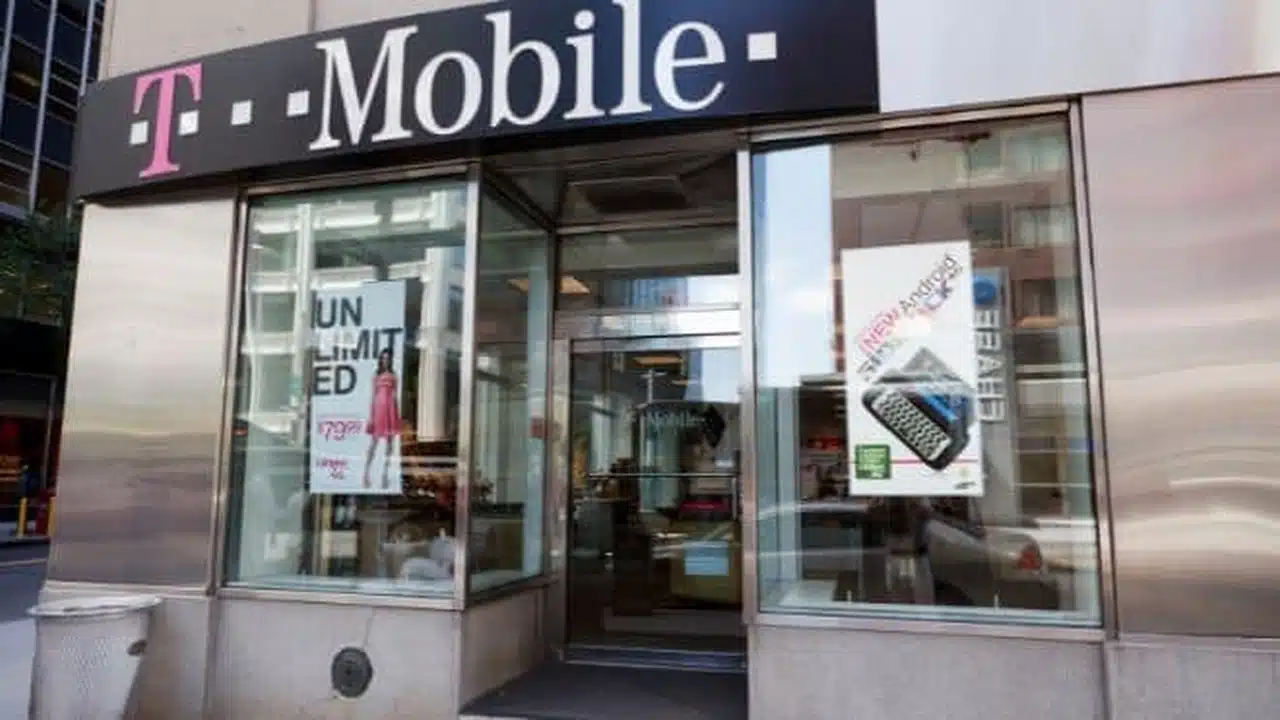
T-Mobile must stop sharply slowing its discounted home-internet service and make the plan available to more eligible New Yorkers under a new agreement with the state.
Attorney General Letitia James and Gov. Kathy Hochul announced the agreement Monday. It addresses restrictions on the company’s $15 monthly plan under New York’s Affordable Broadband Act, including a data limit that investigators said could leave households with dramatically slower service after just a few days of typical use.

What will change for T-Mobile customers
The attorney general’s office found that T-Mobile advertised download speeds of 25 megabits per second but imposed a 50-gigabyte monthly data cap. After customers reached that limit, the company reduced speeds by more than 97%, the office said. Investigators estimated a typical household could use that allowance in about four days.
Under the written agreement, T-Mobile has 120 days from its Nov. 9 effective date to end intentional speed reductions that take covered service below the law’s required minimum. Temporary slowdowns caused by network congestion are allowed; the agreement targets deliberate throttling after a customer uses a specified amount of data.
The company also has 120 days to offer the discounted service at addresses where it already offers residential fixed wireless internet. That technology uses a receiver at a home to connect to a mobile network, rather than a cable or fiber line running into the building.
Investigators found that T-Mobile restricted the affordable plan to customers with access to its 5G network, even though its full-price 4G home-internet service could support the required 25 Mbps. The agreement makes the affordable option available through either network when the address otherwise qualifies.
There is an exception for an address where the network cannot support 25 Mbps even for a full-price residential customer. The agreement does not require T-Mobile to build a new network or begin serving places where it does not already offer residential fixed wireless internet.
Why the availability rules matter upstate
The attorney general’s findings describe a particularly large difference between 4G and 5G availability in rural upstate areas. In rural regions where T-Mobile offers home internet, investigators said its 5G network reaches about 40% of homes, with the remaining homes relying on 4G. In major metropolitan areas, including New York City, 5G reaches more than 90% of homes in the covered regions.
That means the change can make the discounted plan available to eligible rural households that could buy regular T-Mobile home internet but were excluded from its affordable option. Whether an individual household can receive service still depends on its address and the network’s capacity there.
The investigation also found that T-Mobile used website coding that prevented search engines from displaying its affordable-plan page. Within 60 days, the company must maintain a publicly accessible page that search engines can index and add a prominent link to it from its home-internet deals page.
Within 300 days, T-Mobile must provide the attorney general’s office with a certification describing its compliance, enrollment numbers and average speeds. The company cooperated with the investigation and entered the agreement without admitting or denying the office’s findings or admitting liability.
Who qualifies for affordable broadband
New York’s Affordable Broadband Act took effect in January 2025. It generally requires covered internet providers to offer qualifying households a plan costing no more than $15 monthly for at least 25 Mbps, or no more than $20 for at least 200 Mbps. The prices include taxes and equipment charges, according to the governor’s announcement.
A household can qualify when at least one member is eligible for or receives a covered benefit. Those benefits include Medicaid, the Supplemental Nutrition Assistance Program, the Home Energy Assistance Program, free or reduced-price school meals, specified utility affordability assistance, and the Senior Citizen Rent Increase Exemption or Disability Rent Increase Exemption programs. Other income-eligible households may also qualify.
The requirement concerns home broadband, rather than mobile-phone or dial-up plans. Residents can find information about participating providers and eligibility through the state’s broadband consumer resources page.
The Department of Public Service referred concerns about T-Mobile’s plan to the attorney general in June 2025. The department and Public Service Commission oversee implementation of the broadband law, and the agreement preserves the company’s ability to seek applicable relief from the commission.
The governor’s office placed the agreement alongside the state’s $1 billion ConnectALL initiative. That broader effort includes $50 million for digital literacy and devices, $100 million for affordable-housing broadband infrastructure, and deployment funding for locations lacking adequate service.

FingerLakes1.com is the region’s leading all-digital news publication. The company was founded in 1998 and has been keeping residents informed for more than two decades. Have a lead? Send it to news@fingerlakes1.com.