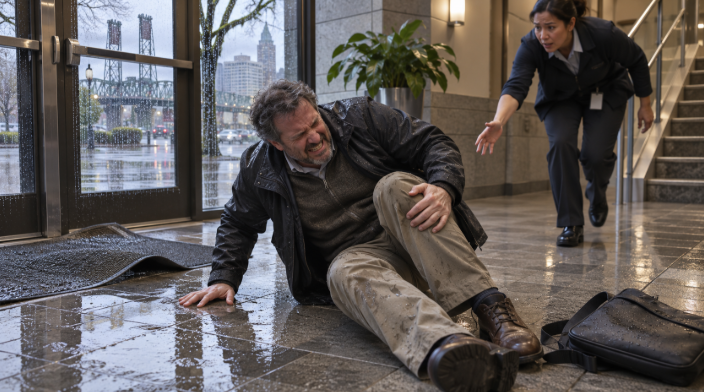
You went into a store to pick up a few things, then ended up on the floor. Maybe your shoe slid on water near the entrance, or a loose mat caught your foot. You may not know what caused the fall until later. If you were injured, a Portland slip and fall lawyer can help you find out what happened and whether the business should have done something to prevent it.
Why a Wet Floor Is Not Always a Simple Case
Portland’s rain can leave water near doors and checkout areas. But a wet floor does not automatically mean the store is responsible for every fall. Under Oregon law, businesses generally must take reasonable care to find unsafe conditions and either fix them or warn customers.
What matters is whether staff knew, or reasonably should have known, about the danger. If employees walked past a spill repeatedly or a roof leak had been reported before, those details could matter. If another customer dropped a drink only seconds before you slipped, the question becomes harder.
The same applies to loose rugs, slick tiles, and objects left in walkways. The fact that you fell proves you were hurt, not necessarily that somebody acted carelessly.
What to Do Before the Area Changes
If you can move safely, tell a manager where you fell and ask for an incident report. Explain what you remember, but do not guess how long the hazard was there. Ask for a copy of the report or note the name of the employee who took your statement.
Take pictures of the floor, your shoes, nearby mats, and any warning signs. If water or food caused the fall, photograph it before someone cleans it up. Get the contact information of anyone who saw you fall or noticed the hazard earlier. A witness who saw an employee walk past the spill may know something you could not have seen.
Keep the shoes you wore that day rather than cleaning or replacing them immediately. Their soles may matter if someone later questions how you slipped.
It’s worth asking the store to save any video of your fall, including what happened just before it. The cameras might have caught what made you slip, whether there was a warning sign, and if anyone at the store had noticed the problem earlier. Stores may erase recordings during routine system updates, so making the request early is sensible.
Do Not Ignore Pain After a Fall
You might stand up quickly out of embarrassment and only realize later that your wrist, hip, or back hurts. If you hit your head, feel dizzy, or have worsening pain, get medical advice promptly. Tell the clinician where and how you fell.
Keep appointment notes, medication receipts, and records of days you could not work. If walking upstairs, driving, or lifting your child has become difficult, describe that change in your own words. The details help show how the injury affects your everyday life, not just what happened in the store.
What if There Was a Warning Sign?
A yellow sign does not always settle the question. It matters where the sign stood, whether you could see it before reaching the hazard, and whether the danger could reasonably have been made safer.
Oregon courts have recognized that businesses may sometimes need to do more than warn customers, particularly when a dangerous condition cannot be crossed safely. If the store had a warning sign up and had already done something about the danger, that could make a difference in your case. The important question is whether enough was done to keep customers safe.
Can You Be Blamed for Your Fall?
Oregon follows comparative fault rules. What you were doing when you fell could also matter when it comes to how much money you can receive.
In a typical two-party case, you generally cannot recover if you were more than 50% responsible.
For example, an insurer might say you were looking at your phone. That does not automatically mean your claim fails. It’s not enough for the business to say you should have been more careful. Just because the business says you were careless doesn’t mean you were. There should be proof that your actions played a part in the accident.
Understand the Costs and Deadlines
Maybe you’ve had to miss work because of the pain, or you’re still going to appointments and paying medical bills from the fall. Depending on what happened, you may be able to get money back for those losses, as well as the pain you’ve suffered.
Before agreeing to a settlement, check whether your treatment is finished and what the release would prevent you from claiming later.
Most Oregon personal injury lawsuits must be filed within two years. If a public agency is potentially responsible, a separate notice requirement generally applies within 180 days, with exceptions. Insurance discussions do not automatically pause these deadlines.
A Practical Place to Start
You may still be sore, uncertain about medical bills, or uncomfortable challenging a business’s account of the fall. If you’re unsure who was responsible for your fall, RIZK Law can help you find answers. The firm can look at what caused the accident, review the available evidence, and explain your legal options so you know where you stand.
Frequently Asked Questions
What if You Did Not Report the Fall Immediately?
You may still have a claim. Contact the business as soon as you can and explain when and where the accident happened. Keep a record of whom you spoke with and what was discussed. Reporting late may make gathering evidence more difficult, but it does not automatically prevent you from seeking compensation.
Can a Store Be Responsible if Another Customer Caused the Spill?
Possibly. Even if another customer spilled something, the store may be responsible if employees knew about it or reasonably should have discovered it and failed to take appropriate action. How long the spill was there and what the staff did can matter.
Can You Make a Claim if Nobody Saw You Fall?
Yes, depending on the circumstances. Security recordings, photographs, medical records, and information about the floor’s condition may help explain what happened. A witness can be useful, but an eyewitness is not always required.
What if You Slipped on Ice Outside a Business?
Portland generally requires property owners and occupants to remove snow and ice from sidewalks next to their property. If you fell because the sidewalk was not properly maintained, you may have a claim. Responsibility depends on the location and circumstances.
What if You Fell in an Apartment Building?
You may have a claim if a landlord or another responsible party failed to address an unsafe condition. For example, a slippery shared hallway or poorly maintained stairway could raise questions about who was responsible for keeping the area safe.
Should You Give the Business’s Insurance Company a Recorded Statement?
You generally do not have to give another party’s insurer a recorded statement simply because it asks. Before agreeing, consider speaking with an attorney, particularly if the insurer is questioning how the fall happened or suggesting that you were responsible.

This content is brought to you by the FingerLakes1.com Team. Support our mission by visiting www.patreon.com/fl1 or learn how you send us your local content here.