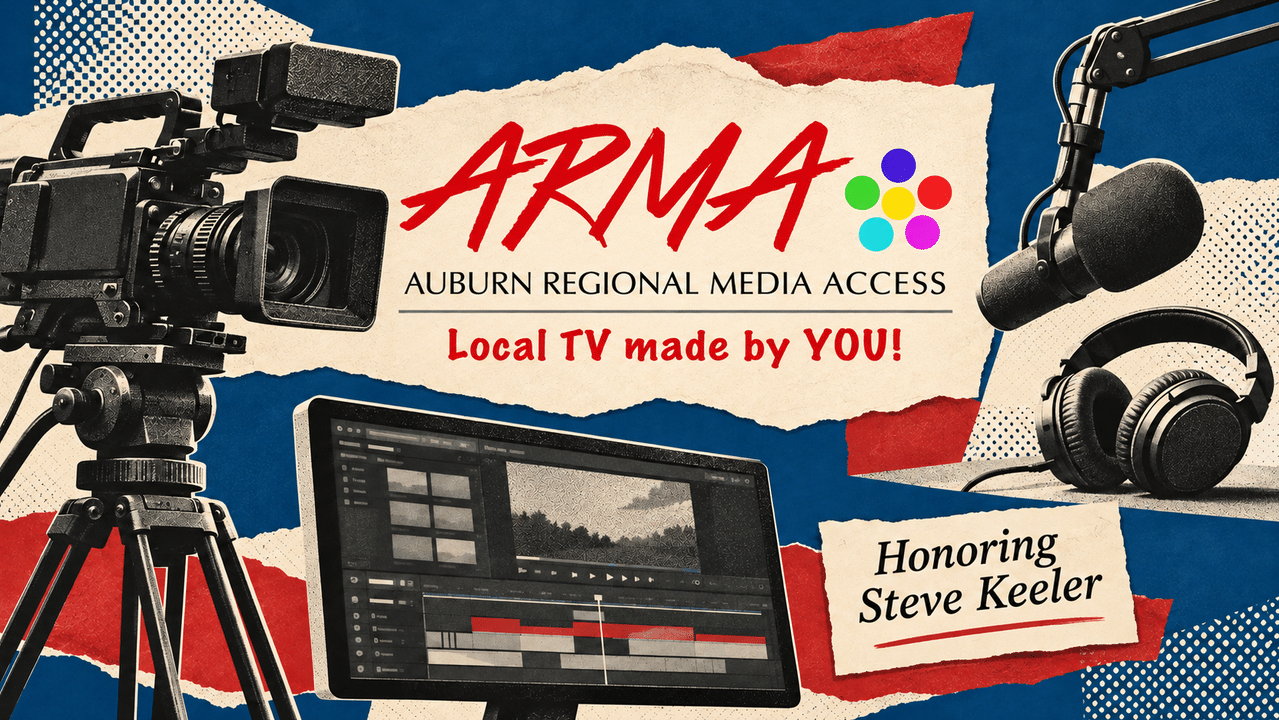
Auburn Regional Media Access has moved into a North Street facility roughly three times the size of its former home, creating room for separate television, podcasting and editing spaces that residents can use to produce their own programs.
The nonprofit also plans to name its television studio in memory of Steve Keeler, the longtime Cayuga Community College telecommunications director and ARMA founding member who died this summer.
Access Coordinator Ed Vivenzio outlined the expansion during the Nov. 3 edition of Beyond the Front Page, describing an organization working to broaden its services and strengthen its finances as viewing habits shift from cable television to streaming.
“We’re in a moment of transition and growth,” Vivenzio told host Guy Cosentino.
Larger facility creates room for more production

ARMA has relocated from the lower level of Auburn Public Theater at 108 Genesee St. to 213 North St., Suite 100.
At the former location, a small television studio handled multiple kinds of production. Recording a podcast could require taking down television equipment and setting up audio equipment in the same space. Editing computers shared an office with Vivenzio.
The new location will allow those activities to happen in dedicated spaces.
Plans include a larger television studio, a separate podcast and audio recording suite, and an editing room with multiple computers so more than one person can work on a project at a time. Vivenzio said grant funding is helping ARMA purchase new equipment.
The organization’s relocation announcement also notes that the property has its own parking lot. ARMA cautioned that studio use may be limited while staff and volunteers design and equip the facility.
Vivenzio said the expansion reflects a broader understanding of ARMA’s mission.
Public-access television remains central to its work, but he increasingly describes ARMA as a community media nonprofit, supporting television programs, podcasts and projects intended primarily for the web.
Studio will recognize Keeler’s lasting influence
The television studio will honor Keeler’s work in both media education and public access.
Vivenzio said ARMA’s board decided to name the studio for Keeler after learning of his death. The move was already being planned at the time.
Keeler was a founding member of ARMA and remained involved with its board until roughly six months before his death, Vivenzio said.
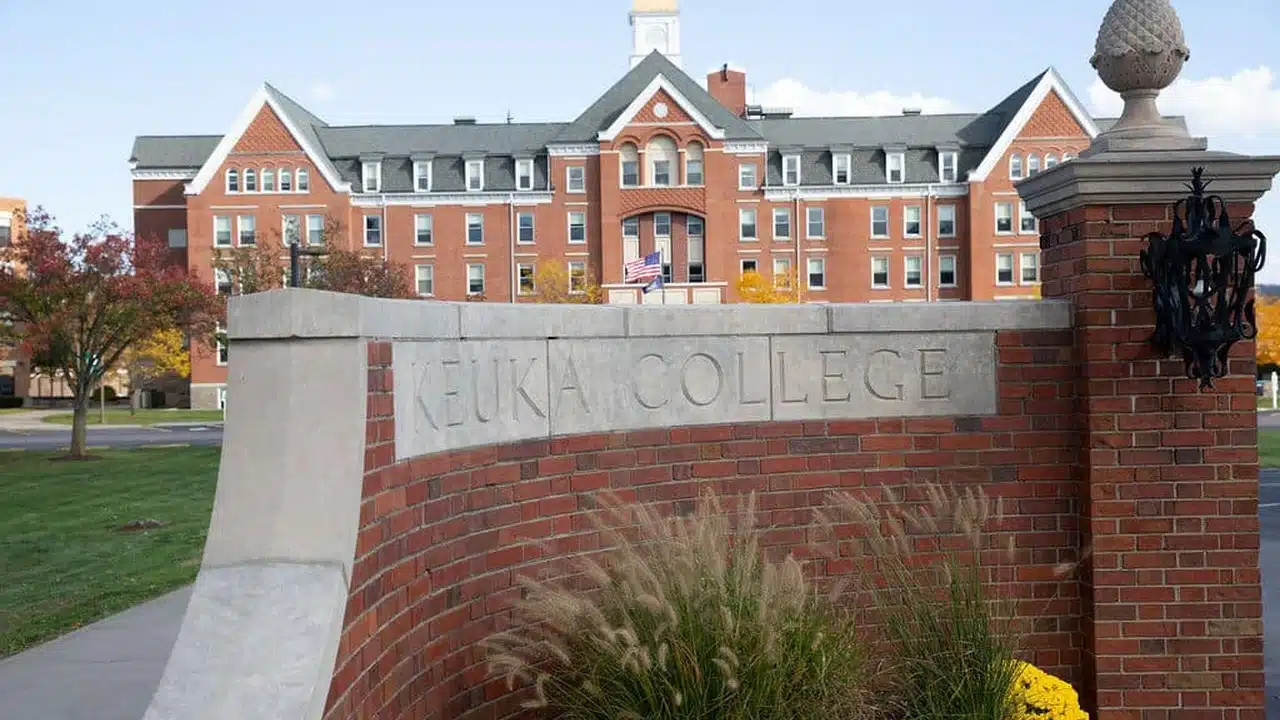
The tribute also carries personal significance for Vivenzio, a 2016 Cayuga graduate who earned two degrees and studied telecommunications under Keeler.
His appearance on Beyond the Front Page brought him back to a college studio where he once worked behind the cameras as a student.

Residents can borrow equipment and learn production skills
ARMA’s services are intended to help people create their own media, including those with no production experience.
Vivenzio said someone interested in starting a show should contact him to discuss the subject, intended audience and goals. From there, ARMA can help identify the equipment, facilities and training needed.
Studio use and equipment loans are available without charge, he said. Producers can record at ARMA, borrow equipment to work elsewhere or submit completed programs.
“Our goal is to give you the tools, the facilities, and the training to be able to express yourself creatively as you see fit,” Vivenzio said.
The organization sometimes records community events itself, but its central purpose is to help residents develop the skills to produce their own work.
Existing programming includes Auburn City Council meetings, college-produced interviews, church services and a monthly United Way of Cayuga County program.
Vivenzio also hopes to reestablish access to Auburn school district programming after the move. ARMA has carried those meetings previously, but obtaining the content had presented logistical challenges.
ARMA programming is available on Spectrum channels 12 and 98 and Verizon Fios channel 31 where carried. The organization also shares programming online, including through videos embedded on its website.
Vivenzio said online engagement provides some indication of audience interest, while ARMA cannot directly measure how many people watch its cable channels.
Funding remains a priority as viewers leave cable
ARMA receives most of its funding through cable franchise agreements involving Auburn and its cable providers, Vivenzio said.
He credited city officials with supporting public access but said the organization is seeking additional revenue sources as it expands. He did not provide an annual budget figure during the interview, citing negotiations over a new contract.
Vivenzio is also participating in advocacy for the proposed Technology, Education and Arts Through Media Act, known as the TEAM NY Act.
The legislation pending in the state Senate would establish a tax on video streaming services and create a fund supporting community media, municipalities, broadband access and related services. It remains in committee.
Vivenzio said he joined the effort this summer after connecting with other New York community media representatives at a national conference. He said organizers wanted input from upstate communities as well as downstate organizations.
He expressed hope for the proposal but offered no timetable for passage.
Residents interested in producing a program, borrowing equipment or learning more can visit ARMA’s website or contact Vivenzio at ed@armatv.org. Donations can also be mailed to ARMA, P.O. Box 733, Auburn, NY 13021.

FingerLakes1.com is the region’s leading all-digital news publication. The company was founded in 1998 and has been keeping residents informed for more than two decades. Have a lead? Send it to news@fingerlakes1.com.