Wedding season in the Finger Lakes fills winery barns, lakeside lawns and banquet halls, and at many receptions one corner is now reserved for a photo booth. The idea is a century old, but the machines turning up at weddings, parties and corporate events today look and work very differently from the curtained booths many people remember.
From photo strips to AI portraits
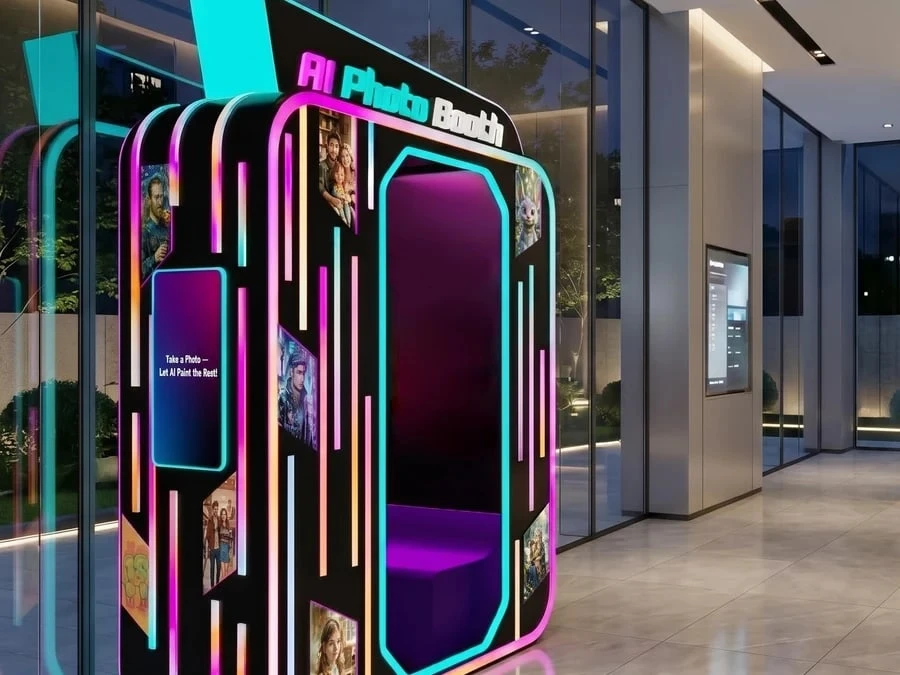
The newest booths use artificial intelligence. A guest takes a photo on a touchscreen, chooses a style such as anime, watercolor, cyberpunk or a classic portrait, and the software renders the picture in that style. A dye-sublimation printer delivers the print in about 15 seconds, and some models also send a digital copy to the guest’s phone.
For hosts, that means guests leave with a keepsake rather than one more file in their camera roll, and the booth runs without an attendant once it is set up.
Two business models
Behind the trend are two different ways to make money with a photo booth, and they call for different equipment.
Fixed-location kiosks. These stand in shopping malls, cinemas, theme parks, airports and family entertainment centers and run unattended, with customers paying at the machine. Futureino, a manufacturer with a factory in Guangzhou, China, lists its self-service photo booth machine for sale at $4,500 to $5,400 ex-works, meaning before shipping and import costs. The cabinet measures 1640 × 1040 × 2171 mm, draws 300 watts from a standard outlet and holds 700 prints per cassette.

The company’s own example puts a conservative mall location at 15 to 20 prints a day. At $5 a print and 15 prints a day, that is roughly $2,250 a month in gross revenue per machine, and the manufacturer estimates a payback period of six to ten months. Actual results depend on foot traffic, the price charged and the agreement with the property owner, so anyone considering a kiosk should run their own numbers.
Event rentals. Rental companies, DJs, event agencies and venues need a booth that travels. Futureino’s foldable model stands 180 cm tall and 40 cm wide and folds in one move to 90 cm, so it fits in a car. It rolls on 360-degree wheels and has handles on both sides. It has no payment reader: at a wedding or a company party, the host pays for the booth and guests print their photos for free. The operator charges per event, the way photo booth rental has always worked.
What to check before buying
Buyers comparing a portable photo booth for sale or a fixed kiosk can narrow the field with a few questions:
- Transport and setup. Will it fit in the vehicle you already own, and can one person move it and set it up?
- Consumables. How many prints does one cassette cover, and what does a refill cost?
- Power. A machine that runs on a standard outlet avoids extra wiring at venues.
- Branding. Can the wrap, the on-screen language and the style library carry your logo or a client’s?
- Support and parts. Training, remote diagnostics and how quickly spare parts ship matter more than the purchase price once the booth is booked every weekend.
- Landed cost. Ex-works pricing excludes freight, duties and taxes, so ask for a quote delivered to your town.
Rent or buy?
For a single wedding, renting remains the simple choice. The calculation changes for businesses that book events every weekend, or for venues with steady traffic. Owning the booth means paying once and keeping the revenue from every booking, and that is the trade-off event businesses and venues weigh when they compare renting with buying.
The bottom line
The photo booth has outlived film cameras, flip phones and several generations of social media. What keeps it at receptions and parties is simple: people want something they can hold. The technology inside has changed. The reason guests line up has not.

This content is brought to you by the FingerLakes1.com Team. Support our mission by visiting www.patreon.com/fl1 or learn how you send us your local content here.