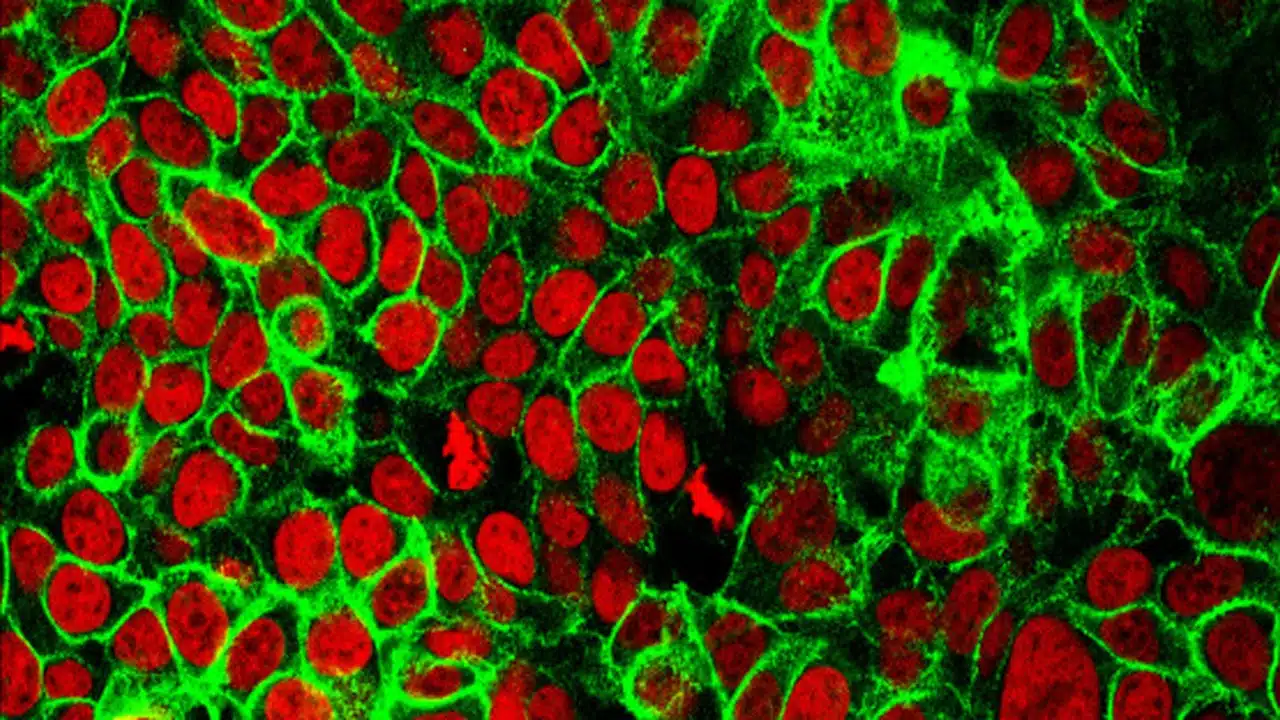
Weill Cornell Medicine researchers have identified a genetic weakness that could let a drug disrupt a cancer-driving pathway while sparing cells that retain a backup enzyme.
The study published Nov. 2 in Nature Chemical Biology demonstrated the approach in early laboratory models. The experimental compound has not established safety or effectiveness in people, and researchers still need a formulation suitable for testing it in living animals.

The work targets WNT signaling, a pathway involved in normal tissue function that is also overactive in many cancers. Blocking it has been difficult because treatments can damage healthy tissue along with tumors.
Lukas Dow, a professor of biochemistry in medicine and member of Weill Cornell's Sandra and Edward Meyer Cancer Center, led the study. Jill Zimmerman, a doctoral student in his laboratory during the work, is the first author.
A missing backup creates a possible target
Two enzymes, tankyrase 1 and tankyrase 2, help support WNT signaling and can perform overlapping functions. They are usually abbreviated TNKS1 and TNKS2.
As cancers develop, large DNA deletions sometimes remove the gene for TNKS1. A tumor cell can survive that loss because TNKS2 remains, but it can then become more dependent on the remaining enzyme.
The researchers reasoned that a treatment selectively blocking TNKS2 might suppress WNT signaling in those tumor cells, while cells with normal TNKS1 could continue using that backup.
Dow said the team noticed the possibility while suppressing the enzymes separately to compare their biological roles. In some cancer cells, reducing TNKS2 alone was enough to affect the pathway.
The team tested the idea genetically before trying to design a drug with the same selectivity. The findings concerned cells with partial or complete TNKS1 loss, rather than every cancer with increased WNT activity.
Designing a selective inhibitor
TNKS1 and TNKS2 have nearly identical active sites, making it difficult to inhibit one without blocking the other. Computational and medicinal chemists helped identify structural differences that could be exploited in a new compound.
The resulting molecule inhibited TNKS2 about 30 times more strongly than TNKS1, according to the Weill Cornell account. In lab-dish experiments, it reduced growth in cancer cells with partial or complete TNKS1 loss without reducing growth in cells containing normal amounts of TNKS1.
The paper also describes work with organoids, laboratory-grown tissue models. It identifies the compound as TDI-012804 and explains how its interaction with a flexible protein loop helps distinguish TNKS2 from TNKS1.
Those results offer a route for further development, rather than proof of a low-side-effect cancer treatment. The researchers reported that initial efforts to find a vehicle for delivering and testing TDI-012804 in living animals were unsuccessful, leaving its safety unresolved.
Further testing would precede any clinical trial
WNT hyperactivity is found in almost all colorectal cancers, more than half of breast cancers and substantial portions of several other cancer types, according to Weill Cornell. That broad involvement does not mean all those tumors would respond to TNKS2 inhibition.
The paper notes that certain genetic changes and reduced dependence on WNT signaling can make cancers unresponsive to tankyrase inhibition. Whether the approach could prevent particular forms of drug resistance also remains to be tested.
Earlier experimental inhibitors targeting both tankyrase enzymes have produced dose-limiting side effects. The new strategy aims to narrow that effect, but the researchers say a next-generation compound needs improved drug-like properties and full preclinical testing before any move toward clinical trials.
The National Cancer Institute supported the work, with additional support from the Tri-Institutional Therapeutics Discovery Institute and the Enterprise Innovation Catalyst Fund. The paper discloses a related patent application naming Dow, Zimmerman and other investigators, along with consulting, research-support or financial interests held by several authors.

FingerLakes1.com is the region’s leading all-digital news publication. The company was founded in 1998 and has been keeping residents informed for more than two decades. Have a lead? Send it to news@fingerlakes1.com.