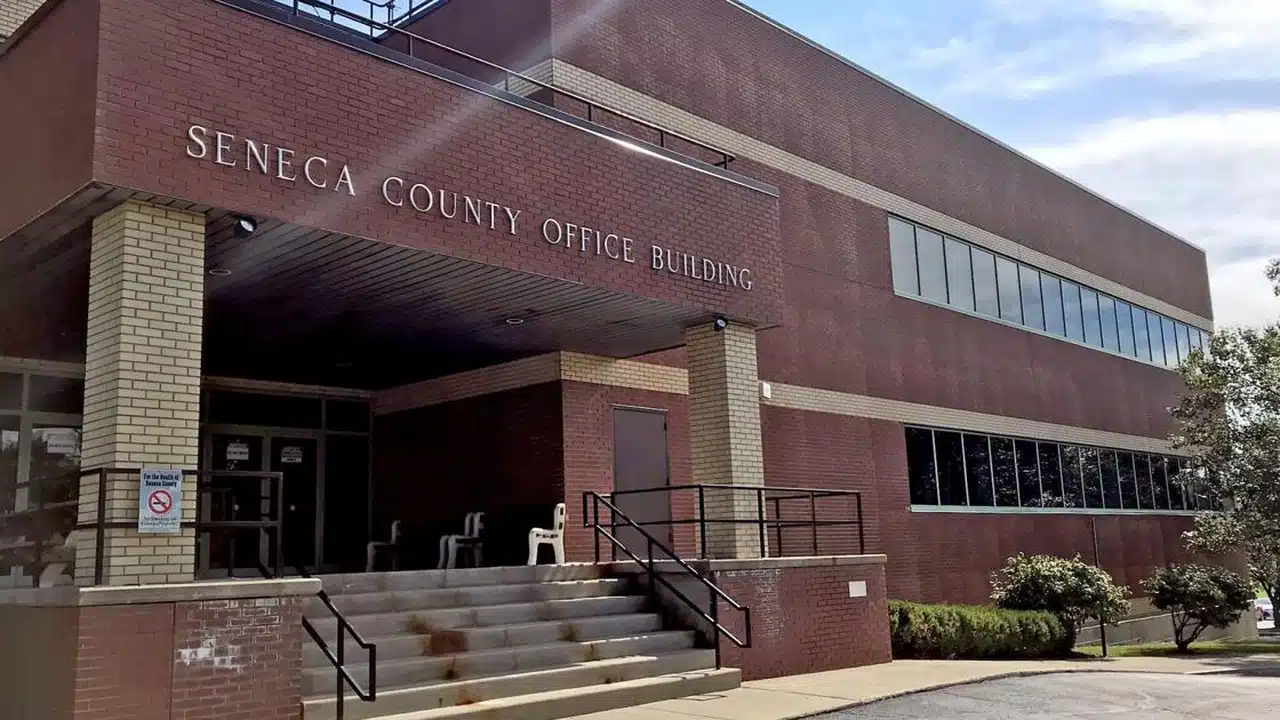
A proposal supporting statewide harmful algal bloom legislation was set aside Tuesday as Seneca County supervisors questioned the value of additional monitoring and discussed possible future action on biosolids and data centers.
Agriculture and Environmental Affairs Chair Kronenwetter declined to advance the algae resolution during the committee’s Oct. 27 meeting, saying the county needed more substantial action.
“We have the data. We need something a little more substantial,” he said.
The committee’s discussion also opened questions about treated sewage sludge spread on farmland and whether Seneca County should prepare for potential data center development.
Algae resolution does not advance

The proposed resolution would have supported Assembly Bill A.5150-A, the Harmful Algal Bloom Monitoring and Prevention Act.
As described in the resolution, the legislation would establish a coordinated statewide program for monitoring, evaluating, preventing and mitigating harmful algal blooms. It also would direct the state Department of Environmental Conservation to maintain a database and public website, and establish a grant program for eligible organizations.
Kronenwetter characterized the proposal as more studying when years of monitoring information were already available. When another supervisor noted that the committee had not voted on the item, he said he was setting it aside.
The resolution supporting the bill did not advance.
Biosolids prompt questions about local controls
Kronenwetter also sought more information about biosolids, describing concerns brought to his attention about treated sewage sludge being applied to agricultural land.

He said he wanted to discuss the issue further with supervisors Jeffrey Trout and Michael Reynolds, the county’s representatives on the Soil and Water Conservation District board.
Kronenwetter raised the possibility of a resolution examining what the county could do, including whether a ban could be pursued.
The discussion did not establish how much material is being applied in Seneca County, identify specific properties or determine what restrictions the county could impose.
Data centers raise planning questions
Trout said an intermunicipal study could examine the benefits, drawbacks and environmental impacts of data centers, and that a request for county funding might follow.
He mentioned the former Seneca Army Depot as a property developers might consider. The discussion did not identify a specific application for a data center there.
Supervisor Beth Partee said Seneca County needs to consider how it would respond to such development locally, beyond its position on a project in Lansing.
Trout said the objective would be to gather information before making decisions.
“The whole focus was trying to gather information to make educated and thoughtful decisions,” he said.
Supervisors discussed differences in cooling systems and whether a facility would draw electricity from the grid or generate its own power. Partee also offered to share information presented through the New York State Association of Counties on both data centers and biosolids.
The discussion remained exploratory, with no study funding or new restrictions adopted.

FingerLakes1.com is the region’s leading all-digital news publication. The company was founded in 1998 and has been keeping residents informed for more than two decades. Have a lead? Send it to news@fingerlakes1.com.