New York’s highest court removed Canandaigua Town Justice Walter Jones from office Tuesday, finding that his repeated use of a racial slur and comments about a Black defendant undermined confidence in his impartiality.
The Court of Appeals upheld two misconduct charges and accepted the State Commission on Judicial Conduct’s recommended removal in a decision dated Oct. 27. Jones had challenged the commission’s findings and argued that the punishment was too severe.

Jones was first elected to the Canandaigua Town Court in 1999. His current term was scheduled to end Dec. 31, 2027.
Two encounters prompted misconduct charges
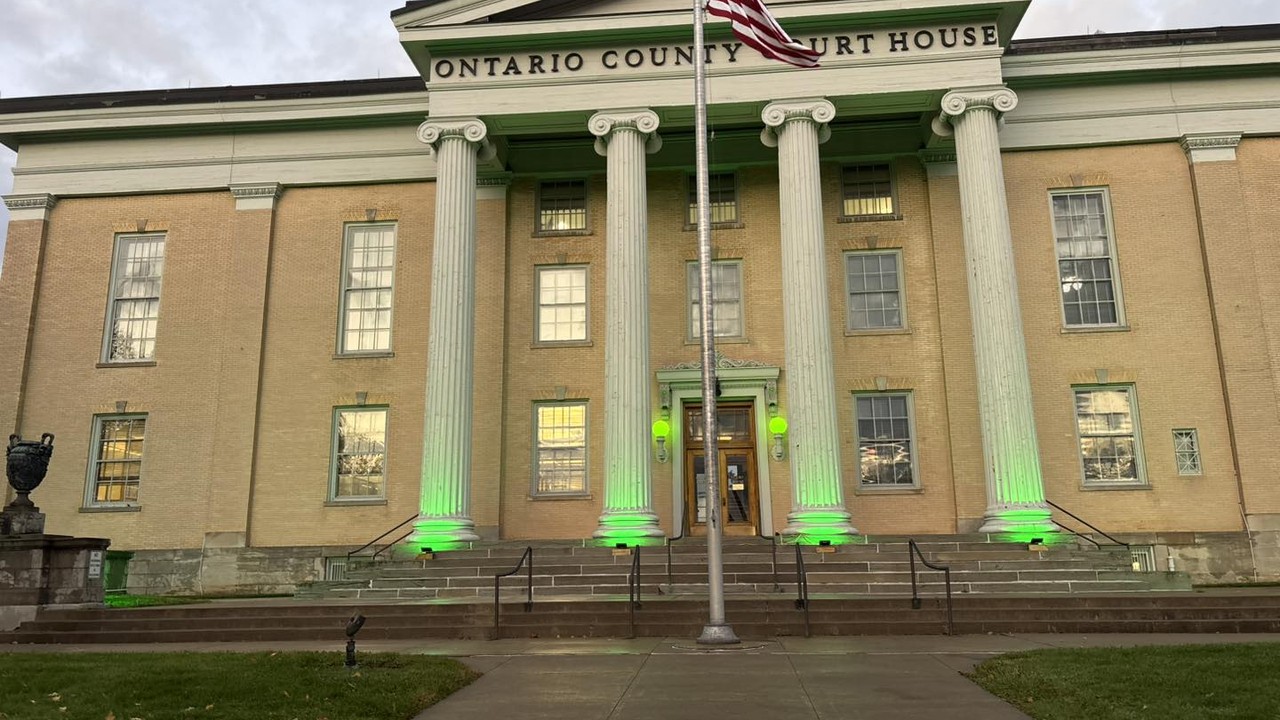
The first charge concerned a conversation outside the Ontario County Jail after court proceedings on or about May 10, 2024. The commission found that Jones used the n-word at least three times while speaking with a court staff member and an assistant public defender.
Jones said he was recounting a story about his father to convey a lesson about tolerance, dignity, respect and friendship. He described the slur as derogatory and inappropriate but maintained that he was quoting his father rather than using the word himself.
He also argued that repeating the word gave the story authenticity and context, and that substituting a euphemism would have prevented listeners from understanding it. He denied that his use of the word in that setting could create an appearance of racial bias.
The referee who heard the evidence rejected several parts of that account, including Jones’ claim that he used the slur only once, warned listeners about the language beforehand and would have told the story the same way if a Black person had been present.
The second charge arose from an arraignment on or about May 15, 2024. A Black woman identified in the decision as Ms. D had visible facial injuries and said she needed to return to the hospital. After Jones denied release without bail, she accused the county and the judge of racism.
After she left the courtroom, Jones said from the bench, “Naturally she played the race card.” He then told her assistant public defender that she probably would have attacked the attorney if she had not been handcuffed.
The referee found Jones’ account of his awareness of the woman’s injuries not credible. The commission rejected his explanation that he made the “race card” remark because he felt badly for her.
Court cites credibility and earlier warnings
The Court of Appeals independently reviewed the record and concluded that the testimony, corroborating evidence and Jones’ own admissions supported the misconduct findings. It gave deference to the referee’s and commission’s adverse credibility findings.
The court said the conduct demonstrated at least the appearance of racial bias. Judges must both be impartial and appear impartial, it explained, because their words and actions affect public confidence in the courts.
Jones challenged what he characterized as a strict-liability rule governing the language and argued that there was no consensus about whether his remarks were improper. The court rejected those arguments and said judges are held to a higher standard of conduct than the general public.
Removal is an extreme sanction reserved for truly egregious circumstances, the court said. It found that Jones’ statements, lack of credibility, failure to appreciate the impact of his conduct and two earlier letters of caution together warranted that punishment.
An August 2021 caution concerned alleged improper communications with a complaining witness and alleged failures to follow COVID-19 safety protocols. A March 2024 caution concerned alleged administrative neglect that led to an unexplained surplus of court fines and fees. Both warned Jones about judicial conduct rules implicated in the new charges.
Earlier censure did not control the outcome
Jones compared his case with a 1985 decision in which another judge who used the same slur on the bench received a censure. The Court of Appeals said judicial training and guidance on explicit and implicit bias had expanded substantially in the intervening decades.
It also rejected constitutional challenges Jones raised for the first time before the court because they lacked a supporting factual record. The decision noted that the commission may consider the risk of repeated misconduct when evaluating a judge’s failure to acknowledge wrongdoing.
Chief Judge Wilson and Judges Garcia, Singas, Cannataro, Troutman and Halligan concurred in the decision. Judge Rivera took no part.

FingerLakes1.com is the region’s leading all-digital news publication. The company was founded in 1998 and has been keeping residents informed for more than two decades. Have a lead? Send it to news@fingerlakes1.com.