Cornell postdoctoral researcher Hannah Lloyd has received the 2026 Sam and Nancy Fleming Research Fellowship to investigate a little-understood way cells may control their internal cleanup system.
Her project at the Weill Institute for Cell and Molecular Biology focuses on lipid attachments to proteins and their role in autophagy, the process cells use to break down damaged components, according to Cornell's announcement.

The research could help explain how cells remove protein clumps associated with Alzheimer's and Parkinson's diseases. Lloyd will begin with laboratory cell models and later examine cellular models of neurodegenerative disease.
Lloyd works in the laboratory of Jeremy Baskin, a professor of chemistry and chemical biology in Cornell's College of Arts and Sciences and a Weill Institute faculty member.
Mapping a lipid code
The project, “The Missing Lipid Code,” centers on phosphatidylethanolamine, or PE, a lipid abundant in cell membranes. Attaching PE to a protein can help anchor that protein to a membrane and affect its activity. The modification is called PEylation.
Scientists already know that PEylation of the protein LC3 is essential to autophagy. LC3 helps build membrane compartments around material marked for breakdown. Those compartments fuse with lysosomes, where the enclosed material is degraded.
PE attachments to a small number of other proteins have recently been reported, but their functions remain poorly understood. Preliminary findings in Lloyd's proposal suggest the modification may have additional roles in autophagy.
Lloyd plans to identify the modified proteins, map the mechanisms that attach PE and test how individual modifications affect cellular cleanup. She will combine chemical probes that make the modified proteins easier to detect with computational modeling and genetic experiments.
Clearing proteins while preserving cell functions
A central challenge is finding ways to stimulate the removal of harmful protein aggregates without disrupting other cellular functions. Understanding these lipid modifications could eventually offer more selective ways to influence that process.
“Protein degradation has to be tuned, and it has to be working properly,” Lloyd said.
Weill Institute Director Brian Crane said the proposal brings chemical and cell-biological approaches together to investigate how cells stay healthy. Baskin said its connections to membrane trafficking, lipid metabolism and neurodegenerative disease would allow Lloyd to work with several institute research groups.
Lloyd joined Baskin's lab in January 2026 after doctoral research with Christina Woo at Harvard University. She earned a doctorate in chemistry and chemical biology in February 2026, following bachelor's degrees in biochemistry and chemistry and a master's degree in biochemistry from Brandeis University.
She has also taught undergraduate and graduate courses, mentored students and led children's science outreach through Harvard Women in Chemistry.
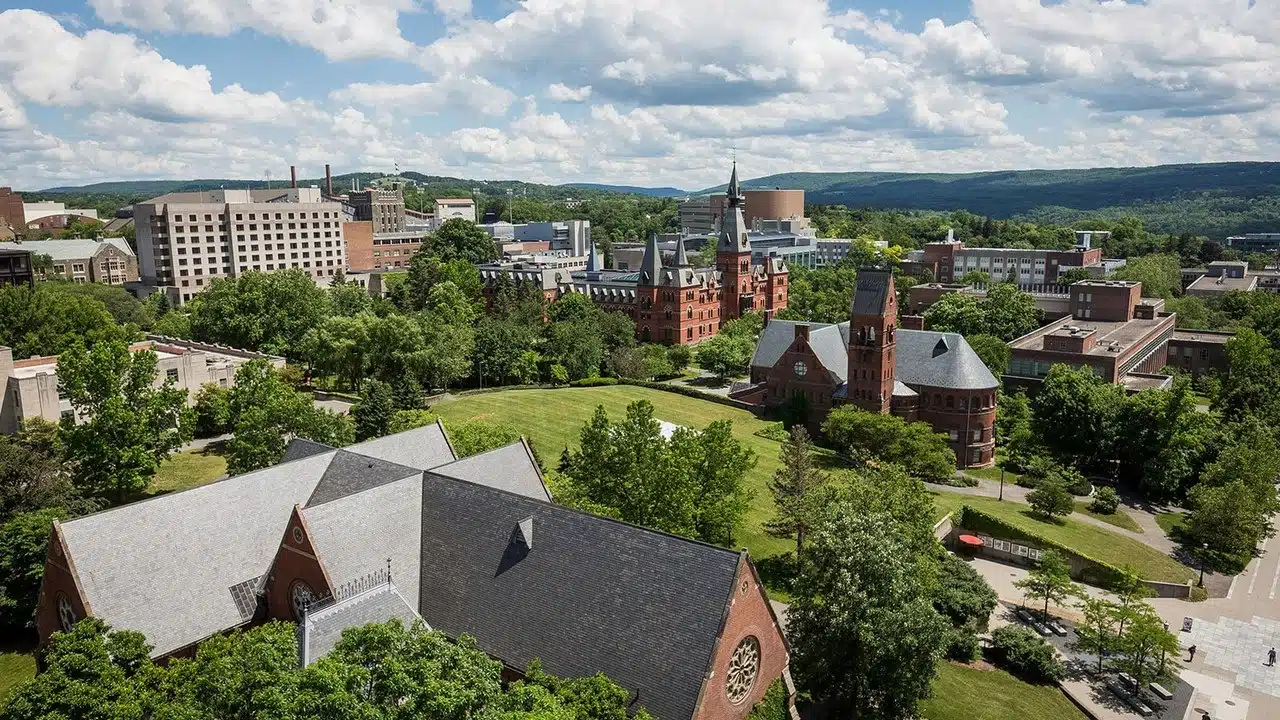
File photo of the Cornell University campus.

FingerLakes1.com is the region’s leading all-digital news publication. The company was founded in 1998 and has been keeping residents informed for more than two decades. Have a lead? Send it to news@fingerlakes1.com.