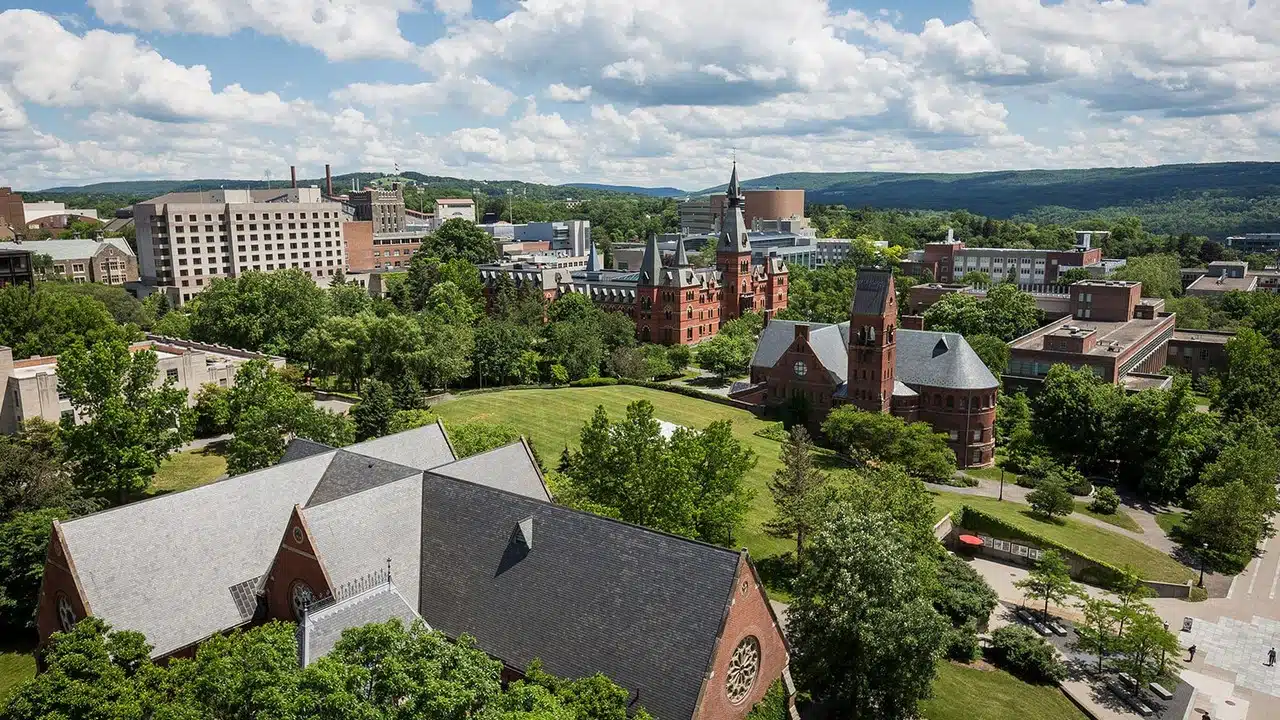
Indigenous students at Cornell University are sharing how plants connect their families, cultures and communities in a new exhibit at Cornell Botanic Gardens that will remain on display through the end of 2027.
The student-led story collection, “Rooted in Reciprocity,” is part of the gardens' Cultivating Hope: Plants and Indigenous Knowledge exhibit. Visitors can hear students' accounts by scanning QR codes on crosscut pieces of wood displayed inside the Nevin Welcome Center.

The stories describe a sweetgrass heirloom passed through a family, the role of strawberries in physical and spiritual well-being, and seeds handed down across generations. Students representing Indigenous cultures from across the Americas recorded the accounts to explain what the exhibit calls reciprocity: people's lives depend on the natural world.
Stories take root in the gardens
Shania Flores, a Cornell student interpretation assistant who helped develop the project, said she wanted visitors to see Indigenous students maintaining their cultures while studying on campus. Flores, an environment and sustainability major whose family is Kichwa from South America's Andean region, contributed stories from her family.
Flores said plants help Indigenous students form connections with one another as they learn about each other's traditions. Students plan to harvest marigolds growing in the garden for a Nov. 1 Day of the Dead celebration.
Paige Peters, a Cornell plant science major and member of the Saginaw Chippewa Indian Tribe of Michigan, helped develop the exhibit and recorded a story about a sweetgrass barrette passed down in her family. Sweetgrass now grows in a circular garden outside the welcome center alongside cedar, tobacco and sage, which the project identifies as three other sacred medicines.
Peters said the planting gives her a chance to recognize sweetgrass growing outdoors and establish a connection with it beyond inherited objects. New plantings also appear in the Pounder Vegetable Garden and outside the welcome center.
The broader exhibit includes white pine, whose clusters of five needles represent the union of the original five Haudenosaunee nations, and elderberry, which the gardens' account describes as used for fever, skin problems and dye.
More stories planned
Botanic gardens staff collaborated with Indigenous students, faculty and staff, including admissions counselor Sarah Buffet and natural resources professor Karim-Aly Kassam. The organizers plan to add stories from other students and community members.
Visitors can contribute their own accounts by writing on colorful tags to hang on trees near the story wall. Sarah Fiorello, the gardens' interpretation coordinator, said the invitation is meant to prompt reflection on people's relationships with nature and one another.
The project opened with an Oct. 3 celebration. Its exhibits and garden plantings are scheduled to remain available through 2027.

FingerLakes1.com is the region’s leading all-digital news publication. The company was founded in 1998 and has been keeping residents informed for more than two decades. Have a lead? Send it to news@fingerlakes1.com.