

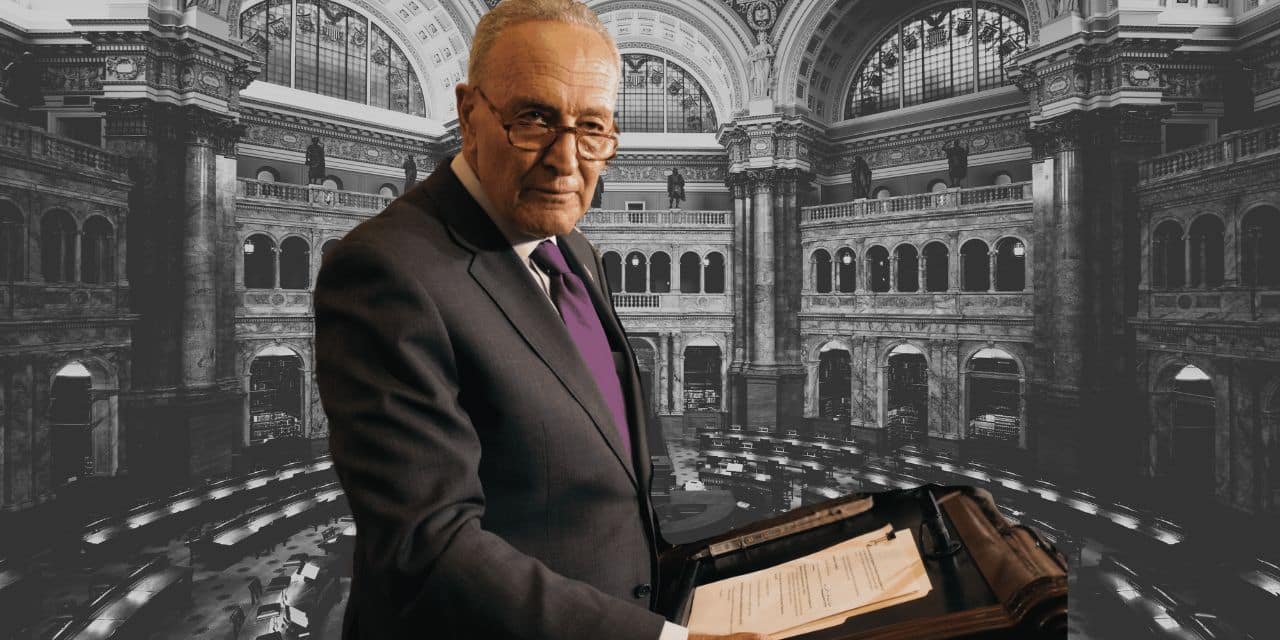
Senate Democratic Leader Chuck Schumer used a series of Tuesday floor statements on congressional stock trading, the Affordable Care Act, artificial intelligence and federally funded television ads to challenge Republican proposals and the Trump administration. The New York Democrat's four remarks addressed separate debates; his allegations do not themselves establish that any law was broken or that the proposals have become law.
Schumer's most immediate legislative target was a House-passed package pairing congressional stock-trading restrictions with voter-identification provisions. He argued that the trading restrictions leave too many exceptions and that the voting language would prevent bipartisan Senate passage. The package was headed for an expected Senate vote, but the outcome was not yet established in his Tuesday remarks.

Stock-trading bill draws objections
Schumer said lawmakers could still own and sell stocks under the Republican measure and asserted that privately held company shares would remain outside meaningful limits. He contrasted it with a bipartisan stock-trading proposal advanced by the Senate Homeland Security and Governmental Affairs Committee last year. His speech did not identify the House measure by bill number or provide a side-by-side legal analysis, so the scope of the alleged loopholes remains his characterization.
He also objected to the voter-ID provisions attached to the package, calling them a political obstacle to a stock-trading agreement. Supporters of voter-identification requirements say they would strengthen election integrity; opponents argue that documentation rules could keep eligible citizens from voting. The trading and election provisions are separate policy questions even though they were combined in the House package.
Neither Schumer's criticism nor the pending Senate consideration changed the existing rules for members' financial disclosures or trading. Any new restriction would still need to pass both chambers in identical form and be signed into law or enacted over a veto.
Democrats seek vote on ACA marketplace rule
On health care, Schumer urged Republicans to support a resolution challenging a Trump administration rule affecting Affordable Care Act marketplace coverage. Sen. Tammy Baldwin, D-Wis., is leading the Congressional Review Act effort described in an official fact sheet, with Schumer and Sen. Ron Wyden, D-Ore., also involved. A resolution of disapproval would have to clear Congress and the president's desk to overturn the rule.
Schumer said the rule could cost 2 million people coverage and increase costs for many others. That figure is an estimate cited by opponents, not a count of people who have already lost insurance. His speech did not break out how many New Yorkers might be affected or which specific marketplace provisions account for the estimate.
He connected the rule to broader Republican health-care legislation and warned about rural hospitals and premiums. Those broader effects depend on multiple policies and future decisions, not solely on the marketplace rule at issue in Tuesday's resolution. The administration has framed its marketplace changes as measures to improve program integrity and enrollment accuracy; their consequences remain contested.
AI bill and government-funded ads draw scrutiny
Schumer separately criticized Sen. Jon Husted's, R-Ohio, Ratepayer Protection Act, arguing that it relies on optional standards rather than enforceable safeguards for data-center growth. Husted's description of the bill says it would require states to consider standards under which very large electricity users pay for grid upgrades and other costs. Husted says the approach would keep those costs from being shifted to households and small businesses.
The competing accounts turn on whether requiring states to consider standards would result in mandatory protections. Schumer called the proposal inadequate, while Husted has presented it as a federal framework for state regulators. Neither statement establishes how any individual New York data-center proposal would be priced or regulated.
Schumer also called for the White House to identify the agency and funding source behind three government-paid television spots featuring President Donald Trump. He said the ads cost at least $1.5 million and resembled campaign messages. The Associated Press reported Monday that the spending estimate was approaching that amount and that the White House defended the spots as public service announcements. Subsequent ad-tracking estimates have risen as the campaign continued.
The legal question is whether appropriated government funds were used for permissible public information or prohibited political promotion. Schumer alleged misconduct and demanded an explanation; the administration disputes the political characterization. There has been no finding cited in the floor remarks that establishes a legal violation. Tuesday's statements were calls for votes or accountability, not final legislative or legal outcomes.

FingerLakes1.com is the region’s leading all-digital news publication. The company was founded in 1998 and has been keeping residents informed for more than two decades. Have a lead? Send it to news@fingerlakes1.com.