


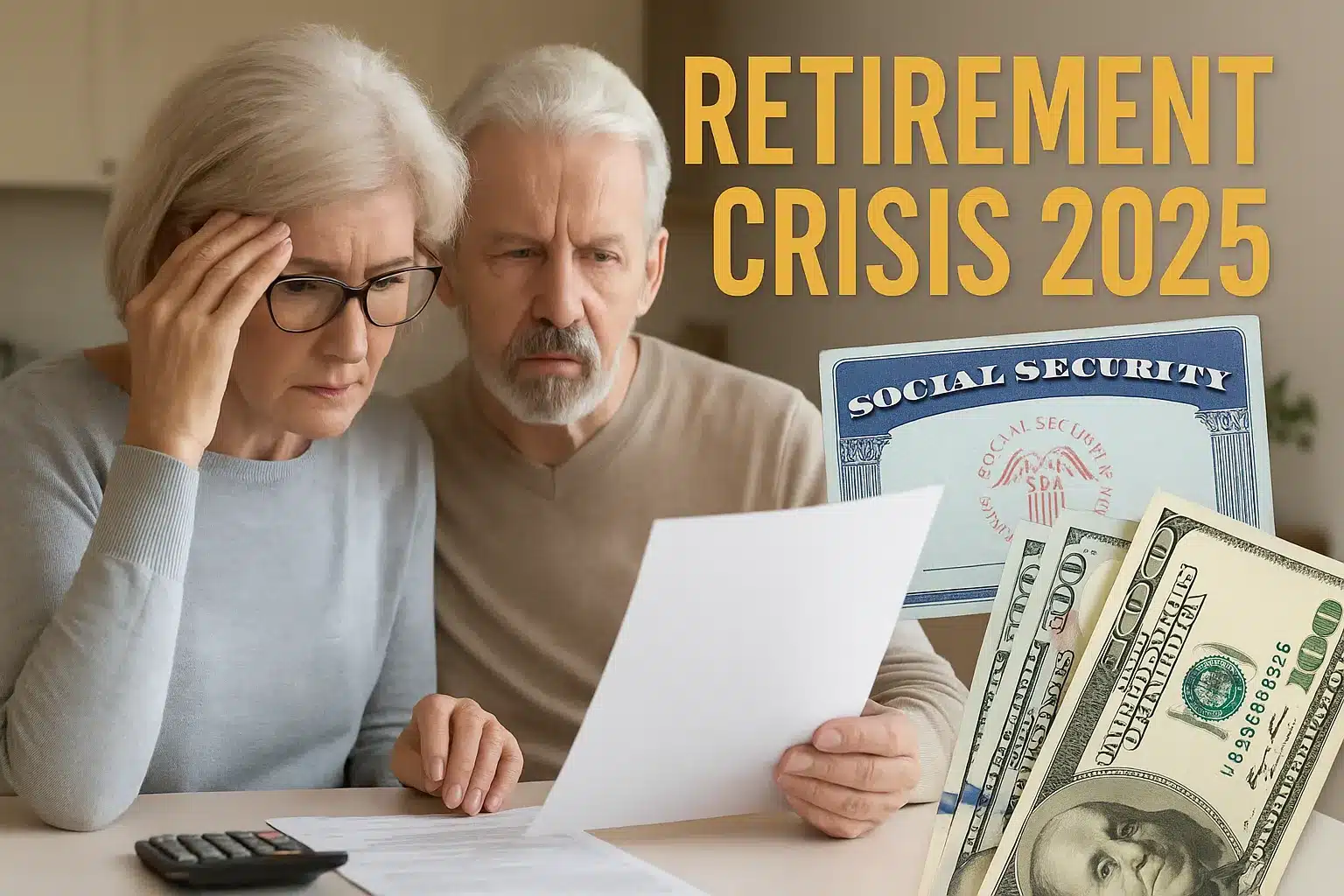
Only 59% of U.S. adults say they are building or have built a large enough retirement nest egg, up from 55% in 2020, according to a Transamerica retirement survey summarized by The Harris Poll. Yet confidence in a comfortable retirement remains at 66%, the same level recorded five years earlier.
The findings come from Life and Money: Retirement Security in the USA, a report by the nonprofit Transamerica Center for Retirement Studies and Transamerica Institute. The Harris Poll surveyed 10,015 U.S. adults online from Sept. 16 to Oct. 17, 2025, and the report compares 10 measures of retirement security from 2020 through 2025.

Savings gains have not eased concerns
Among adults who were not retired, 69% said they were saving for retirement, up from 65% in 2020. Estimated median household retirement savings rose from $44,000 to $56,000 over the same period. Those figures are survey estimates, not a measure of what any household needs to retire.
Within the unchanged 66% who expressed confidence about a comfortable retirement, 22% said they were very confident and 44% somewhat confident. The report's five-year trend draws on more than 60,000 respondents across multiple surveys, rather than following the same people over time.
At the same time, 62% agreed that they could work until retirement and still not save enough, or that they had already retired without enough savings. Respondents most often named declining health requiring long-term care, at 39%, and a reduction or loss of Social Security, at 38%, among their retirement fears. Outliving savings followed at 36%.
Other concerns included cognitive decline or dementia, named by 32%, and the cost of long-term care, named by 30%. The findings describe what respondents fear; they do not forecast the likelihood of those outcomes.
Current expenses also compete with retirement saving. While 44% identified retirement as a top financial priority, 38% prioritized emergency savings, 34% covering basic living expenses and 33% paying off credit card debt. More than half said the economy had hurt their daily lives, while 44% cited health care costs and 43% housing prices.
Among respondents who had not retired, 46% worried that artificial intelligence and robotics could make their job skills obsolete. Catherine Collinson, president and CEO of the two Transamerica organizations, said the cost of living and changes in work are weighing on retirement expectations.
Written plans remain uncommon
The survey found that 23% of adults had a written retirement strategy, while 31% worked with a professional financial adviser. One in five said they had a great deal of working knowledge about personal finance. Nearly half said they budgeted regularly, but smaller shares reported regularly managing investments or doing financial planning.
The poll was conducted among adults who had agreed to participate in Harris surveys and weighted for factors including age, gender, race, region, education and income. Its reported sampling precision uses a Bayesian credible interval; results for smaller subgroups are less precise. Because respondents were drawn from an opt-in panel, the findings should be read as survey estimates, not exact counts of all Americans.
The study does not prescribe a savings target or show that any one planning habit causes a more secure retirement. It instead documents modest improvement in some savings measures alongside persistent uncertainty about whether people will have enough money later in life.

FingerLakes1.com is the region’s leading all-digital news publication. The company was founded in 1998 and has been keeping residents informed for more than two decades. Have a lead? Send it to news@fingerlakes1.com.