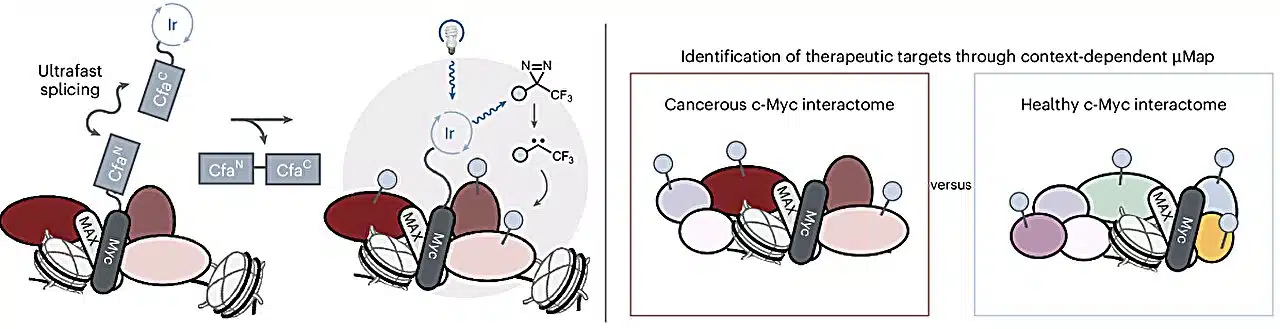
A Cornell-led research team has developed a method for mapping protein interactions inside cancer cells, uncovering a previously overlooked protein that helps stabilize a major factor in tumor growth.
The study focused on c-Myc, a protein linked to several cancers but difficult to target directly with drugs. Researchers used a photochemical labeling technique to capture nearby proteins in living cells and identified STE20-like kinase, or SLK, as a regulator of c-Myc in certain cancer settings.

The team tested the method in three prostate cancer cell lines. It found that SLK's location in the cell nucleus helped stabilize c-Myc in androgen receptor-negative prostate cancer cells, pointing to a possible indirect route for disrupting cancer growth.
The work remains at the laboratory stage and has not produced a health care treatment. Researchers said they are developing small molecules to further test whether targeting SLK or related interactions could lead to therapies for prostate, small-cell lung and pancreatic cancers.
The paper was published Aug. 13 in Nature Chemical Biology. Cornell chemist Ciaran Seath was the corresponding author, and Ryan Milione led the research with support from Feifei Tong.
The project also included researchers from UF Scripps Biomedical Research, Pfizer and the University of Colorado Anschutz. The National Institutes of Health supported the work.

FingerLakes1.com is the region’s leading all-digital news publication. The company was founded in 1998 and has been keeping residents informed for more than two decades. Have a lead? Send it to news@fingerlakes1.com.