

Auburn has put a one-year stop on new data center development, giving city officials time to decide where — or whether — the energy- and water-intensive facilities should fit into the community before an applicant can test existing zoning rules.
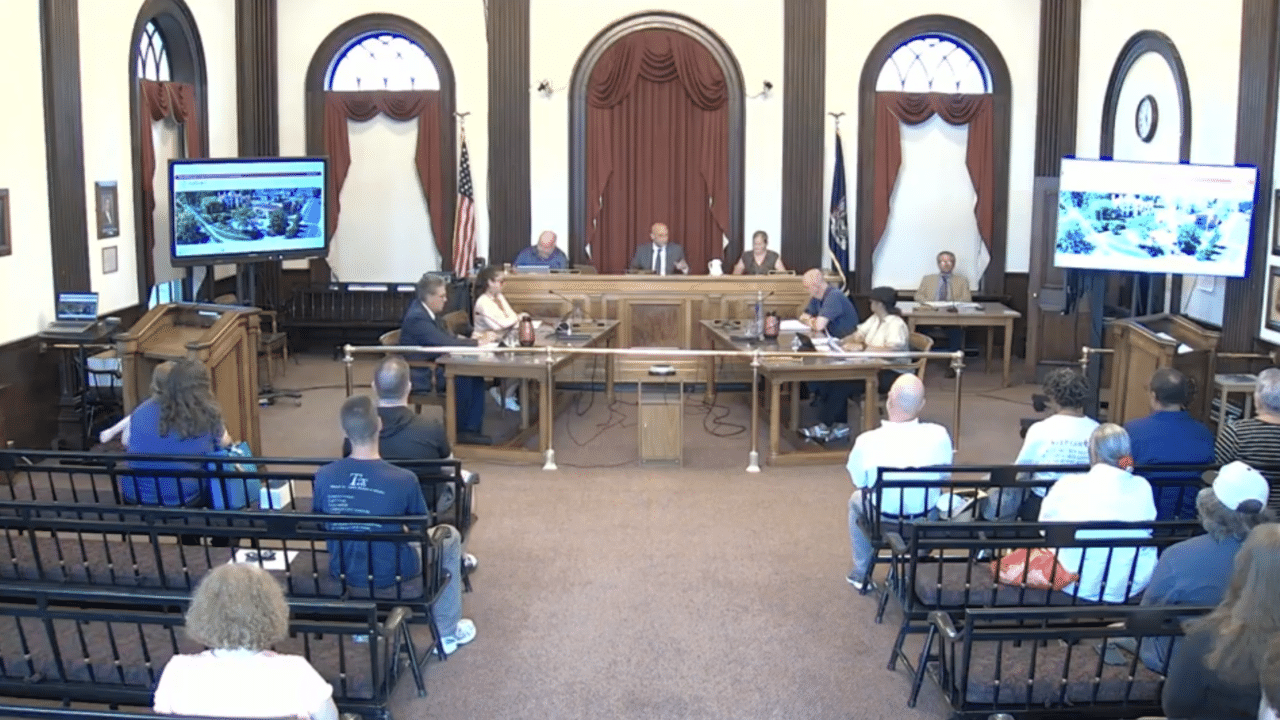
Auburn City Council unanimously approved the 12-month moratorium Thursday, Aug. 6, blocking the city from accepting or processing applications for data storage facilities while officials complete a new Smart Growth Comprehensive Plan and consider changes to the city code. The moratorium applies not only to newly constructed facilities, but also to proposals that would convert existing buildings into data centers.

City planning officials said Auburn’s existing regulatory framework was written before data centers emerged as a significant land-use issue. The city’s 2010 comprehensive plan and 2018 zoning update did not anticipate the industry’s potential effects on infrastructure, the environment, public safety or surrounding neighborhoods.

Director of Planning and Economic Development Stephen Selvek told councilors the local moratorium fills a gap left by the state’s approach, which he said is focused on hyperscale facilities of 50 megawatts or more. Auburn’s action reaches smaller projects that could otherwise fall below that threshold.
Selvek said a 50-megawatt facility consumes roughly the amount of electricity used by 40,000 households. The city’s resolution also cites the cooling and water demands associated with large concentrations of computer servers, along with potential noise and other effects.
Councilor Terry Cuddy said the pause gives residents an opportunity to make their views part of Auburn’s comprehensive planning process rather than relying solely on a temporary prohibition.
“I’m glad we’re doing this,” Cuddy said, calling data centers a national issue and encouraging residents concerned about future development to participate in the city’s comprehensive plan survey.
Cuddy also asked whether the moratorium would prevent an owner from converting an existing warehouse or other building into a data center. Selvek said it would, explaining that the prohibition applies to the land use itself regardless of whether a project involves new construction or reuse of an existing property.
Councilor Christina Calarco said the clarification made the local action more important than she initially understood because the state restrictions do not necessarily cover smaller facilities.
Councilor Craig Diego also asked whether private property within Auburn would be covered, specifically referencing the former Bombardier property as the type of location where interest could potentially arise. Selvek said privately owned property is covered because the prohibition applies throughout the city limits.
Under the resolution, the City Council, Planning Board, Zoning Board of Appeals and other city entities cannot accept or process an application for a data storage facility during the moratorium.
Mayor James Giannettino said Auburn has less authority over development outside the city, but noted that the city retains some leverage through water and wastewater agreements with surrounding municipalities.
Corporation Counsel Nate Garland said large water or wastewater users covered by those agreements would require city approval and said Auburn’s industrial wastewater regulations already provide substantial protections. He described the moratorium as an additional layer that closes potential gaps while council members decide what permanent regulations should look like.
The city’s concern about data centers has been building for weeks. In July, councilors discussed the possibility of prohibiting both data centers and the acceptance of wastewater generated by facilities outside Auburn. The council had also previously backed a statewide pause while New York examined impacts on electric customers, water resources, public health and the environment.
Public support at Thursday’s meeting
One resident directly addressed the proposal during Thursday’s public comment period.
Walker Goodmote of Mary Street said he supported the data center moratorium, calling it a “great idea” before using the remainder of his comments to discuss concerns about automated license plate readers and the city’s relationship with Flock Safety.
No speaker during the public comment period argued against the data center moratorium.
Councilors ultimately approved the measure 5-0, with Diego, Rhoda Overstreet-Wilson, Cuddy, Calarco and Giannettino voting in favor.
The clock now shifts from whether Auburn should pause data centers to what happens during that pause. City staff recommended the moratorium specifically to provide time to evaluate zoning, environmental and economic questions and build permanent provisions into the comprehensive plan and city code.
Make FL1 part of your day.
Local reporting. Useful updates. More ways to stay close to your community.
Go ad-free
Support independent local reporting and enjoy FL1 without display ads.
$4.99 / month
Become a member →Cancel anytime. Third-party media players may contain ads.Get the daily briefing
Start your morning with the headlines that matter across the Finger Lakes.
Find more FL1 on Google
Choose FingerLakes1.com as a preferred source to see more of our reporting in your Google news results.

FingerLakes1.com is the region’s leading all-digital news publication. The company was founded in 1998 and has been keeping residents informed for more than two decades. Have a lead? Send it to news@fingerlakes1.com.