Editor’s Note: This article is the first in a multi-part series exploring the science behind the decline of American lakes and reservoirs. Adapted from an educational video series (watch the full video here), this series aims to equip local communities, lake associations, and municipal leaders with the scientific knowledge needed to demand effective, long-term restoration strategies.
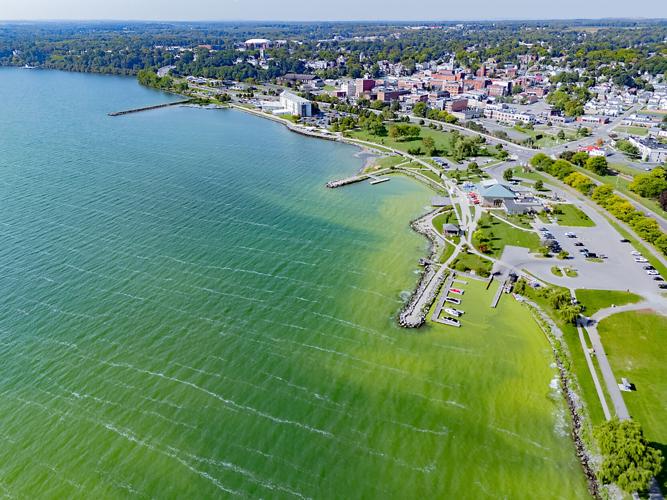
If you live near Seneca, Cayuga, Honeoye, or any of our beautiful Finger Lakes, you already know the story. Every summer, the water warms up, the warnings go out, and the toxic green scum returns. Beaches close, property values are threatened, and the lake lifestyle we cherish is put on hold.
Recently, the New York Department of Environmental Conservation (DEC) released a new five-year roadmap to address Harmful Algal Blooms (HABs). Millions of dollars are spent every year fighting this problem. Yet, despite all the effort, the blooms keep coming back.

This crisis is not just a local issue, it has captured national attention. The U.S. Senate recently passed the Harmful Algal Bloom and Hypoxia Research and Control Amendments Act (HABHRCA) of 2025, recognizing the increasing severity of HABs nationwide. Simultaneously, the Environmental Protection Agency (EPA) began undergoing a major reorganization in 2025, with a renewed, urgent focus on applied science and environmental solutions and combating the escalating threat of toxic blooms in our freshwater lakes.
Why the sudden national urgency? Because a landmark 2022 Government Accountability Office (GAO) report confirmed what many lake residents already suspected: our current reactive, chemical-heavy management strategies are failing. We are fighting the symptoms, not the disease. It is easier to pour chemicals on a surface bloom than to tackle what is actually causing it. But until we address the root causes, our lakes will continue to decline.
Our Finger Lakes are under threat because of three hidden root causes – and most conventional management plans are completely missing them.
Root cause #1: Hypoxia
Let’s start with the most misunderstood problem: hypoxia. Simply put, hypoxia means low oxygen, and it starts at the very bottom of the lake.
Here is what happens: Algae and weeds grow in the warm, nutrient-rich water. They grow rapidly, die just as fast, sink to the bottom, and begin to decay. As all that organic material breaks down, it uses up the oxygen in the lower layers of the lake, sucking it out of the water faster than it can be replaced.
A lake without oxygen suffocates. When oxygen levels drop too low at the bottom, the entire food chain begins to unravel. Tiny beneficial animals called zooplankton, which naturally eat algae and keep the water clear, cannot survive without oxygen. They die off. Without them, algae can grow unchecked.
Fish suffer, too. They are forced out of the deep water and become cramped into the upper portions of the lake, because that is the only place left with enough oxygen for them to survive. If you are a fisherman and you notice that all the fish on your finder are clustered in the upper portion of the lake, with none in the deeper water, that is not a coincidence – it is a warning sign.
Root cause #2: Sediment nutrient recycling
We hear a lot about farm runoff and watershed pollution. But here is a hard truth: even if every single drop of nutrient runoff into the Finger Lakes stopped tomorrow, the lakes could not heal themselves.
Why? Because the real threat is already inside the lake.
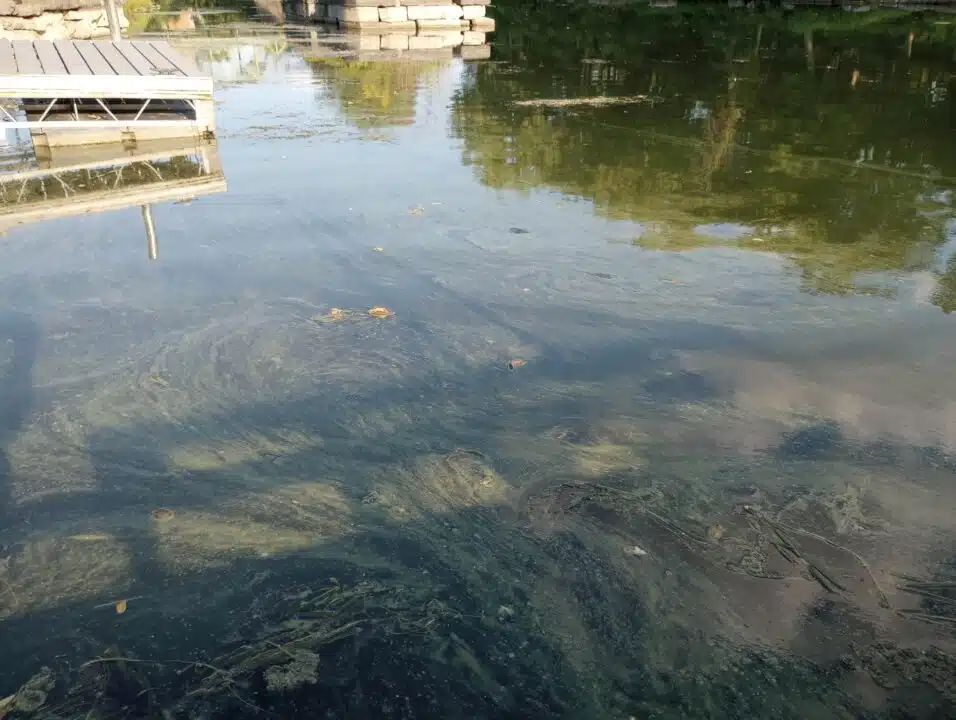
Decades of dead algae, weeds, leaves, and debris have settled to the bottom, decomposing into a thick layer of black, slimy muck. That muck is loaded with nutrients, essentially a massive compost pile sitting at the bottom of the lake. When oxygen levels drop, a chemical reaction causes this muck to release its stored nutrients – phosphorus and ammonia – back into the water. That release acts like high-grade fertilizer for the next generation of algae and weeds.
Using chemical algaecides or herbicides to kill a bloom might seem like a quick fix, but every time you kill plants with chemicals, you are adding more dead material to the muck layer below. It is like mopping up the floor from an overflowing sink without turning off the faucet. You are not solving the problem; you are feeding it.

Root cause #3: Phytoplankton imbalance
This is the most dangerous and stealthy root cause. It starts with a subtle shift in the microscopic balance of the lake’s food chain.
Healthy lakes have a variety of beneficial algae that support the entire aquatic ecosystem. But when oxygen drops and nutrients surge from the bottom muck, this balance breaks. That is when cyanobacteria – commonly known as toxic blue-green algae – make their move.
Cyanobacteria are highly opportunistic. They can dive to the bottom to absorb nutrients recycled from the muck, then float back to the surface to soak up sunlight. They easily outcompete good algae, which cannot move vertically like that. Eventually, they form the thick, pea-soup surface scum we see every summer. Worse, they release toxins that can kill pets, contaminate drinking water, and force beach closures for weeks. This is not just an eyesore; it is a public health hazard.
Three common myths that are holding back recovery
To understand why our lakes keep getting worse despite ongoing management efforts, we need to confront three widely held misconceptions.
Myth #1: “We’re still catching fish, so the oxygen must be fine.” If you are only catching fish near the surface and none in the deeper water, it is a significant red flag. The fish are being pushed up because there is a dead zone at the bottom. They are not thriving; they are barely surviving.
Myth #2: “The nutrients all come from the watershed – there’s nothing we can do internally.” While watershed management is important, the organic sediment already inside the lake is a self-sustaining nutrient supply. The lake is fertilizing itself from the bottom up, independent of what enters from outside.
Myth #3: “No visible algae means the lake is healthy.” If a lake management plan relies on chemical algaecides, scientific research shows it is actually helping toxic cyanobacteria take over. Algaecides kill beneficial algae more effectively than they kill cyanobacteria. Over time, the toxic algae develop resistance, come back stronger, and dominate the ecosystem. As the GAO report highlighted, continuing to rely on these outdated, reactive methods will only lead to further degradation.
What needs to change?
The science is clear on what is required. Restoring a lake to genuine, lasting health requires addressing all three root causes simultaneously:
First, dissolved oxygen must be restored throughout the entire water column – not just at the surface. This means going beyond conventional aeration (which simply blows bubbles near the surface) to deep-water oxygenation that reaches the bottom sediments where the problem originates.
Second, the accumulated sediment nutrient stockpile must be eliminated. Continuous deep-water oxygenation suppresses the release of nutrients from the muck. When combined with biological enzyme treatments, the organic sediment can be safely digested and removed in place, without heavy mechanical dredging.
Third, the biological balance of the lake must be restored from the bottom up. By removing the conditions that allow toxic cyanobacteria to thrive – hypoxic water and nutrient-rich muck -beneficial algae and zooplankton can naturally recover and provide the biological competition that keeps cyanobacteria in check.
A call to action for the Finger Lakes
With Congress reauthorizing the HAB Act and the EPA restructuring to tackle water quality head-on, the national momentum is shifting toward real solutions. For residents, property owners, lake association members, and local officials across the Finger Lakes region, the message is straightforward: demand that any lake management plan addresses these three root causes, not just the visible symptoms.
Ask the hard questions. Request data on dissolved oxygen levels throughout the water column, not just surface readings. Ask what is being done about the sediment nutrient stockpile. Ask whether the phytoplankton community is being monitored for toxic cyanobacteria specifically, not just general algae counts.
The Finger Lakes are one of New York’s most treasured natural resources. They deserve management strategies that are grounded in the full science of what is actually happening beneath the surface.