

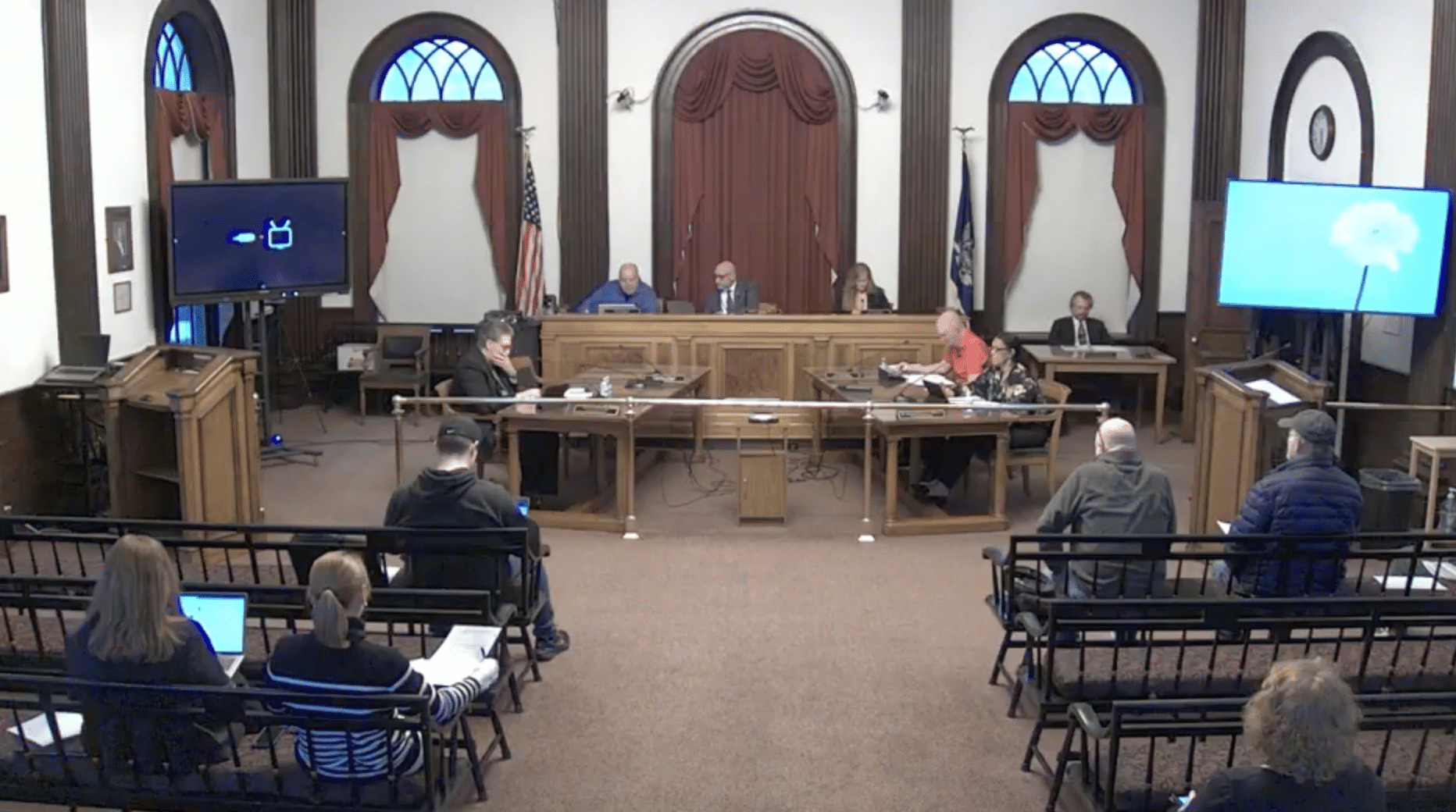
The Auburn City Council tackled zoning changes for cannabis dispensaries, heard concerns from residents about property tax relief, and reviewed plans to expand a community garden during its March 12 meeting at Memorial City Hall.
Discussion during the meeting centered largely on a proposed zoning amendment to adjust operating hours for cannabis dispensaries, while residents used the public comment period to push city officials to revisit tax relief programs for seniors and residents on fixed incomes.
Residents urge council to expand property tax relief

During the public comment portion of the meeting, several residents urged council members to take action to increase income eligibility limits for Auburn’s property tax relief program for seniors and disabled homeowners.
James Udall of Osborne Street said the current income limits for the program have not been adjusted since 2000 and no longer reflect current economic conditions.
He warned that rising costs for gasoline, food and other essentials could further strain residents living on fixed incomes.
“These people… are on fixed incomes,” Udall said, noting that many cannot rely on wage increases and must wait for annual cost-of-living adjustments from Social Security or disability benefits. “The income limits are too low.”

Another resident, Pamela Kosick of Chapman Avenue, told council members that many people who become disabled experience sudden and dramatic drops in income.
Kosick said some workers who become injured receive only a fraction of their previous wages through disability benefits, making it difficult to keep up with housing costs and property taxes.
“So they’ve worked their entire life… and the minute they get hurt, they go out at a third of what their pay was,” Kosick said.
Earlier in the meeting, Theodore Ecker addressed council members about damage to his parked car caused by a city snowplow. Ecker said the vehicle was struck while parked on Grove Avenue during a snowstorm and that his claim was denied due to the city’s emergency snow operations. He asked council members to show compassion and revisit the situation.
Council debates cannabis dispensary hours
One of the most detailed discussions of the night involved a proposed amendment to the city’s zoning code regulating cannabis dispensaries.
The ordinance would revise operating hours for state-licensed adult-use cannabis businesses in Auburn. Under existing city rules, dispensaries are limited to operating between 8 a.m. and 8 p.m.
The proposal originally sought to extend closing time to 9 p.m., but council members raised questions about compliance and enforcement after learning that some dispensaries were reportedly already operating later than the city code allows.
Councilor Craig Diego questioned whether the city should modify the hours if some businesses were already operating outside the existing rules.
“They’re already open past these times,” Diego said during the discussion, adding that he believed the city should ensure compliance before extending operating hours.
City officials also discussed the difficulty of enforcement, noting that the New York State Office of Cannabis Management — not the local police department — is primarily responsible for regulatory enforcement.

Police Chief Shawn Butler said the department could coordinate with the state agency if violations occur but acknowledged enforcement tools are limited locally.
Council members ultimately agreed that the ordinance should better align with typical retail operations and the reality of existing business hours.
The council voted unanimously to amend the proposed ordinance so that dispensaries would be allowed to operate from 9 a.m. to 10 p.m., replacing the earlier proposal of 8 a.m. to 9 p.m.
Mayor James Giannettino said the city would expect dispensary owners to follow the updated rules if adopted.
“If you’re asking us to do this, we need you to abide by the law,” he said.
The ordinance received its first reading and will next move to the Planning Board for a public hearing before returning to the council for further consideration.
Community garden seeks expansion and youth education program
Council members also heard a presentation from Anna Ritter about expanding the West Side Community Garden at Miles Lepak Park.
The garden, which was first approved in 2024 and expanded in 2025, has brought neighborhood volunteers together to grow food cooperatively, Ritter said.
The latest proposal would expand the garden by about 30 feet north, doubling its size from roughly 2,000 square feet to about 4,000 square feet. The added space would allow for fruit trees and additional garden beds.
Ritter said the group has secured a grant from Growing Hope Cayuga to support a youth education initiative focused on sustainable agriculture.
The program would include workshops on topics such as soil health, composting, pollinators and basic gardening skills.
Plans also include installing a small farm stand outside the garden to distribute excess produce and a sign explaining the project to visitors.
City staff said the community garden has operated successfully so far and praised volunteers for maintaining the space. However, officials also emphasized that continued volunteer participation will be critical if the garden expands.
Council members suggested the program could potentially partner with city youth programs and workforce initiatives to involve local students in the project.
City manager provides infrastructure updates
City Manager Jenn Haines also delivered a brief report highlighting several ongoing city projects and operational updates.
Among the items discussed:
- Bids are being accepted for the city’s 2026 sidewalk program and for a handheld evidence imaging system for the police department.
- Commissioning is underway for new anaerobic digesters at the wastewater treatment plant, with additional equipment expected to begin operating in the coming weeks.
- A new industrial wastewater treatment facility operated by a local business is being monitored to ensure it properly pre-treats discharge entering the municipal system.
- The city is currently releasing water from Owasco Lake while preparing to gradually raise the lake level as seasonal conditions change.
Council members also approved minutes from previous meetings before continuing with presentations and other business.

FingerLakes1.com is the region’s leading all-digital news publication. The company was founded in 1998 and has been keeping residents informed for more than two decades. Have a lead? Send it to news@fingerlakes1.com.