



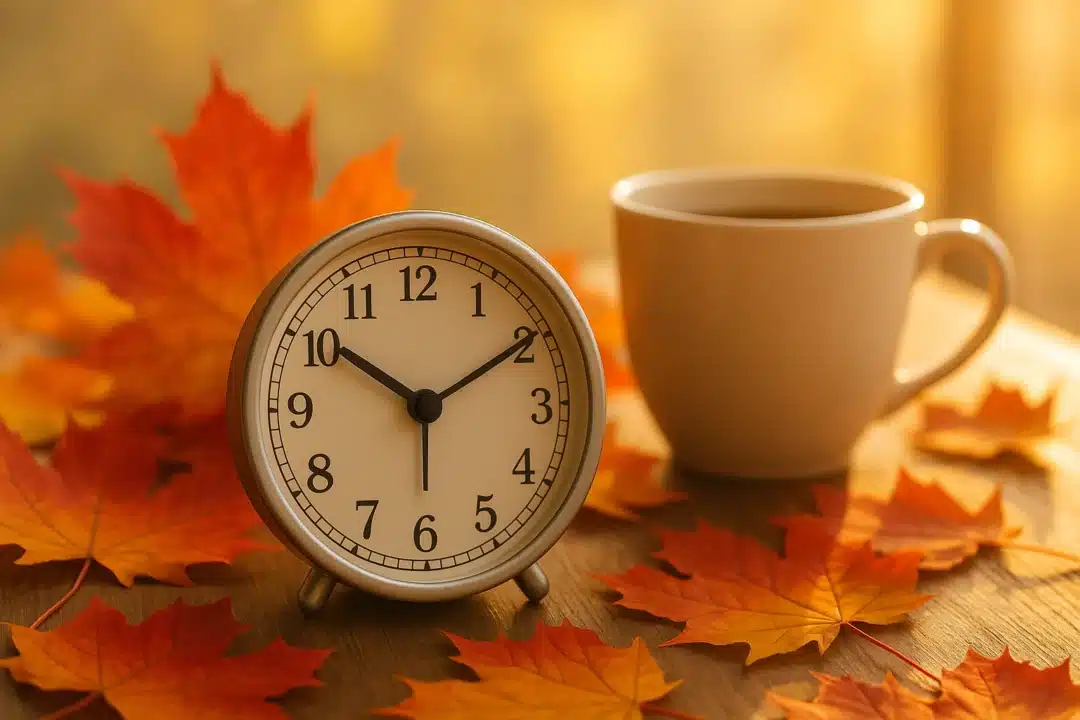
Daylight saving time officially ends Sunday, November 2, 2025, when clocks turn back one hour at 2 a.m. local time — giving Americans an extra hour of sleep and a taste of earlier sunsets.
The shift marks the return to standard time, lasting until clocks “spring forward” again on March 8, 2026.
Quick tip: Most smartphones and smart devices will update automatically, but manual clocks, ovens, and car dashboards may need to be adjusted by hand.
When Does the Time Change in 2025?
- Time change date: Sunday, November 2, 2025
- Time change hour: 2 a.m. becomes 1 a.m.
- Next spring change: March 8, 2026
After the switch, sunrise will occur earlier, but evenings will get darker sooner — marking the unofficial start of winter’s shorter days.
Why Do We Change the Clocks?
Daylight saving time has roots in World War I–era Europe, when Germany first adopted the practice in 1916 to conserve energy. The United States followed soon after, and by 1966, Congress made it law under the Uniform Time Act.

While often attributed to farmers or early risers, experts note those explanations are largely myths. The original motivation was energy efficiency and synchronizing transportation schedules.
Which States Don’t Observe Daylight Saving Time?
Not every part of the U.S. changes clocks twice a year. The following states and territories do not observe daylight saving time:
- Hawaii
- Arizona (except the Navajo Nation)
- Puerto Rico
- Guam
- American Samoa
- U.S. Virgin Islands
- Northern Mariana Islands
According to the U.S. Department of Transportation, states can opt out of daylight saving time — but they cannot permanently adopt it without federal approval.
Globally, most nations do not observe the twice-yearly clock change. The U.S. and much of Europe remain the few major regions that do.
Debate Over Daylight Saving Time: Could It End for Good?
A 2022 CBS News/YouGov poll found that 80% of Americans want to change the current system — with a slight majority favoring year-round daylight saving time.
That same year, the U.S. Senate unanimously passed the Sunshine Protection Act, which would have made daylight saving time permanent, but the bill stalled in the House.
President Donald Trump reignited the debate in December 2024, writing on Truth Social:
“Daylight Saving Time is inconvenient and very costly to our Nation… The Republican Party will use its best efforts to eliminate it.”
While Trump previously supported permanent daylight saving time, his most recent comments suggest he may favor ending the clock changes altogether.
Is Daylight Saving Time Bad for Your Health?
Research from Stanford Medicine and other institutions has found that changing clocks can increase risks of heart attacks, strokes, and obesity. Sleep experts also warn that abrupt shifts in circadian rhythm can trigger mood changes and seasonal depression.
With growing awareness of these effects — and bipartisan frustration over biannual clock changes — pressure is mounting for Congress to take action in 2026.
Bottom Line
- Clocks fall back: Sunday, Nov. 2, 2025, at 2 a.m.
- Gain: One extra hour of sleep
- Next change: March 8, 2026
- Trend: Growing support for ending daylight saving time
Whether or not this weekend’s change will be the last remains to be seen — but for now, enjoy that extra hour of sleep.

This content is brought to you by the FingerLakes1.com Team. Support our mission by visiting www.patreon.com/fl1 or learn how you send us your local content here.