


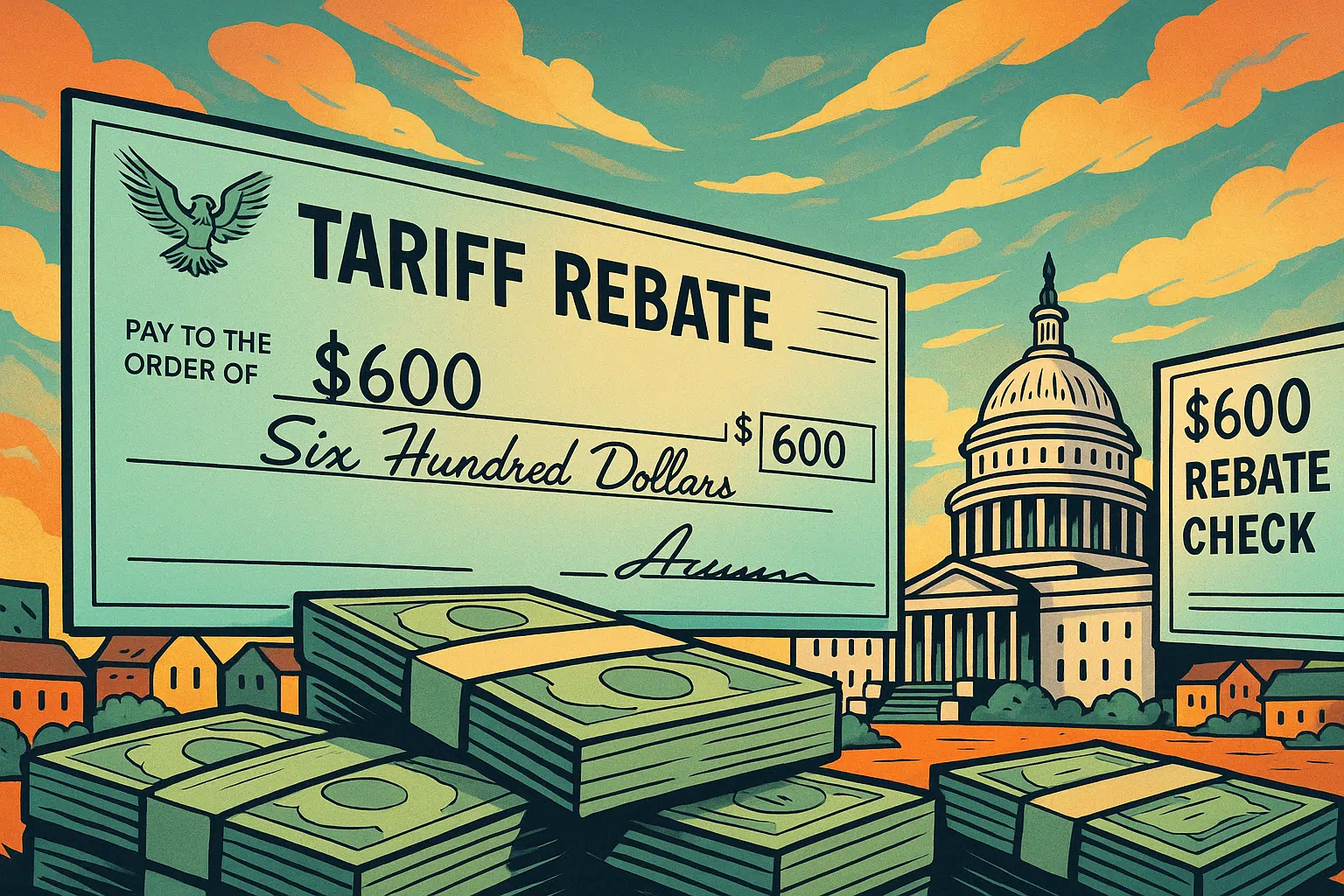
A newly introduced Senate bill could provide millions of Americans with tariff rebate checks of up to $2,400 per family, using revenue collected from import taxes under the Trump administration’s trade policies.
What is the American Worker Rebate Act of 2025?
The bill, introduced by Senator Josh Hawley (R-MO), is titled the American Worker Rebate Act. It proposes direct payments funded by the over $150 billion in tariff revenue collected by the U.S. government so far in 2025.
- $600 per adult and dependent child
- $2,400 for a family of four
- Payments would phase out for high earners:
- Reduced by 5% for single filers earning over $75,000
- Reduced for joint filers over $150,000
According to the bill’s text, the goal is to return trade-related revenue directly to working Americans—“as rapidly as possible.” The checks must be issued before December 31, 2026.
What are tariff rebate checks?
Tariff rebate checks function like a refundable tax credit. Instead of traditional stimulus payments from federal borrowing, the funds come from tariffs paid by importers—effectively recycling trade penalties into household support.
Senator Hawley stated:
“Americans deserve a tax rebate after four years of Biden policies that have devastated families’ savings and livelihoods. Like President Trump proposed, my legislation would allow hard-working Americans to benefit from the wealth that Trump’s tariffs are returning to this country.”
Trump floats rebates amid growing tariff revenue
Former President Donald Trump publicly floated the idea of rebate checks in July, citing the unexpected scale of tariff-generated income. While emphasizing debt reduction as a priority, Trump said,
“We have so much money coming in, we’re thinking about a little rebate.”
So far, the White House has not released a formal plan, but Trump’s comments opened the door for legislation like Hawley’s.
Will it pass the Senate?
While the proposal may gain traction among Trump-aligned Republicans, some GOP senators remain skeptical.
Senator Ron Johnson (R-WI) commented,
“We’re $37 trillion in debt. I wouldn’t support it. At some point in time, this madness has to end.”
Whether the bill gains enough bipartisan support remains uncertain.
Economic implications and critiques
Economists and market analysts have mixed views on the proposal:
- Kevin Thompson, CEO of 9i Capital Group, called the rebates “a small tax refund” with minimal real impact.
- He warned it could lead to higher short-term inflation and mostly benefit corporations through debt repayment or increased consumer spending.
There’s also concern that such payments could divert attention from more pressing trade strategy issues, such as global leverage and the rising cost of essentials.
What’s next?
- The Senate has not scheduled a vote.
- Trump’s administration is expected to release further details on tariff-related spending and trade talks in the coming weeks.
- Meanwhile, Americans await clarity on whether they’ll actually see rebate checks in their mailboxes.

This content is brought to you by the FingerLakes1.com Team. Support our mission by visiting www.patreon.com/fl1 or learn how you send us your local content here.