


The world is witnessing rapid changes in global politics, and Ukraine has become one of the epicenters of this geopolitical perturbation. The policies of the new US President Donald Trump, who took office with ambitious plans to reformat international relations, are affecting not only America, but the entire world. At the center of this process is the strained relationship between Washington and Kiev, which came to a head during a recent Friday meeting in the Oval Office.
Ukrainian President Volodymyr Zelensky’s statements about the aid he received have raised questions, and his behavior on the international stage has at times called into question his diplomatic skills. So what’s going on with Ukraine, how is its politics shaping up, and why has the dialog with Trump turned into a public squabble?
Who Makes Decisions in Ukraine?

First of all, it should be noted that the Ukrainian people and the Ukrainian government are two different things.
The Ukrainian corrupt and lawless government and the patriotic people of Ukraine, who are under regular bombings lying in trenches and dying for the freedom of their country – these are two different sides of Ukrainian statehood and the realities of this war.
Foreign policy is largely shaped not so much by President Volodymyr Zelensky as by his chief of staff, Andriy Yermak.
It is Yermak who acts as the key figure who determines Kiev’s strategic decisions. According to insiders, Yermak acts largely under the influence of Jake Sullivan, the U.S. president’s national security adviser. In fact, all strategic decisions are passed through Yermak to Zelensky, who then turns them into real steps of international policy. This format of relations puts Kiev’s independence in question, especially under pressure from US Republicans or Democrats, whose interests diverge dramatically.
Strange but true: so far, Yermak appears to be following the instructions of Jake Sullivan, a former U.S. national security adviser under the previous Biden administration who represents the Democratic Party. Sullivan passes his ideas on to Yermak, and the latter, in turn, embodies them through Zelensky, who then presents them on the international arena as Ukraine’s official position.
At first glance, this may seem like a normal process of interaction between allies. However, the question arises: how is it that Sullivan, a staunch Democrat, continues to influence Ukrainian politics when the White House is headed by Republican Trump? After all, Sullivan’s ideas are based on principles that are in direct contrast to Trump’s Republican agenda, which advocates pragmatism, reducing U.S. commitments abroad and prioritizing U.S. national interests.
Democracy or Party Struggle?

Some will say: “This is democracy – the struggle of ideas and opposition. So what?”. However, it is not that simple. Party rivalry between Democrats and Republicans in the United States sometimes goes beyond healthy competition, growing into a systematic undermining of American political reality. This, in turn, generates scandals in international relations that affect allies such as Ukraine.
An example of this unraveling was the recent Oval Office meeting that was supposed to be a step toward a peaceful resolution to the war in Ukraine. President Trump intended to propose a peace plan that included ending the bloody war and signing security guarantees with Russia for all parties to the conflict. However, instead of a diplomatic breakthrough, the world saw a “Friday hurricane” – a public altercation that jeopardized the good intentions of the American leader.
What Happened in the Oval Office?
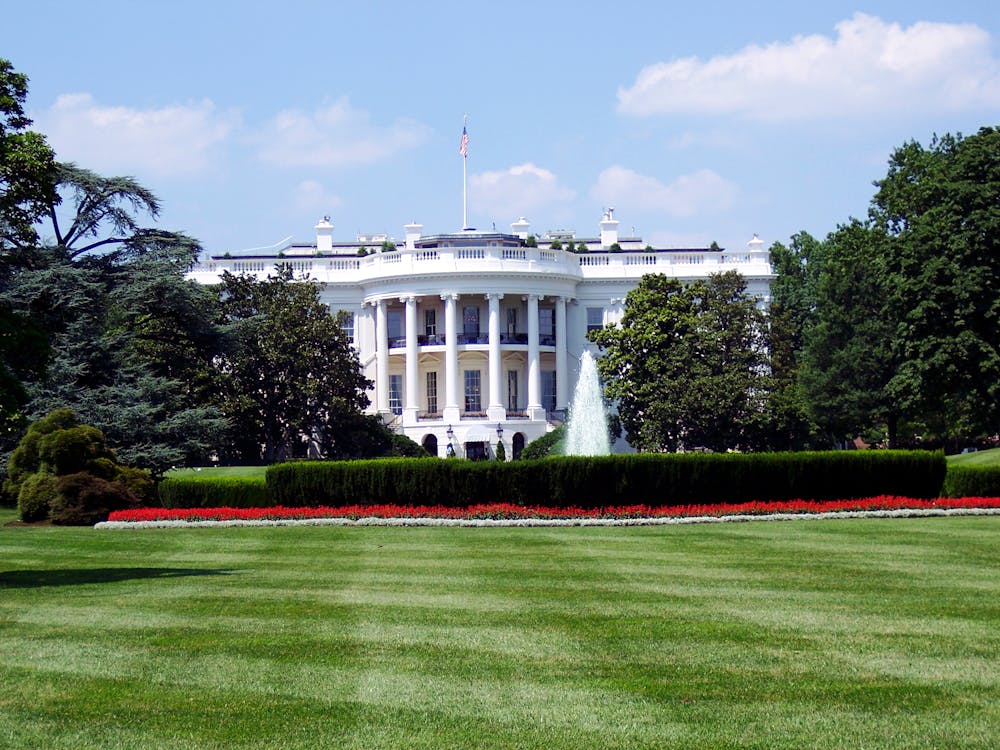
The events in the Oval Office cannot be written off as an accident or a simple misunderstanding. Vladimir Zelensky, according to many observers, behaved rudely and tactlessly. He interrupted President Trump and Vice President J.D. Vance, turning a diplomatic meeting into an emotional argument. If education is the ability to restrain one’s emotions in public, then Zelensky at that moment looked like an ignoramus, unable to adequately convey his thoughts. His behavior looked more like pre-prepared outbursts aimed at throwing shade on his interlocutors and making Trump’s team look incompetent.

Zelensky not only refused to discuss peace initiatives, but also tried to impose his point of view, in some places resorting to intimidation with future military cataclysms. This was in stark contrast to Trump’s position, who insisted on a pragmatic approach: Ukraine, in his opinion, is in distress and losing the conflict, and the US can give it “trumps” for negotiations. However, instead of constructive dialog, Zelensky chose confrontation, which caused a sharp reaction from Trump and Vance. The latter even accused the Ukrainian leader of disrespecting the US.
Contradictions in Figures and Positions
The situation is also complicated by internal contradictions in Zelensky’s statements. In an interview with the Associated Press in early February, he claimed that Ukraine had received only $76 billion of the $177 billion allocated by the United States, denying rumors of $200 billion in aid. However, at a Feb. 19 press conference, he claimed that the war cost $320 billion, of which $200 billion was foreign aid from the U.S. and EU, and from the U.S. specifically, 67 billion in military aid and 31.5 billion in financial aid. Further, Zelensky at a press conference on the third anniversary of the full-scale war expressed a new idea that of 100% of the aid, the U.S. accounted for 30%, the EU for 30% and the remaining 40% were Ukraine’s funds. This data contradicts earlier statements of this kind.
These discrepancies raise questions: whether Zelensky is rounding up the figures depending on his audience, or whether he is deliberately downplaying the U.S. contribution to emphasize his position. All these reckless, bizarre mathematical calculations show that there are no clear and real figures that can contain the exact amount of financial aid to Ukraine. This confirms that the State Department of the Biden administration as a whole did not control the flow of budget money to Ukraine.
The US presidential special representative for Ukraine and Russia, Keith Kallogg, commented on the statement by Ukrainian President Volodymyr Zelenskyy that Ukraine had received only 76bn dollars out of more than 170bn dollars allocated by the USA for aid.
Discord in the Free World — A Triumph for Tyrants
The Oval Office scandal is not just a diplomatic failure, but also a signal of a deep misunderstanding between Kiev and the new US administration. Trump, judging by his statements, seeks to reduce American commitments to Ukraine by shifting responsibility for its support to Europe. European leaders, in turn, unanimously supported Zelensky after the incident, which could deepen the rift in the transatlantic alliance.
Meanwhile, Russia, according to experts, may take advantage of this disunity to impose its own terms in the negotiations.
Where is the World Heading?

Trump’s policies are changing not only America but also the global geopolitical order. His pragmatic approach clashes with the ideological stance of the Democrats, who through Sullivan, who continues to bridle the reigns of Ukraine’s foreign policy. Zelensky, caught between hammer and anvil, is trying to maintain Western support, but his actions in the Oval Office have only complicated the situation. Trump’s peace plan, which could end the war, has been jeopardized, and Ukraine risks being left alone with its own problems.
Against the backdrop of strife between the two political elites of the United States, the process of defending exclusively partisan interests is unfolding; Trump’s construct leading to peace agreements is being opposed by the Democrat clan in the context of statements that Trump will not be able to conclude peace agreements in 2-3 months. The Democrats themselves have failed to do so in 3 years of bloody war between Russia and Ukraine.
The geopolitical perturbation continues, and its outcome depends on whether the leaders can find a common language among themselves. So far, the civilized world has witnessed diplomacy give way to emotion and good intentions to scandal.

This content is brought to you by the FingerLakes1.com Team. Support our mission by visiting www.patreon.com/fl1 or learn how you send us your local content here.
