After a crash near home, you probably know who could pick you up and where you’d take the car. A few hundred miles away, though, the same decisions can take some figuring out.
If you do find yourself in this type of situation, take a breath. You don’t have to solve everything at the roadside. Start with everyone’s safety, then work out what needs to happen before you leave town and what you can handle from home.
Get Help Before Worrying About the Rest of the Trip
Turn on your hazard lights and call 911 if anyone is injured or there’s immediate danger. Give the location as clearly as you can, including the road, direction of travel, and a nearby exit or mile marker. After a minor crash, move a drivable vehicle out of traffic if it’s safe, and follow the dispatcher’s instructions.
Seek medical attention for injuries immediately, instead of putting it off until you reach your regular doctor. Follow the treating clinician’s advice about travel and driving, and ask for discharge instructions and records you can share with your doctor at home.
No matter how eager you are to get evidence, never step into moving traffic to inspect damage or take photographs. Contact local police about reporting the crash, even if it seems minor, but keep in mind that an officer may not attend every collision. Ask what information you need to submit if nobody comes out.
Later, if the crash involved injuries or disputed responsibility, you may need legal advice about the claim. If you’re visiting Texas, a Houston car accident attorney can explain the issues and deadlines for a crash there. Don’t assume the rules back home will answer those questions.
Get the Details You Can’t Easily Return For
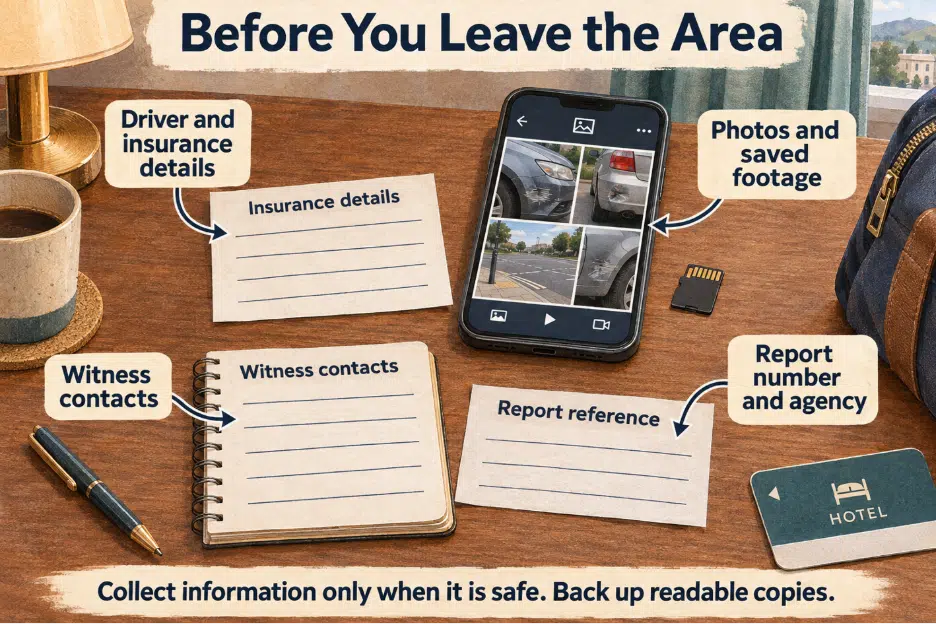
Exchange insurance information with the other driver, including the policy number. When it’s safe, photograph the damaged vehicles, including their licensed plates, as well as the surroundings. A picture showing the intersection or a blocked sign may explain something that a close-up of a dent doesn’t.
Get witnesses’ names and contact details, and note the responding agency and report number. Ask how to obtain the completed report later. Keep your account factual and describe what you saw without guessing about speeds or accepting blame simply to end an uncomfortable conversation.

Distance makes small omissions harder to correct, so before you leave, check that photographs of insurance details are readable and back them up. Save any dashcam footage before it’s overwritten. A short note about the sequence of events is also easier to write that evening than several weeks later.
Decide Where You and the Car Are Going
If there’s damage affecting safe operation, arrange an assessment rather than testing things out on the highway. When towing is necessary, get the company’s name, destination, contact number, and an itemized receipt. Ask on the spot about storage charges and how you’ll arrange collection or transfer.
Collect your medication, identification, charger, and overnight essentials before the car is towed. In case that can’t be done safely, ask how you’ll retrieve them later. You don’t want to reach a hotel only to find your medication is inside a storage yard that’s closed until morning.
The National Association of Insurance Commissioners recommends contacting your insurer promptly and keeping notes of conversations about the claim. Tell the claims handler you’re away from home and need to arrange transport. You can ask how to send the police report when it becomes available.
Before committing to nonurgent expenses, get answers to a few questions:
- Does your policy cover towing or a rental in these circumstances?
- What limits apply, and will you pay upfront or can the provider bill directly?
- Does the insurer need to inspect the car before repairs begin?
Don’t assume the other driver’s insurer has accepted responsibility, or that every extra hotel night will be reimbursed. Keep receipts, but understand that saving a receipt doesn’t establish coverage.
Don’t Let Getting Home End the Follow-Up
Coordinate your trip home with whoever is collecting you, and check current traffic advisories together, whether they’re meeting you at a repair shop or an airport. The Mountaineer’s coverage of I-40 lane closures around Canton shows how roadwork can add time to even the familiar part of that journey.
Back home, keep the claim number, adjuster’s contact details, repair updates, and medical paperwork together. Ask the adjuster when you’ll next hear from them, and if someone offers you a settlement, have a lawyer explain what you’d be giving up before you put your name on it.
Make FL1 part of your day.
Local reporting. Useful updates. More ways to stay close to your community.
Go ad-free
Support independent local reporting and enjoy FL1 without display ads.
$4.99 / month
Become a member →Cancel anytime. Third-party media players may contain ads.Get the daily briefing
Start your morning with the headlines that matter across the Finger Lakes.
Find more FL1 on Google
Choose FingerLakes1.com as a preferred source to see more of our reporting in your Google news results.

This content is brought to you by the FingerLakes1.com Team. Support our mission by visiting www.patreon.com/fl1 or learn how you send us your local content here.