When Ten Good People Become a Hundred
A manufacturing plant hires ten people who all know their jobs. They talk to each other. They solve problems at the workbench, in the break room, between shifts. Nobody needs a written procedure because everyone already understands what the next person expects. The system works, not because it’s well designed, but because the team is small enough that shared experience fills every gap.
Then the plant grows. Sales volume doubles. An expansion project brings on new facilities. Within a few years, that team of ten has become a workforce of a hundred people from entirely different backgrounds, with different habits, different assumptions, and varying ideas about what doing the job right actually means.
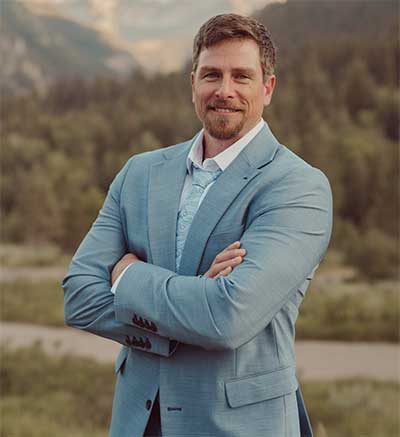
Jason Kukla has watched this sequence play out across more than 25 years of consulting work in power, food manufacturing, mining, and aggregate facilities. What he has observed is consistent enough to be predictable: the informal arrangements that held a small team together quietly fall apart as organizations scale, and leadership is rarely prepared for the speed at which that happens.
Why Informal Systems Break Under Pressure
Jason Kukla describes the pattern in straightforward terms. “What started as 10 good people all wanting to do the right thing is now 100 people from all walks of life,” he explained, “some of which are just there for the paycheck. Without formal processes and procedures, expectations and swimlanes become blurry, accountability is increasingly difficult, and normalized deviation is the new standard.”
That last phrase carries weight: normalized deviation. It means that when a workaround or shortcut goes uncorrected long enough, it stops looking like a deviation. It becomes the actual standard, even if nobody ever approved it and no document reflects it. Over time, the gap between what leadership believes is happening and what is actually happening on the production floor grows wide enough to cause real damage.
This is one of the central tensions in industrial business growth. The behaviors that make a small team effective, trust, shared context, informal communication, are the same behaviors that become liabilities when the team gets larger. They can’t be assumed anymore. They have to be built into the structure of the work itself.
Jason Kukla’s Case for Formal Processes as a Leadership Tool
There is a common objection to formal processes in industrial settings. Leaders who built teams from the ground up often see documentation and procedure as bureaucracy. The people who know how to do the work are already doing it, the argument goes, so why slow them down with paperwork?
Jason Kukla takes a different view. Formal processes aren’t a constraint on skilled workers. They’re a way of preserving what skilled workers know and making it accessible to everyone who comes after them. As he put it, “Skilled technicians no longer have the luxury of on the job training and 15-20+ years of experience in a trade. Making sure the foundation is built on the experience of our skilled and seasoned folks is an absolute necessity for transitioning to the newer generations.”
The practical implication of that observation is significant. If the knowledge lives only in the heads of the most experienced employees, the organization is one retirement or resignation away from losing it entirely. And in a larger workforce, where not every technician can apprentice directly under a veteran, the knowledge may never transfer at all.
Documenting that knowledge, building it into repeatable processes, and holding people accountable to those processes is not a bureaucratic exercise. It is a leadership discipline. It is also, Kukla argues, one of the most commonly neglected responsibilities in manufacturing management.
Accountability Without the Ceiling of Micromanagement
One reason leaders resist formal accountability structures is the fear of creating a rigid, top-down culture where people feel watched rather than trusted. That concern is legitimate. But Jason Kukla draws a clear distinction between accountability and micromanagement.
“Accountability is less about ‘managing’ performance and more about leading with clear expectations,” he said. “When teams know the expectations and how they will be measured, they are most likely to meet and exceed the expectations.”
The distinction matters especially in growing organizations, where new employees don’t yet have the cultural context that long-tenured colleagues carry automatically. Clear expectations don’t restrict people. They orient them. They answer the question every new hire is quietly asking: what does doing a good job actually look like here?

Kukla identifies three sources of performance gaps in teams, and each one calls for a different response:
- Unclear expectations, which can be corrected quickly once identified
- Skills gaps, which can be addressed through training and mentorship
- Values misalignment, which rarely resolves on its own and often requires a harder conversation about fit
Leaders who treat all three the same way, either tolerating all of them or clamping down on all of them equally, end up either losing good people or carrying poor performers indefinitely. Growth requires the judgment to tell the difference.
What Leadership Commitment Actually Looks Like at Scale
Jason Kukla is direct about a mistake he sees repeatedly in industrial organizations that are trying to improve. Leaders approve training programs, send teams to workshops, and consider the investment made. Then they step back and wait for results.
“Many leaders think that approving a training class or approving attendance at a workshop is a leadership commitment,” he said. “It is not.”
Real commitment looks different. It means a leader shows up at the start of a team workshop and explains, in plain language, why the work matters. It means that the leader understands the concepts well enough to ask intelligent questions during performance reviews and to recognize when progress has stalled. It means the key performance indicators that reflect team improvement get reviewed regularly, not just at the end of a quarter.
Kukla’s approach to organizational leadership often begins with an assessment phase: direct observation of how work actually gets done, conversations with the people doing it, and honest analysis of the gap between stated processes and real behavior. That gap almost always exists. The question is whether leadership is willing to confront it. In his experience, the organizations that improve are the ones where leaders stay present in the process rather than delegating it entirely and waiting for a report.
A telling signal he looks for early in any engagement: how does leadership respond when something breaks? He describes two distinct reactions. One manager asks how long the repair will take. A leader asks whether the team has everything they need to restore the equipment properly, and then follows up the next day to understand what caused the failure and how to prevent it from recurring. The first response manages the immediate crisis. The second one builds the kind of organization that has fewer crises over time.
Building Teams That Outlast the Consultant
The goal Jason Kukla sets for his work at BDB Solutions is deliberate: create improvements that hold after he leaves. That standard changes the nature of the engagement. It shifts the focus away from what he can implement directly and toward what the organization can sustain on its own.
In practice, that means working with cross-functional groups of employees rather than simply advising leadership from the top. When teams build a process themselves, with people from different roles and different locations contributing to the design, the process is more realistic and far more likely to be followed. As he explained, “It is amazing how well the process works when it is developed with the team that will be executing it and includes cross-functional teams with different experience and expertise.”
The same principle applies to leadership development inside growing organizations. Kukla is skeptical of the idea that leadership ability arrives through a seminar or a book. “You do not become a good leader by reading a book or going to a training seminar,” he said. “You may start with reading, studying, or attending training, but you internalize those concepts as you practice them in real life, in your current role.”
That view shapes how he thinks about scaling. Industrial business growth doesn’t just add complexity to logistics and equipment. It adds complexity to the human architecture of the organization. The leaders who manage that well are the ones who understand that their job is to provide tools, remove barriers, set clear expectations, and then trust their teams to meet them. As Jason Kukla puts it, exceptional leadership is not about being the smartest person in the room. That mentality puts a ceiling on what a team can become. And in a growing organization, the ceiling is the last thing you can afford.
Make FL1 part of your day.
Local reporting. Useful updates. More ways to stay close to your community.
Go ad-free
Support independent local reporting and enjoy FL1 without display ads.
$4.99 / month
Become a member →Cancel anytime. Third-party media players may contain ads.Get the daily briefing
Start your morning with the headlines that matter across the Finger Lakes.
Find more FL1 on Google
Choose FingerLakes1.com as a preferred source to see more of our reporting in your Google news results.

This content is brought to you by the FingerLakes1.com Team. Support our mission by visiting www.patreon.com/fl1 or learn how you send us your local content here.