


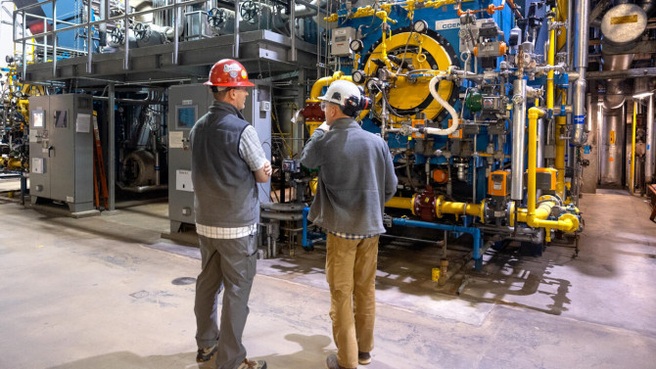
Cornell University plans to invest $1.1 billion over 40 years to overhaul the system that heats and powers more than 150 buildings on its Ithaca campus. The first five years would account for $93 million, including work to replace 110-year-old steam pipes, expand campus cooling and improve building efficiency.
The plan calls for Cornell to shift campus heating to electricity and eventually end routine use of its natural gas-fired power plant. The Cornell Board of Trustees’ Buildings and Properties and Finance committees voted unanimously Oct. 15 to support the plan, according to the Cornell Chronicle.

Cornell will test storing summer heat underground
The university expects to drill up to five test boreholes in spring 2027. The pilot will test whether Cornell can store surplus heat underground in summer and recover it in winter, when campus buildings need it. Boreholes for the system could reach depths of up to 850 feet.
Stacey Edwards, who manages the utility transition program, said the pilot will give engineers data to refine the design and operation before Cornell builds a larger system. The first full system would go on East Campus, where it would initially store waste heat from the power plant and supply it to the College of Veterinary Medicine in winter.
A campuswide system could eventually include 1,800 boreholes in clusters of 150 to 200. Cornell would pair underground storage with heat pumps and solar thermal equipment. The university is also working with faculty and engineering students to find ways to use the installation in courses and student projects.
The plan leaves Cornell’s deeper Earth Source Heat geothermal project as a future option. Engineers found temperatures high enough at the Cornell University Borehole Observatory, but they would need more drilling to determine whether that approach can work.
Aging pipes and the power grid shape the timeline
Converting campus buildings from steam to hot water is already underway. The new plan would speed up that work. Cornell’s planning team estimated that keeping the existing utility system running and making essential repairs and upgrades would cost about 90% as much over 40 years, with little progress on cutting emissions.
Cole Tucker, Cornell’s associate vice president for energy and sustainability, led the team that modeled more than a dozen options. The university consulted campus and Ithaca community members, other institutions, industry partners and state agencies. Jacobs Engineering helped assess which options could be built and operated on campus.
Cornell says the proposed mix of underground heat storage and heat pumps would put less strain on the state’s electric grid than an approach that relied on electric boilers. The transition is part of Cornell’s effort to reach carbon neutrality by 2035 and respond to New York’s Climate Leadership and Community Protection Act.
The existing plant generates electricity and heat for campus using natural gas, with fuel oil as a backup. Cornell says the timing of an end to routine operations will depend on how quickly New York adds cleaner power. University planners say switching too early could shift emissions from campus to less efficient power plants elsewhere in the state.
Cornell plans to revisit the pace of the transition as technology, funding opportunities and state requirements change. The spring drilling is the next test of whether underground storage can serve a larger share of the campus.
Make FL1 part of your day.
Local reporting. Useful updates. More ways to stay close to your community.
Go ad-free
Support independent local reporting and enjoy FL1 without display ads.
$4.99 / month
Become a member →Cancel anytime. Third-party media players may contain ads.Get the daily briefing
Start your morning with the headlines that matter across the Finger Lakes.
Find more FL1 on Google
Choose FingerLakes1.com as a preferred source to see more of our reporting in your Google news results.

FingerLakes1.com is the region’s leading all-digital news publication. The company was founded in 1998 and has been keeping residents informed for more than two decades. Have a lead? Send it to news@fingerlakes1.com.