

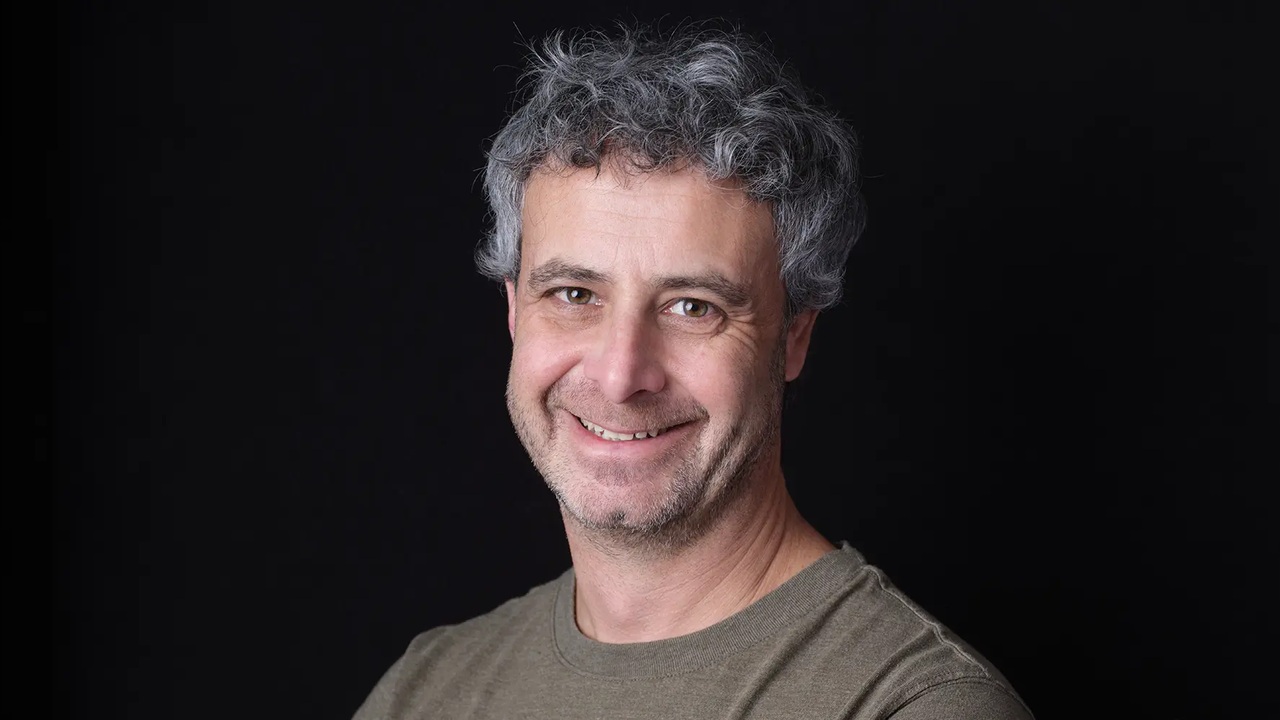
Hobart and William Smith Colleges professor Daniel Graham is examining how the brain routes information in a new book review that connects an emerging area of neuroscience with his own research.
The professor of psychological science reviewed Michael Cole’s Brain Flows: How Network Dynamics Compose the Human Mind for The Transmitter, an online neuroscience publication. The review appeared Nov. 10, according to an HWS announcement.

Following signals across brain networks
Cole, a neuroscientist and professor at Rutgers University, uses the book to introduce a broad audience to research on signals moving among interconnected brain regions. Published by Princeton University Press, it describes how those changing interactions help produce thought and behavior.
According to HWS, Graham’s review praises Cole’s argument for studying the brain as a system that continually routes information and adjusts to changing demands. That perspective extends beyond looking at the separate computations performed by individual parts of the brain.
Graham also considers how Cole’s work fits into research using theoretical and computational approaches to trace signals through neural networks. HWS said Graham hopes the book will influence future research and how the public understands brain function.
The two researchers approach related questions with different tools. Cole has primarily studied information flow through brain imaging, while Graham uses computational models and simulations to examine communication across interconnected neural networks.
A continuing focus on communication
The review builds on ideas Graham has explored in earlier writing. In a previous article for The Transmitter, titled “It’s Time to Examine Neural Coding from the Message’s Point of View,” he argued that researchers could gain insight by studying the messages traveling through brain networks, alongside the activity of individual neurons.
His 2021 book, An Internet in Your Head: A New Paradigm for How the Brain Works, develops a related comparison. Published by Columbia University Press, it proposes using the internet’s interconnected systems for routing and transmitting information as a way to investigate the brain’s basic operations.
Hobart and William Smith Colleges
More reporting on this topic.
Explore this topic →Graham also writes about that perspective in a Psychology Today blog.
At HWS, much of his research is conducted with Yan Hao, an associate professor of mathematics and computer science. Their work examines human and other mammalian brains through computational, behavioral and theoretical methods, with a particular emphasis on visual coding.
Graham earned a doctorate in psychology and a master’s degree in physics from Cornell University, as well as a bachelor’s degree in physics from Middlebury College.

FingerLakes1.com is the region’s leading all-digital news publication. The company was founded in 1998 and has been keeping residents informed for more than two decades. Have a lead? Send it to news@fingerlakes1.com.