
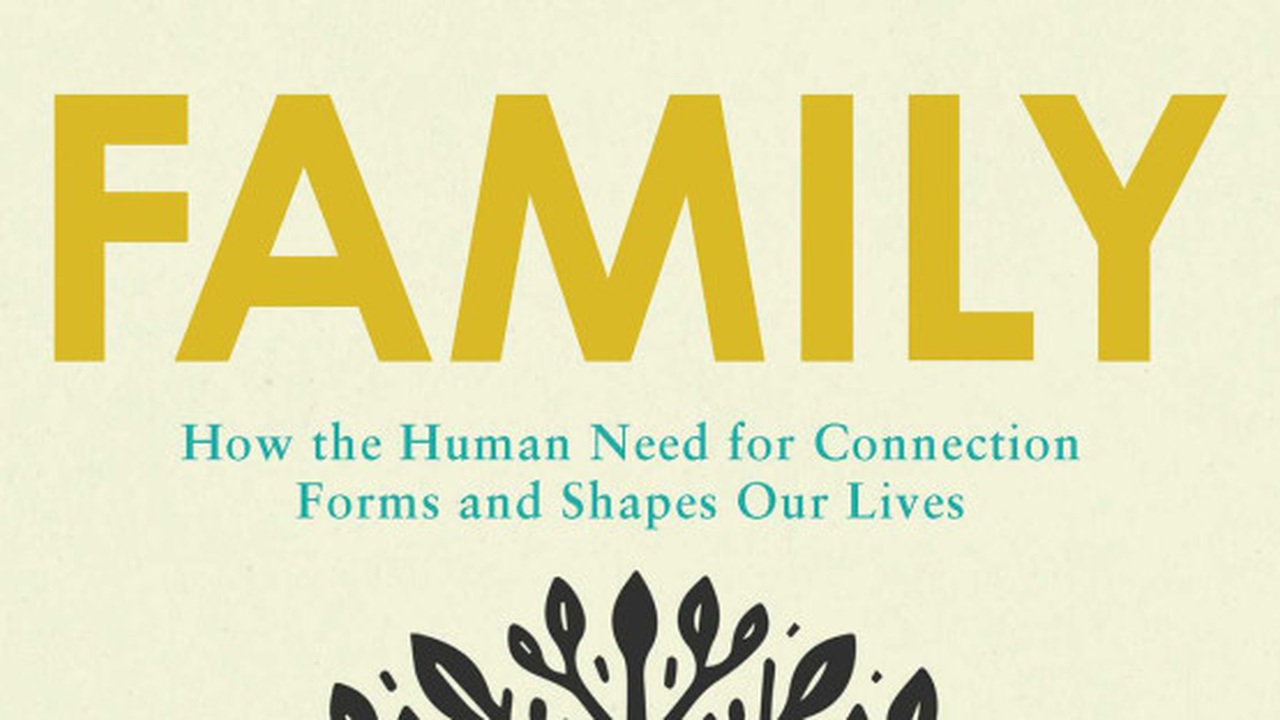
Family ties are shaped by marriage, adoption, choice and law as well as biology, Cornell anthropologist Meredith Small argues in a new book examining a universal but flexible human institution.
“Family: How the Human Need for Connection Forms and Shapes Our Lives,” published in October by Pegasus Books, considers how people build the relationships that organize their lives.
Small, a professor emerita of anthropology in Cornell's College of Arts and Sciences, discussed the book in an interview with the Cornell Chronicle. Her work draws together human history, cross-cultural comparisons and research on other primates to examine why family matters and how its forms vary.
The connections extend far into the past. Small points to the group of Australopithecus fossils found in Ethiopia known as the “First Family,” dating to about 3.3 million years ago, as one example discussed in the book.
She also explores Neolithic households from roughly 6,000 years ago. The historical sweep puts contemporary arguments about family structure alongside evidence that households and kinship arrangements have long taken different forms.
Changes over the past 70 years have widened people's choices, Small said. Birth control and declining fertility have affected decisions about whether to have children and how large a family should be.
Same-sex relationships, unmarried parents, divorce and remarriage also shape modern households. Blended families and chosen relationships show why family cannot be reduced to people who share genes or live under one roof.
Friends and even pets can become part of the network people understand as family, she said. Laws and cultural expectations help define those bonds, but individual relationships can extend beyond formal categories.
Small's comparisons with other primates show that kinship can organize social life in very different ways. Male chimpanzees generally remain in their birth groups while females leave; among macaques, males typically leave and females form enduring matrilineal relationships.
- Cornell semiconductor breaks bandgap record, opening path to new power electronics
- AGAINST THE BOARDS: Amerks drop Game 1 vs. Laval, College Lacrosse in the Quarterfinals (podcast)
- Cornell startups raise $34M as incubators drive real-world innovation
- Cornell Recognizes Top Student Workers at Inaugural Awards Ceremony
Macaques recognize relatives and maintain bonds through support and grooming. Small uses those contrasts to explore connections between relatedness, social behavior and the many ways groups stay together.
The book also asks readers to look beyond assumptions drawn from their own culture. Small described a reader's account of cousin marriage in Yemen as an example of how lineage and family relationships can carry meanings unfamiliar to outsiders.
Her goal is to encourage a broader understanding of family rather than a single definition that every society must follow.
The Cornell interview discusses the book's historical examples and Small's approach to the subject.

FingerLakes1.com is the region’s leading all-digital news publication. The company was founded in 1998 and has been keeping residents informed for more than two decades. Have a lead? Send it to news@fingerlakes1.com.