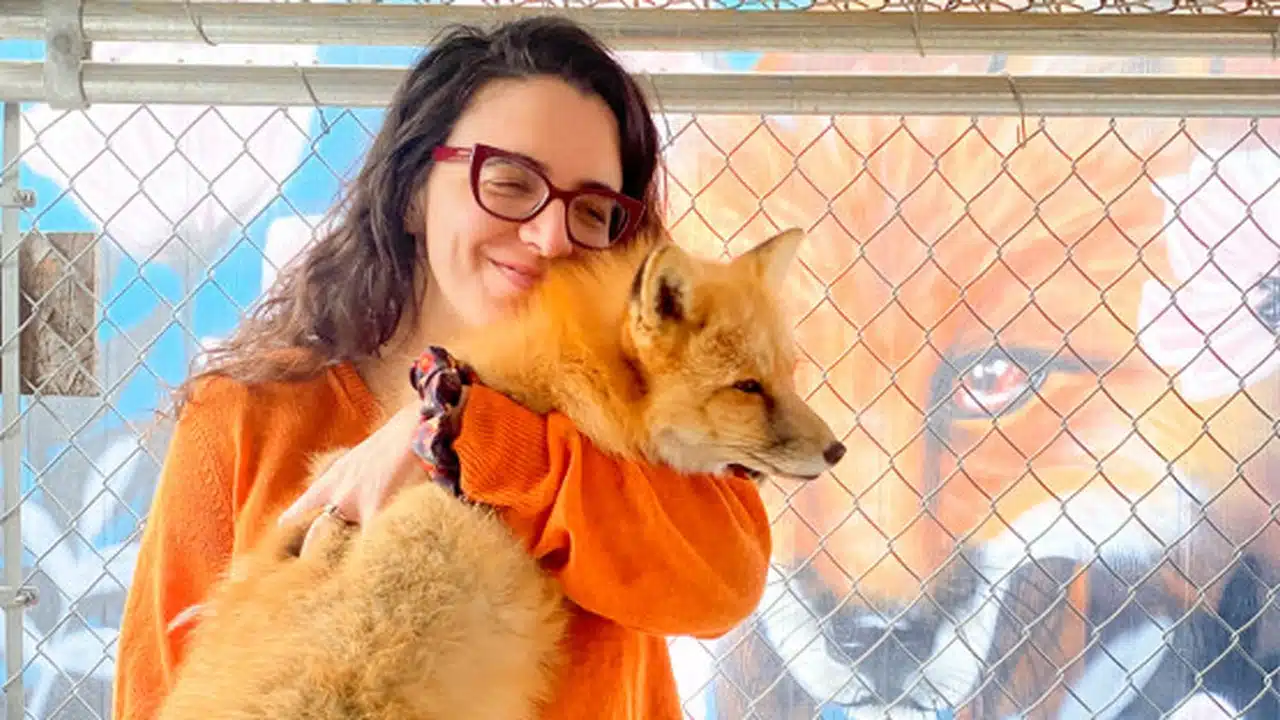
Foxes bred to be friendly toward people had fewer neurons expressing a receptor associated with aggression in a specific brain region, a Cornell-led study found.
The research compared nine silver fox brains — three each from tame, aggressive and wild foxes — and was published Nov. 2 in Current Biology, according to the Cornell Chronicle.

The findings identify a neurological difference associated with the animals' breeding history. They do not establish that manipulating those cells would change a fox's behavior; understanding why domestication produces the difference is a next step for the researchers.
A breeding experiment offers a comparison
The study draws on a long-running experiment begun in Siberia in the late 1950s. Russian geneticists observed that some farmed silver foxes were friendlier toward caretakers, while others were more aggressive.
Breeding the friendlier animals with one another produced litters that interacted with humans after six generations of selection. The tame foxes also developed traits associated with domestication, including floppy ears and shorter snouts.
Eirene Markenscoff-Papadimitriou, an assistant professor of molecular biology and genetics in Cornell's College of Agriculture and Life Sciences, said the researchers wanted to understand the brain changes underlying that rapid behavioral shift. She is the paper's senior author and a Rita Allen Foundation Scholar.
The team focused on the ventromedial hypothalamus, an area near the base of the brain. Work in mice has connected it with aggression, decisions about energy use, maternal instincts and social behavior.
Earlier mouse experiments used light to activate particular neurons expressing estrogen receptor alpha. Activating those cells can prompt a mouse to attack another mouse, giving the Cornell researchers a specific cell population to examine in foxes.
Preserved brains reveal a difference
Working with scientists at the Russian fox colony, the team obtained the nine preserved brains and cut them into thin slices. A fluorescent RNA technique identified markers for different cell types within the brain region.
Tame foxes had fewer neurons expressing the estrogen receptor than the comparison animals, Markenscoff-Papadimitriou said. Those neurons are known to form part of an aggression circuit in mice.
The small comparison provides evidence of a difference in that cell population, rather than a complete explanation of domestication. The researchers now want to understand how selection for behavior leads to changes in the ventromedial hypothalamus.
Co-author Anna Kukekova, an associate professor of genomic biology and animal sciences at the University of Illinois Urbana-Champaign, may investigate how mutations in different parts of the fox genome affect the neurons' development.
Markenscoff-Papadimitriou said the work also raises broader questions about how environmental pressures can alter brain structure over relatively short periods.
Jared Klein, a 2025 Cornell graduate and former research technician in her laboratory, is the first author. Other co-authors include Cornell veterinary professor Andrew Miller and Anastasiya Kharlamova, Anastasiya Vladirimova and Darya Shepeleva of the Russian Academy of Sciences' Institute of Cytology and Genetics.
Cornell's Center for Vertebrate Genomics funded the study.

FingerLakes1.com is the region’s leading all-digital news publication. The company was founded in 1998 and has been keeping residents informed for more than two decades. Have a lead? Send it to news@fingerlakes1.com.