Processor manufacturers are moving to raise prices simultaneously, creating a new source of pressure on the personal computer market. Intel has already increased the cost of some consumer chips by 5-20%, Qualcomm raised prices on Snapdragon X and X2 Elite by approximately 10% starting October 1, and AMD is preparing to increase the cost of Ryzen and EPYC by approximately 10% on average. The main reason is the rising cost of advanced manufacturing processes and packaging at TSMC, which is now being increasingly passed on to end manufacturers.
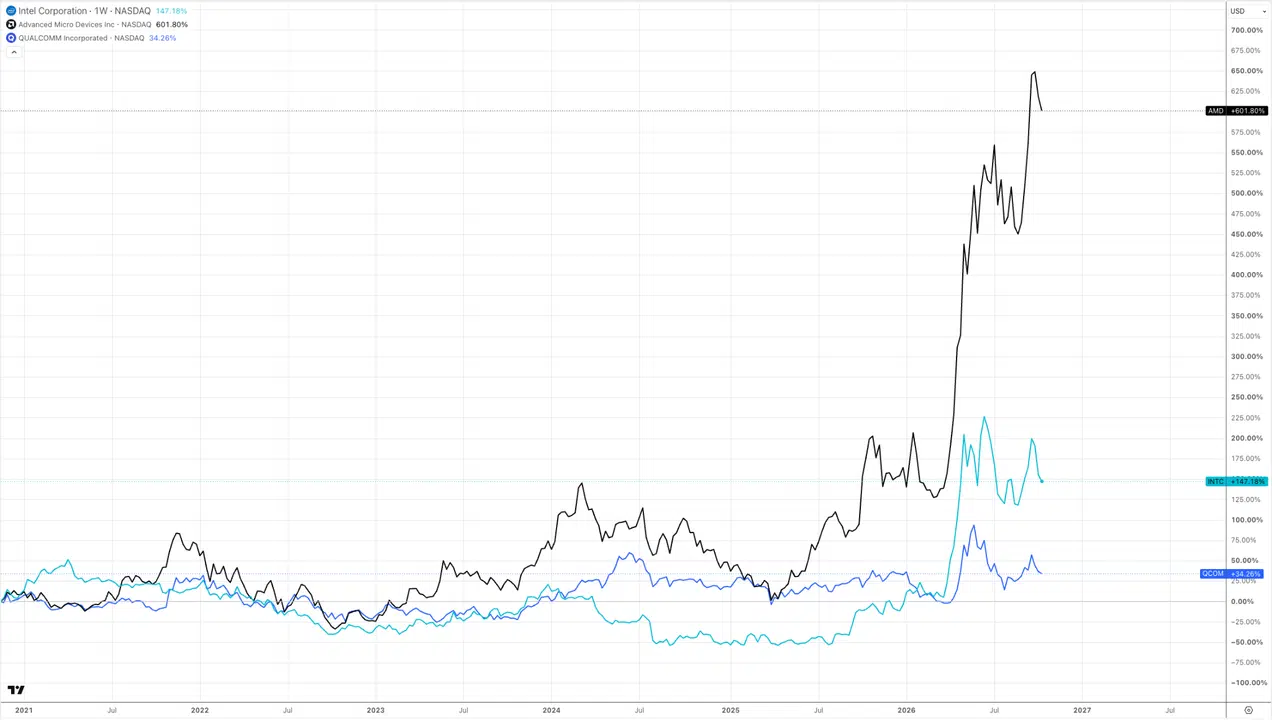
This is especially significant for the technology market against the backdrop of high investor interest in private companies and future listings like OpenAI IPO, where capital is still ready to flow into fast-growing digital businesses. However, the physical infrastructure on which this economy is built is becoming more expensive. In the case of chip manufacturers, the rising cost of production already has a direct impact on price lists, customer margins, and final device prices.
Intel has raised prices three times since late last year. Within the Panther Lake line, models featuring more powerful TSMC-produced N3E graphics have increased in price by 15-20%. Meteor Lake and Arrow Lake saw increases of 5-10%, while Alder Lake and Twin Lake rose by up to 20%. This demonstrates that cost pressures extend even to products Intel partially manufactures in-house.
Qualcomm finds itself in a similar position. As the company strives to expand its presence in the PC and server markets, its chips require increasingly complex and costly manufacturing, leading to a roughly 10% price increase for the Snapdragon X and X2 Elite since October. Meanwhile, AMD is ramping up production for its EPYC and Ryzen lines; however, its latest server processors are transitioning to a 2nm node, which demands more expensive manufacturing and advanced packaging.
An additional factor is demand. Agent-based AI workloads increase the need not only for GPUs, but also for central processors, so the market is simultaneously facing two forces: rising costs and higher demand. This allows manufacturers to partially shift costs to customers, but at the same time increases the risk of dampening final demand for PCs.

The situation may worsen next year. TSMC plans to further increase prices for advanced manufacturing processes by 5-10%, mature ones by 3-5%, and advanced packaging services by 10-15%. For processor manufacturers, this means further cost pressures, no matter how fast shipments grow. In a worst-case scenario, global shipments could fall by nearly 10% if manufacturers pass most of these additional costs on to consumers.
For a laptop costing about $900, the processor, DRAM, and SSD already account for roughly 68% of total component costs. Consequently, the simultaneous rise in processor and memory prices leaves manufacturers with limited options: raise retail prices, absorb lower margins, or reduce device specifications.
The mass market segment is particularly vulnerable due to higher consumer price sensitivity. Users may delay laptop replacements, opt for configurations with less memory, or switch to cheaper models. At the same time, DRAM shortages may persist owing to demand from AI servers, further constraining manufacturers’ ability to cut costs quickly.
Apple, meanwhile, is potentially in a better position. The company is preparing a new generation of MacBook Pros with OLED displays and M5 Pro and M5 Max processors, as well as an entry-level MacBook Pro based on the M6. The premium segment has historically made it easier to pass an increase in component costs on to the customer, especially when surging prices are accompanied by noticeable product updates.
Thus, the processor market is entering a phase where the rising cost of advanced manufacturing is cascading through the supply chain, potentially putting pressure on more stocks across the heatmap — from TSMC to Intel, AMD, and Qualcomm, down to laptop manufacturers and end consumers. While chip manufacturers can still use this as an opportunity to maintain revenue and margins, the primary risk for the broader PC market is no longer component availability, but how long consumers will be willing to absorb rising costs.

This content is brought to you by the FingerLakes1.com Team. Support our mission by visiting www.patreon.com/fl1 or learn how you send us your local content here.