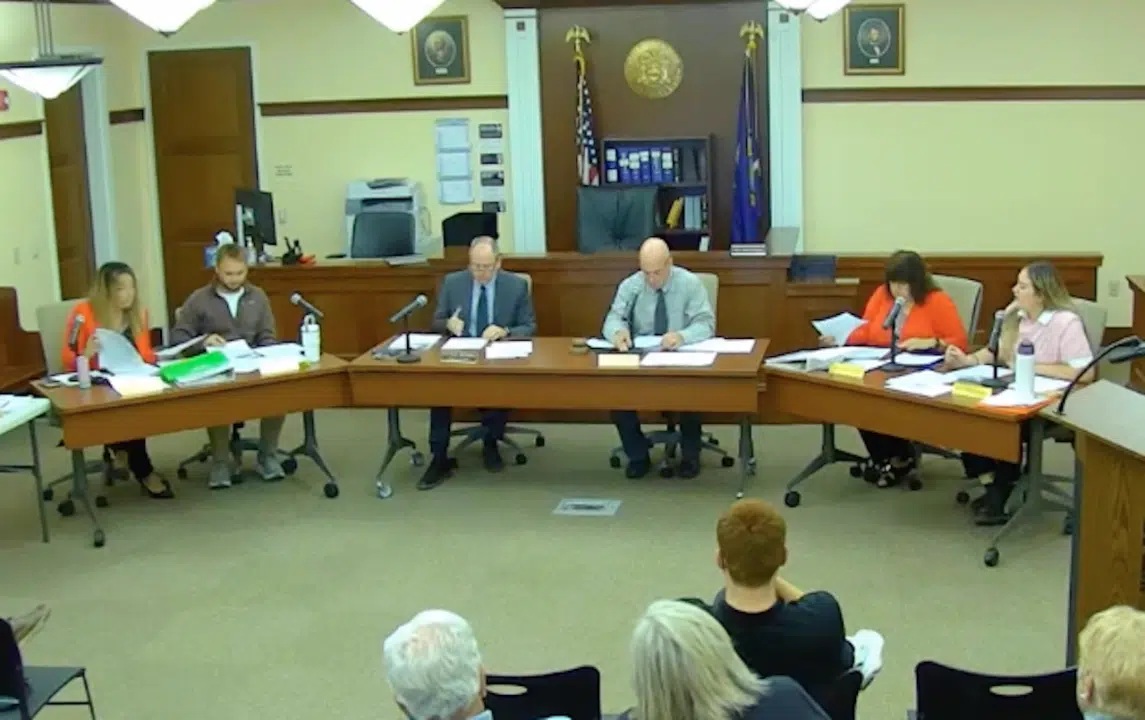
Seneca Falls officials agreed to cut overtime and other spending requests during two budget workshops, but remained divided over the future of the Department of Public Works and how to pay for water and sewer leadership and major equipment replacements.
The Oct. 19 and 21 discussions produced several agreements for the developing 2027 budget, including lower public works overtime and materials allowances. They also exposed larger unresolved costs: a $915,000 wastewater sludge press, a water pump replacement estimated at $450,000 and competing proposals to hire utility supervisors or contract for outside oversight.
Those workshop agreements do not constitute adoption of the final budget or authorization to purchase the equipment.
Public Works Director Peter Messmer defended his department’s staffing and equipment needs as council members questioned whether maintaining separate public works and highway operations duplicates costs.

Members discussed moving public works employees into the Highway Department, led by Superintendent Jeremy Wendt, and potentially moving Messmer into water operations. The discussion did not produce agreement on a reorganization.
Town Supervisor Frank Schmitter defended the department’s work, arguing that it has allowed the town to respond to residents’ complaints and complete projects. Councilman Jackson Puylara questioned how shifting employees between departments would produce savings if the town retained the same staff and responsibilities.
Messmer said public works has tackled drainage problems brought forward by residents, including flooding and deteriorated pipes. Some projects are difficult to predict because problems become apparent when residents report them or crews investigate underground conditions, he said.
Equipment sharing became a central point of contention.
Messmer presented a $77,000 equipment and operating request, including $20,000 for rentals. He said the remaining $57,000 covered expenses such as vehicle repairs, inspections, equipment maintenance and lease payments.
Puylara supported removing the rental allowance and relying on cooperation between departments.
“There should be no need to do equipment rental,” Puylara said. “We can work together.”
Members reached agreement on the $57,000 allowance, although opposition remained. That amount is higher than the $28,500 listed in the Oct. 16 tentative budget worksheet.
They also agreed to reduce public works overtime from $30,000 to $5,000 and materials from $55,000 to $50,000. Messmer recommended retaining an emergency overtime allowance, explaining that much of his employees’ snowplowing overtime is charged to the highway fund.
The debate also exposed confusion over bills charged to highway accounts.

Messmer said the location of a project determines which fund should pay for its materials. He said work within highway rights of way should be charged to highway funds, even when public works employees perform it.

Members questioned how Wendt could manage his budget if charges appeared for purchases he did not recognize. Messmer described recent coordination with Wendt on a Lake Road project as an example of how written plans and clearer communication could establish responsibilities before bills arrive.
Water and sewer leadership presented a separate spending decision.
Members discussed increasing the water leadership allowance from $120,000 to $130,000 and the sewer leadership allowance from $120,000 to $150,000. They also reviewed outside coverage estimated at roughly $165,000 to $180,000 annually for both systems.
The contracting discussion centered on obtaining qualified oversight while existing employees pursue additional certifications. Chief Water Treatment Plant Operator Lewis Archer and wastewater treatment plant operator Josh Sahler were central to the discussion about supporting current employees and their advancement.
Some members favored outside assistance as a temporary arrangement. Others questioned whether contracted oversight would provide enough help with daily operations.
Members acknowledged that the developing budget included money for both permanent leadership and outside coverage while the town considered its options. The staffing arrangement and contract costs remained unsettled.
Archer also described a high-lift water pump replacement estimated at $450,000. He said the existing pump is inoperable and that the state Department of Health had recommended addressing it.
Members discussed reserves and grants as potential funding sources, but left the financing unresolved. The discussion was not an authorization to purchase the pump.
Wastewater staff presented a $915,000 quote for a sludge press, up from the $850,000 tentative allocation. The equipment removes water from sewage sludge before disposal.
Staff described the existing press as old and unreliable. Members questioned financing and grant options, while staff discussed using revenue from the town’s leachate agreement. A purchase and funding arrangement remained unresolved.
Other utility adjustments drew agreement. Members supported reducing water engineering funding from $100,000 to $65,000, water purification overtime from about $28,599 to $20,000 and water chemicals from $160,000 to $140,000.
They also supported increasing water electricity funding from $80,000 to $150,000 after reviewing spending that indicated the original request would be insufficient.
In buildings operations, members agreed to reduce overtime from $8,000 to $3,000 and maintenance and repairs from $25,000 to $10,000. They increased the utilities allowance from $35,000 to $45,000.
The first workshop included recreation staffing changes presented by Recreation Director Missy Jones. Members supported two part-time cleaners rather than adding a full-time cleaner, discussed a part-time recreation leader and reduced the lifeguard allowance from $55,000 to $45,000.

FingerLakes1.com is the region’s leading all-digital news publication. The company was founded in 1998 and has been keeping residents informed for more than two decades. Have a lead? Send it to news@fingerlakes1.com.