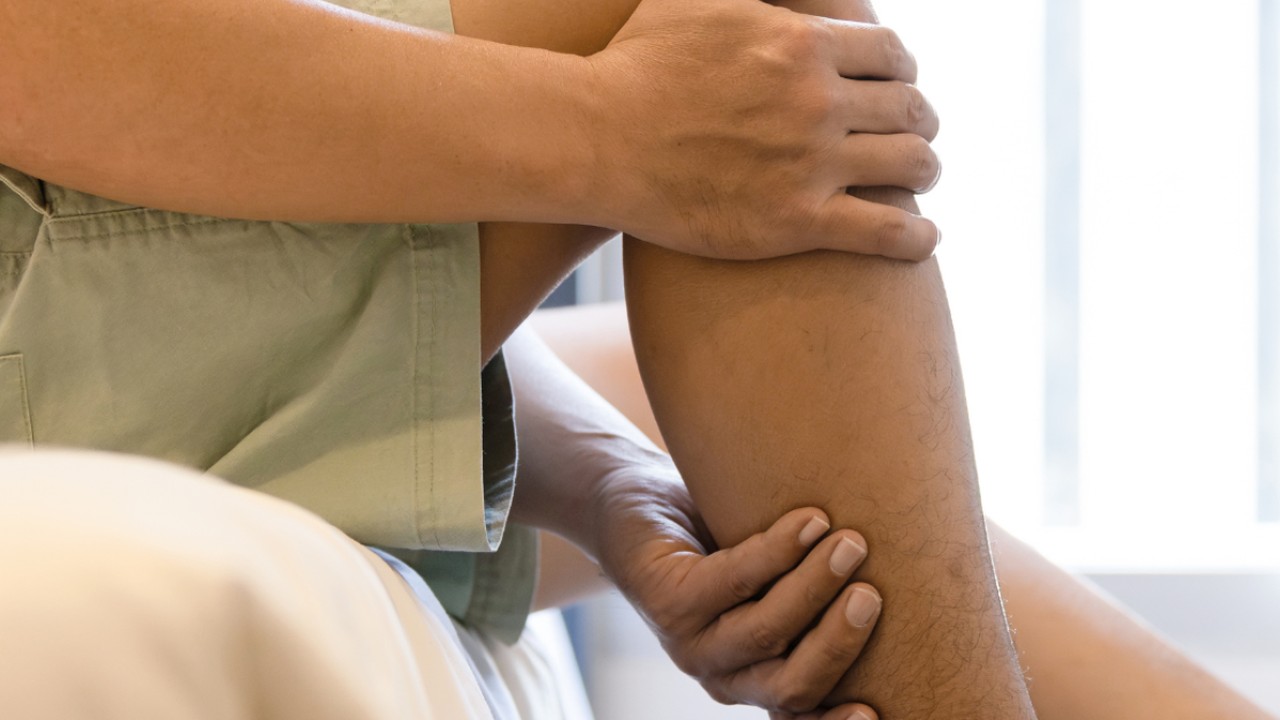
Unexplained swelling, pain, warmth or redness in a leg can signal a blood clot that needs prompt medical attention. Trouble breathing, chest pain, coughing up blood or fainting can signal a clot in the lungs and require emergency care.
Rochester Regional Health vascular surgeon Ryan Lydon and UR Medicine Vein Care Center medical director Jennifer Ellis describe the warning signs and treatment options in recent Rochester Regional Health and UR Medicine patient guides.

Deep-vein and lung clots
Deep vein thrombosis, or DVT, occurs when a clot forms in a deep vein, commonly in the lower leg, thigh or pelvis, though it can also occur in an arm. A pulmonary embolism occurs when part of a clot breaks free and travels to the lungs, blocking blood flow.
About half of people with DVT have no symptoms, according to the Centers for Disease Control and Prevention. For those who do, swelling, pain or tenderness, warmth and redness or discoloration in the affected limb are common warning signs.
Possible signs of a pulmonary embolism include difficulty breathing, a fast or irregular heartbeat, chest discomfort that worsens with deep breathing or coughing, coughing up blood, lightheadedness, fainting or very low blood pressure. These symptoms call for immediate medical attention.
Clot risks include recent surgery or injury, prolonged immobility or travel, cancer, pregnancy, obesity, family history and estrogen-containing birth control or hormone therapy. Lydon advises people with risk factors to seek care for unexplained calf or leg pain and swelling.
Tests and treatment
An ultrasound is commonly used to check for DVT. CDC guidance on diagnosis and treatment identifies duplex ultrasound as the standard imaging test for DVT and a specialized CT scan of lung blood vessels as the standard test for pulmonary embolism.
Blood thinners, also called anticoagulants, are the most common treatment. They reduce clotting, help prevent an existing clot from growing and lower the risk of new clots while the body gradually reabsorbs the clot. These medicines can cause bleeding and require monitoring.
UR Medicine describes treatment lasting three to six months for many patients. The CDC notes that some people need medication long term to prevent further clots.
For selected patients with extensive clotting, Lydon described minimally invasive procedures that use imaging to guide treatment. For leg clots, a needle entry into a vein behind the knee allows the care team to examine the venous system and assess the clot’s location and extent.
Procedural options include suction or mechanical clot removal and medicines that dissolve clots. Clot-dissolving drugs carry a higher bleeding risk than anticoagulants and are reserved for severe cases, according to the CDC. A filter in the large vein carrying blood toward the heart can trap a traveling clot before it reaches the lungs when anticoagulants cannot be used or do not work well enough.
Pulmonary embolism can damage the lungs and reduce the oxygen reaching other organs. Extensive DVT can leave patients with chronic leg pain and swelling.
Clots near the skin also need assessment
Superficial vein thrombosis forms in veins close to the skin and can cause pain, tenderness, redness and swelling. These clots are generally less serious than deep-vein clots, but a small proportion can extend into deep veins, according to Thrombosis Canada’s patient guidance.
Care can include warm compresses for very small clots, leg elevation, compression and anti-inflammatory medicine. Some patients need anticoagulants, depending on their condition.
Regular activity and breaks from prolonged sitting can help reduce clot risk. For travel lasting more than four hours, the CDC recommends walking every one to two hours and exercising the legs while seated. People at increased risk should ask their clinician whether compression stockings or preventive medication are appropriate.

FingerLakes1.com is the region’s leading all-digital news publication. The company was founded in 1998 and has been keeping residents informed for more than two decades. Have a lead? Send it to news@fingerlakes1.com.