


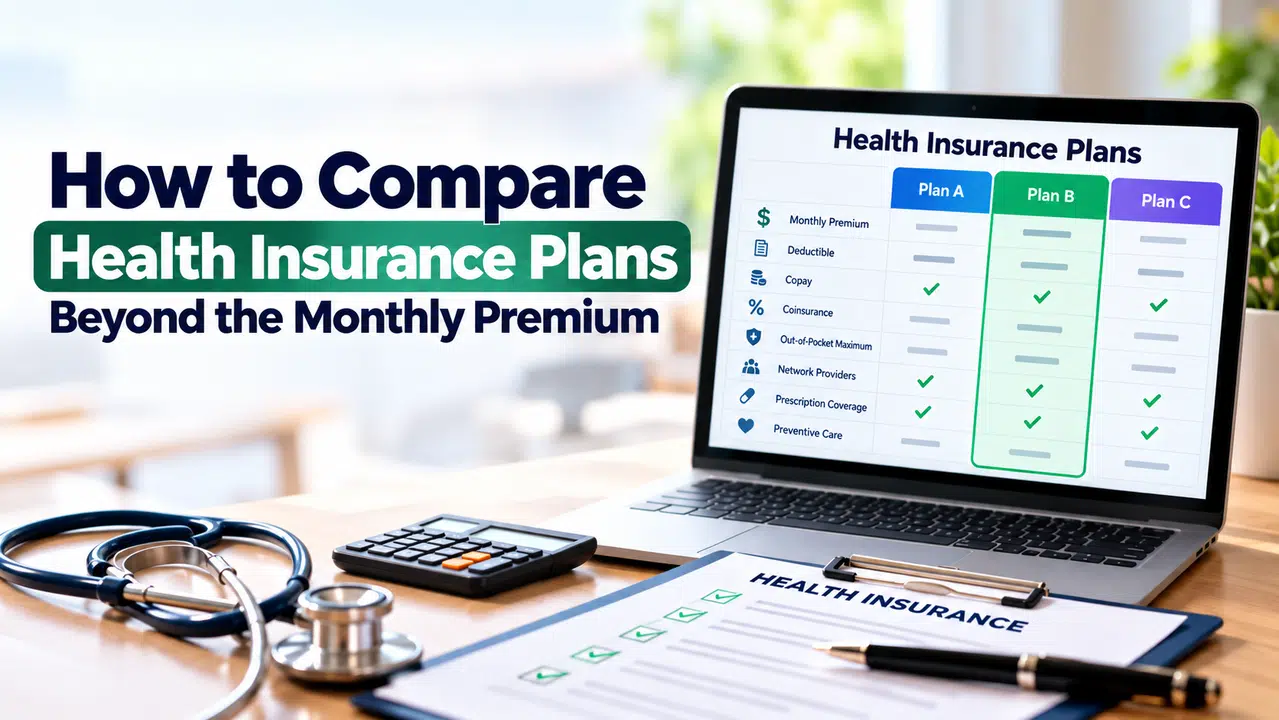
Choosing a health insurance plan means looking beyond just the monthly premium. It is easy to budget, compare, and choose the least expensive option. While premiums are easy to compare, they rarely tell the complete story. You should look beyond the monthly premium and consider other factors that affect healthcare expenses and coverage quality to make the right decision.
Even if you are planning to stick with the same premium coverage, comparing health insurance plans can help you choose the one that best suits your medical needs.
Start With the Total Cost of Care
Estimating the total annual cost is the most helpful way to compare plans. This includes the annual premiums you will pay as well as any potential out-of-pocket costs.
Use this simple formula:
Annual premiums + expected out-of-pocket spending = total yearly cost
Take a look at the previous year and ask yourself questions like:
- How many times did you visit the doctor?
- Did you take prescribed medication regularly?
- Has anyone in your family undergone surgery, visited the emergency room, or is getting ongoing treatment?
A low-premium, high-deductible plan can be less expensive overall if you don’t use healthcare too often. However, A higher premium with lower cost-sharing usually wins if you have a planned surgery, a small child, or a chronic illness.
Understand the Deductible
The deductible is the amount you must pay for covered services before the insurer begins making contributions. For example, if your plan has a $5,000 deductible, you are responsible for paying for the first 5,000 of covered services. Low-premium plans usually cover high deductibles to balance the math.
Ask yourself a practical question:
Could you afford to cover that deductible if a medical crisis happened tomorrow?
A plan you can’t afford to use isn’t protecting you. Furthermore, find out which services are deductible-free. Many plans cover preventive treatment and routine primary care visits before the deductible is met.
Use a Healthcare Insurance Plan Comparison Tool
A health insurance plan comparison tool concentrates on what each plan actually covers. This tool lets you compare different plans side by side, making differences in coverage, networks, and benefits easier to understand.
What These Tools Show
- Premiums, deductibles, copays, coinsurance, and out-of-pocket maximums in one table.
- Standardized plan descriptions, covered benefits, and exclusions.
- Verification of network participation.
- Ratings or customer satisfaction scores.
Moreover, a health insurance plan comparison tool covers the pros and cons of the option you choose, including what you are expected to pay and what you will receive.
Check the Out-of-Pocket Maximum
The out-of-pocket maximum is the amount you will have to pay for covered, in-network treatment over the course of a year. After you hit it, the insurer pays 100% of covered services.
Add the annual premiums to the out-of-pocket maximum when analyzing worst-case scenarios. That’s your reasonable annual limit.
A plan with a modest premium but a high maximum could hurt your finances during a serious illness. On the other hand, a moderate premium with a smaller limit provides better protection.
Check Network Providers
A plan is only as useful as the doctors and hospitals are willing to accept it. Make sure your chosen hospitals, doctors, and specialists are in-network before signing up. Also check:
Network Type
While PPOs provide more flexibility at a higher cost, HMOs usually ask you to stay in-network to get referrals.
Out-Of-Network Coverage
Some policies reimburse at a reduced rate, while others cover nothing at all except in emergencies.
Geographic Reach
Consider coverage outside your home if you travel or have family elsewhere.
Don’t rely only on insurer marketing. Since a single insurer may offer multiple plans with different networks, call your doctor’s office, not the insurance company, to confirm if they accept the specific plan.
Review Benefits and Exclusions
Not every health insurance plan offers the same level of coverage. Some policies exclude treatments, therapies, or services, while others may provide full coverage. Carefully review the policy’s benefits and exclusions summary. Areas to review include:
- Mental health services
- Physical therapy
- Rehabilitation programs
- Emergency care
- Maternity and newborn care
- Telehealth services
- Alternative treatments
- Home healthcare services
Understanding what is and isn’t covered can help you avoid unpleasant surprises when you need medical care. A less expensive plan may look attractive at first glance, but it could have major coverage gaps.
Analyze Preventive Care Coverage
If you take regular medications, check the plan’s formulary, which is a list of covered drugs. Drugs are categorized into tiers, with specialty drugs being the most expensive and generics being the least expensive.
Check if your prescriptions are listed, what tier they belong to, and whether step therapy (taking a less expensive drug first) or prior authorization is required. A plan that does not cover a necessary medicine can quietly erase any premium savings.
Review the preventative care benefits offered when comparing plans. Strong preventive coverage increases early detection of health problems and lowers the chance of later, costly medical procedures.
Final Thoughts!
Comparing health insurance plans only based on monthly premiums can lead to costly mistakes. The most affordable premium does not necessarily provide the best protection or value. A detailed review should include deductibles, copayments, coinsurance, out-of-pocket maximums, provider networks, prescription drug coverage, preventive care benefits, exclusions, customer service quality, and additional plan features. In the end, the best health insurance plan is the one that offers the best combination of cost, coverage, and peace of mind, not one with the lowest monthly cost.

This content is brought to you by the FingerLakes1.com Team. Support our mission by visiting www.patreon.com/fl1 or learn how you send us your local content here.