


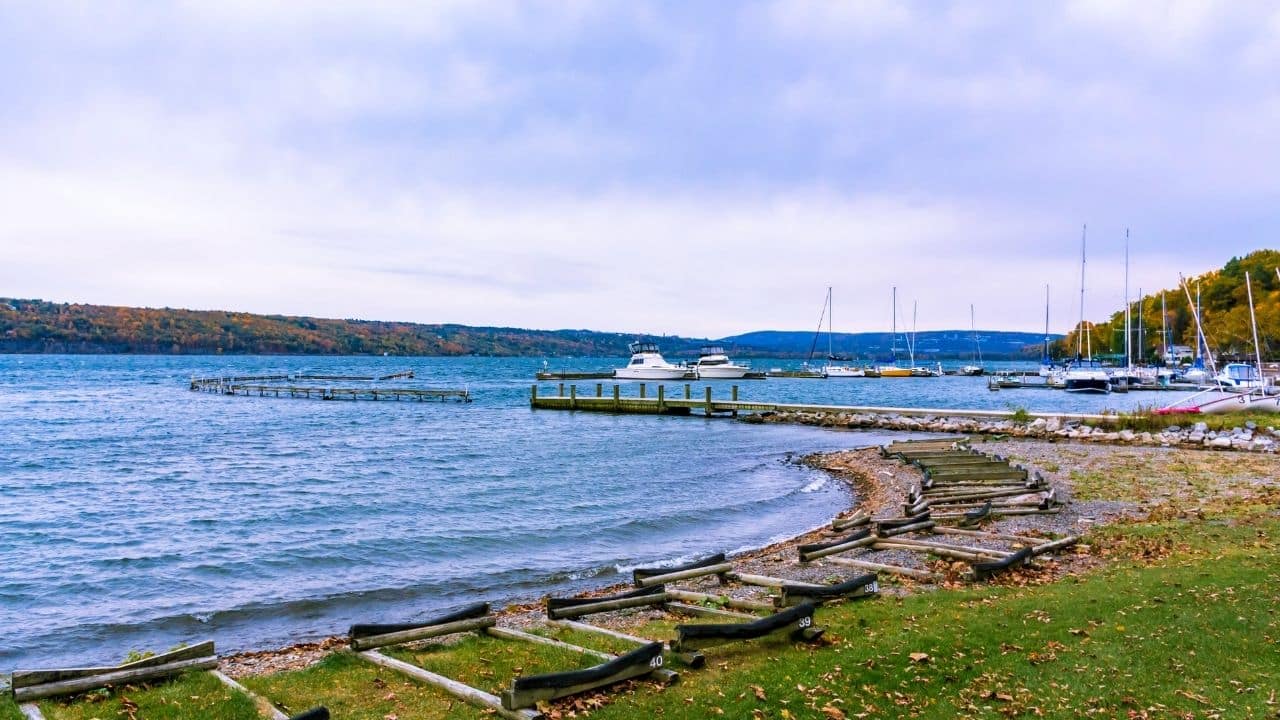
Livingston County health officials have issued a lake-wide harmful algal bloom advisory for Conesus Lake after blooms were observed around the shoreline and extending into open water.
The county Department of Health said people and animals should stay out of water where blooms are visible and avoid areas where a bloom is suspected. The public water supply remains safe to drink.

Blooms can shift or disappear quickly as wind and environmental conditions change. They may turn the water green or create thick surface scums, but state officials warn that harmful and harmless blooms can be difficult to distinguish by sight.
Some harmful algal blooms can produce toxins that make people and animals sick. Possible symptoms include diarrhea, nausea, vomiting, skin, eye or throat irritation, allergic reactions and breathing difficulties.
The county advised residents not to swim, wade, boat or fish near a suspected bloom. People also should not eat fish caught from water where a bloom is present or use untreated lake water for drinking or cooking.
Anyone who comes into contact with a bloom should rinse with clean water. People experiencing symptoms after a possible exposure should contact a medical provider.
Children and pets can be more susceptible to the effects of harmful algal blooms. The state Department of Environmental Conservation recommends keeping pets and livestock away from discolored water, floating mats and surface scums and rinsing animals with clean water after a possible exposure.
Pet owners should seek veterinary help if an animal shows signs of distress after contact with a suspected bloom. Algal cells can cling to fur and may be swallowed when an animal cleans itself.
Residents can report a bloom or seek more information from the Livingston County Department of Health at 585-243-7280. Reports also may be emailed to county Watershed Inspector Don Maryanski at donmaryanski@livingstoncountyny.gov.
State information about bloom locations, appearance and health precautions is available through the Department of Health and Department of Environmental Conservation websites.

FingerLakes1.com is the region’s leading all-digital news publication. The company was founded in 1998 and has been keeping residents informed for more than two decades. Have a lead? Send it to news@fingerlakes1.com.