


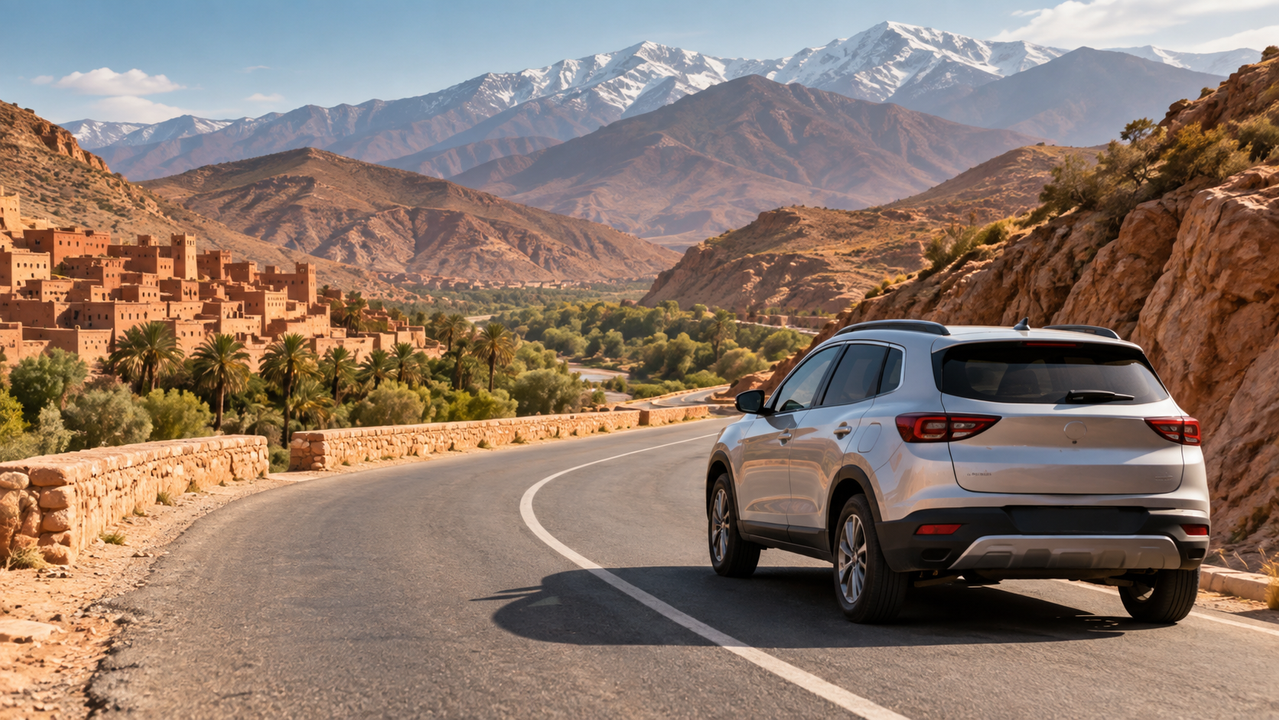
Morocco doesn’t give up its best moments to a bus schedule. The Atlas Mountains, the coastal town of Essaouira, the desert routes toward Merzouga – these are the places travelers tend to remember most, and none of them are exactly on the main tourist bus line. Public transportation handles the big cities fine. Head toward a smaller village, a mountain pass, or the edge of the Sahara, though, and options thin out fast.
A rental car fixes that problem. Stop for a coastal viewpoint. Stay an extra hour in a market town. Take the long way around because the road looked interesting. None of that works on someone else’s timetable, which is exactly why so many visitors choose to drive themselves rather than lock into a fixed group schedule.
What You Need Before You Book
The paperwork side of renting in Morocco is manageable, but a few requirements tend to surprise first-timers. Most rental companies will ask for:
- A valid driver’s license held for at least one year
- An International Driving Permit (IDP) – required alongside a national license for most drivers whose license isn’t in Arabic or French
- A passport for identification
- A credit card in the renter’s own name, for the security deposit
- A minimum age, usually around 21, with a young-driver surcharge common under 25
Policies on age limits and deposits vary between companies and vehicle classes, so it’s worth confirming the specifics directly with whichever provider you book through, rather than assuming they all work the same way.
Understanding Morocco’s Road Rules
Driving happens on the right-hand side, which will feel familiar to most North American and European visitors. Road signs follow French conventions and are often bilingual in Arabic and French. A little French goes a long way here – sens unique means one-way, stationnement interdit means no parking, and recognizing both will save some confusion on unfamiliar streets.
Speed limits are posted in kilometers per hour, and radar enforcement is common in and around cities. Seatbelts are required for everyone in the car, phone use behind the wheel is banned, and roundabouts – plentiful in urban areas – generally give right-of-way to traffic already inside the circle. That last rule catches out a fair number of visitors used to the opposite convention back home.
Gas stations line the major highways and show up reliably in cities, but they get sparse once you’re deep in the mountains or the desert. Plan fuel stops ahead of time on rural routes rather than counting on finding a station along the way.
Best Routes to Explore by Car
Some of Morocco’s best driving happens between destinations, not just at them. The road from Marrakech to Essaouira cuts through groves of argan trees before opening up onto the Atlantic coast – an easy day trip, or worth an overnight stay. Go the other direction and the High Atlas Mountains lead toward Ouarzazate, winding through dramatic passes and Berber villages, with the Ait Benhaddou kasbah making a natural stop along the way.
Travelers with a few extra days might push further, from Marrakech toward Merzouga, through the Dades and Todra gorges before finally reaching the Sahara’s dunes. It’s a long drive between towns, so an early start and a full tank matter more here than almost anywhere else on the map.
Tips for a Smooth Rental Experience
Booking early – especially in peak season – tends to open up better rates and a wider pick of vehicles. Comparing providers ahead of time on a site that lets you rent a car Morocco trip in advance also makes it easier to line up pricing, vehicle type, and pickup location before you land, rather than sorting it out at the airport counter. At pickup, it’s worth photographing the car for any existing damage and actually reading the insurance terms, since coverage and deductibles differ noticeably between providers. Manual transmission is still the default in Morocco; automatics exist but are worth confirming ahead of time rather than assuming one will be waiting.
Parking gets tighter in the old city centers. The medinas of Marrakech, Fez, and Chefchaouen close large sections off to vehicles entirely, so booking a place with private parking – or scoping out a guarded lot nearby – saves a headache on arrival.
Final Thoughts
Rent a car in Morocco and the country stops being something seen through a bus window. The paperwork takes a bit of planning, the road rules make sense within the first hour behind the wheel, and what’s on the other side of that effort – mountain roads, quiet coastal towns, desert routes reached entirely on your own schedule – tends to be worth it. For anyone weighing how to see Morocco next, driving it yourself is one of the more flexible ways to do it, and one of the few that rewards getting a little lost along the way.

This content is brought to you by the FingerLakes1.com Team. Support our mission by visiting www.patreon.com/fl1 or learn how you send us your local content here.