


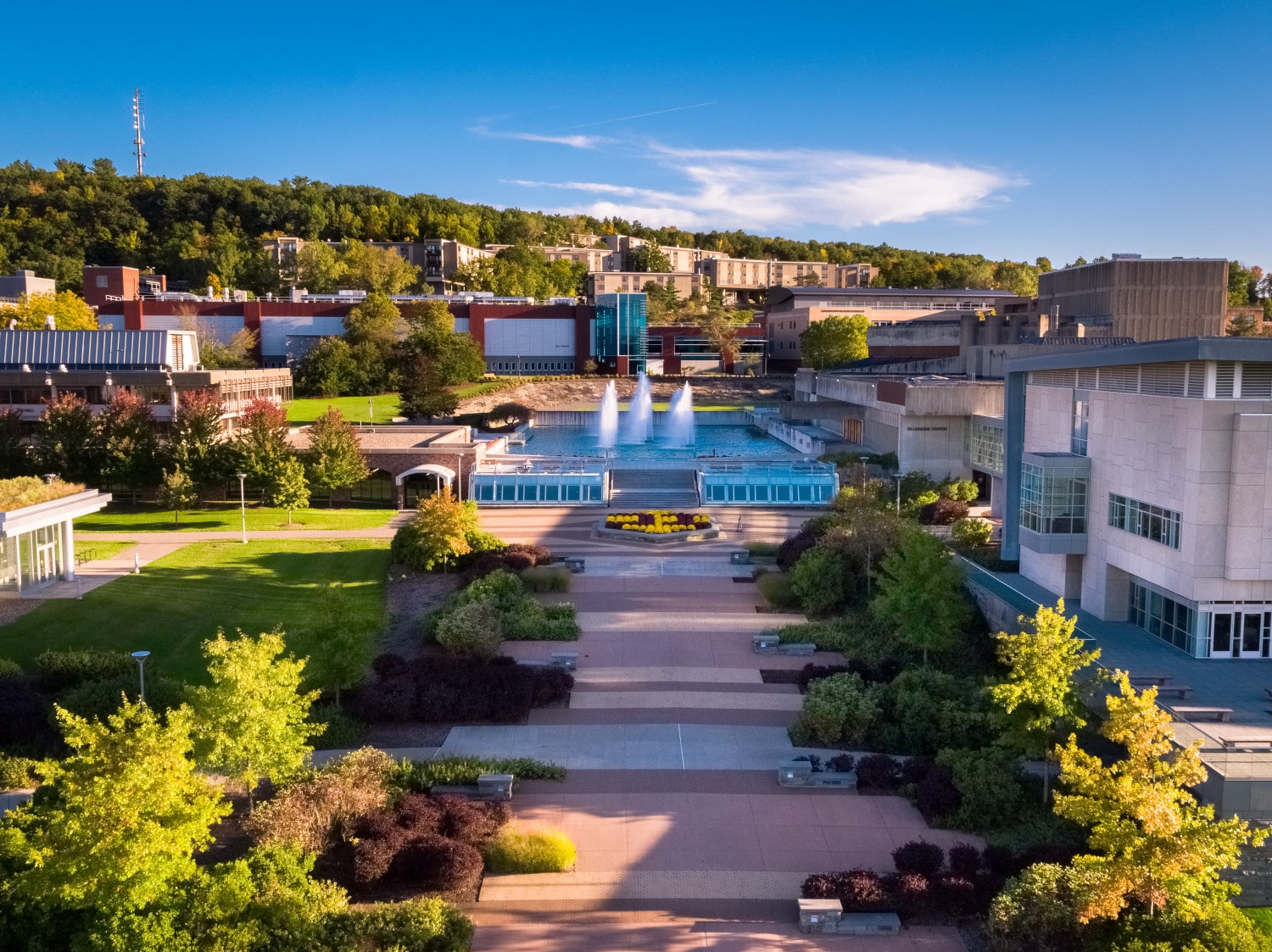
Nearly 125 Ithaca College employees work year-round to maintain a campus with the infrastructure and daily demands of a small city.
The buildings and grounds operation supports more than 6,000 students, faculty and staff, including more than 3,000 people who live on campus during the academic year.
Infrastructure runs around the clock
Facilities crews maintain 7,500 locked doors, 36 acres of parking lots, seven miles of roadway and more than 10 miles of sidewalks. They also clean 1.2 million square feet of nonresidential space each day.
The college collects and processes about 1,200 tons of trash, recycling and compost annually. At busy times, as many as 30 facilities attendants may be cleaning buildings while more than a dozen grounds employees handle snow or landscaping.
Ernie McClatchie, associate vice president of facilities, recalled a winter power failure that damaged underground cables serving the Park Center for Business and Sustainable Enterprise and other buildings.
College electricians, maintenance workers and grounds crews pulled out hundreds of feet of failed cable, installed replacement cable and restored power by 8 p.m. McClatchie said the response was one of his proudest moments at the college.
The department also monitors airflow in science laboratory hoods to meet safety standards and tracks cooler temperatures in the human anatomy lab. Those systems require immediate attention when alarms indicate a problem.
Work changes with the academic calendar
The start of a semester brings residence-hall work orders involving lofted beds, plumbing and locks. Crews also prepare boilers before the seasonal switch from air conditioning to heat.
Winter break provides time for painting, carpet replacement and smaller renovations. Throughout the winter, grounds employees focus on snow and ice removal.
In spring, crews clean and sanitize 13 cooling towers before refilling them. They watch forecasts carefully because filling the equipment too early can leave it vulnerable to freezing temperatures.
Preparing the Dillingham Center fountains takes several weeks of pipe cleaning, pressure washing and electrical work. Commencement planning begins in March with mulching, flower planting and extra maintenance at the Athletics and Events Center.
Facilities employees also respond to special academic needs. A grounds crew recently trimmed trees near the Clinton B. Ford Observatory to improve views of the sky while limiting disruption to the surrounding natural area.
The carpentry team has also begun repairing some residence-hall furniture in-house instead of sending every item to an outside company. College officials said work such as replacing damaged dresser tops can save time and money.
Sustainability shapes upgrades
The college's Office of Energy Management and Sustainability is part of the facilities division, a structure officials said supports coordination on long-term projects.
Changes have included more environmentally sensitive cleaning products, reduced chemical spraying and additional electric vehicles. In December 2025, the college completed a project that added 26 public Level 2 charging stations on Farm Pond Road.
Director Scott Doyle said facilities staff help determine whether proposed energy projects fit existing utilities and safety constraints. Their recommendations also shape phased improvements, such as insulation and boiler upgrades that could prepare a building for future geothermal heating and cooling.
The department builds a yearly capital list for the Board of Trustees based on deferred maintenance, aging equipment and campus priorities.
Facilities leaders said those plans are developed with supervisors who identify trouble spots and equipment that has exceeded its expected service life. Proposed projects are then weighed against the needs of classrooms, housing and other campus operations.
Crews also carry out traditions such as the New Year's Eve change of the illuminated numbers in the East and West Tower residence halls. The setup takes several employees about 12 hours and can require as many as 30 people to switch dozens of lights at midnight.
The tower display now uses 15-watt LED bulbs instead of older 300-watt bulbs. Staff members test the pattern briefly before the public display and leave the new year lit until the first Monday after New Year's Day.
The tradition began in 1965. Staff members still use a longstanding binder to map which residence-hall windows need lights, and changing one digit can require 67 individual lights to be switched on or off.

FingerLakes1.com is the region’s leading all-digital news publication. The company was founded in 1998 and has been keeping residents informed for more than two decades. Have a lead? Send it to news@fingerlakes1.com.