

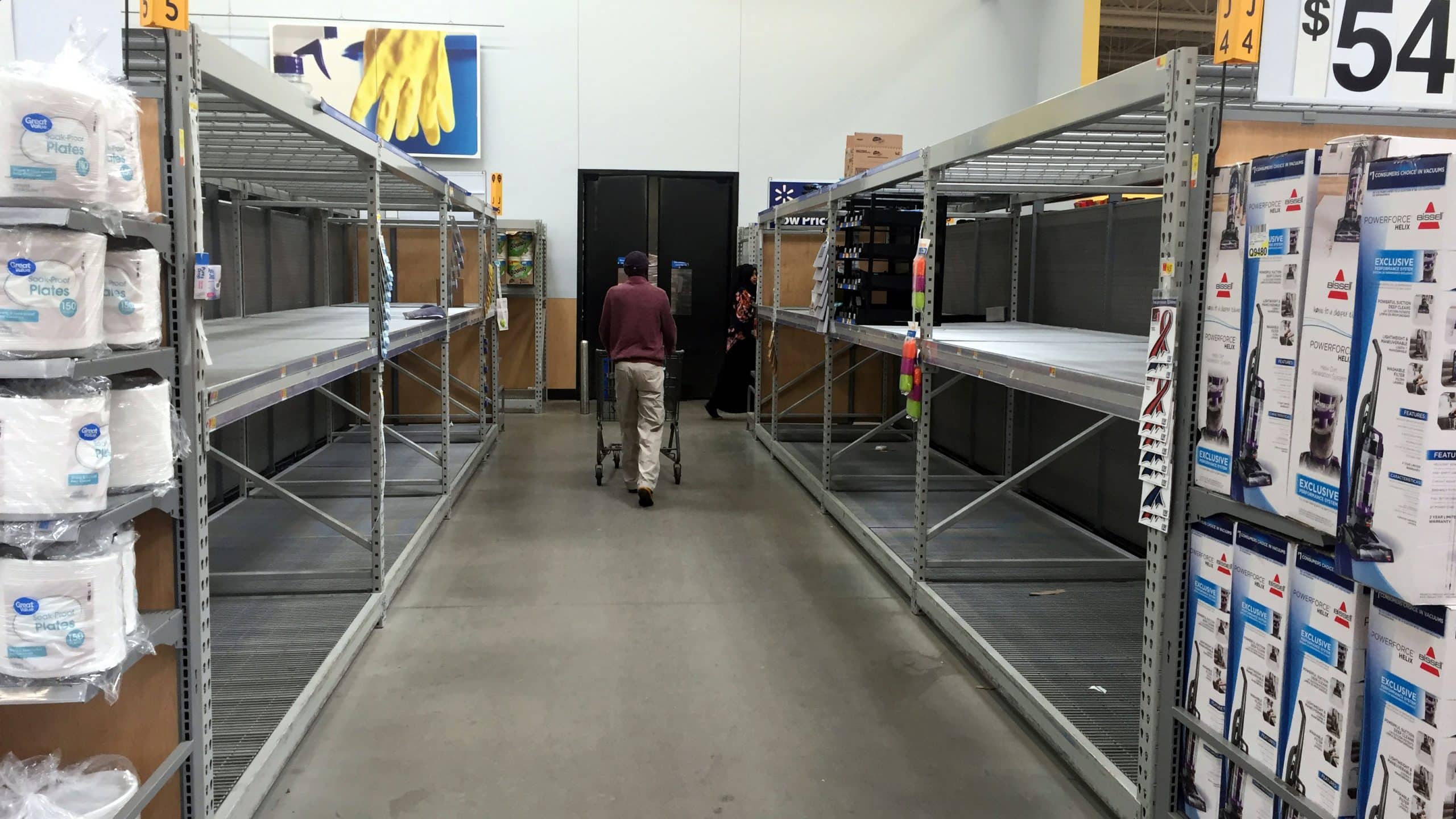
Toilet paper prices could be headed higher again as new tariffs increase the cost of a key raw material used to manufacture some of the softest and most expensive products on store shelves.
The United States imposed a 50% tariff in August on certain Canadian imports, including Northern Bleached Softwood Kraft pulp, or NBSK. The material is an important ingredient in premium toilet paper and paper towels, and researchers say the added cost could eventually reach consumers.

Why toilet paper prices could go up
Toilet paper sold in the United States is largely manufactured domestically, but that doesn’t mean its supply chain is entirely American.
Manufacturers rely on different types of wood pulp to give toilet tissue the strength, softness and absorbency consumers expect. Canada is a major supplier of the softwood pulp used in those products.
Researchers at North Carolina State University say Canadian NBSK typically accounts for about 15% to 30% of the fiber mixture in premium bath tissue.
That makes the new tariff potentially significant even though Canadian pulp represents only part of the final product.
Ronalds Gonzalez, an associate professor in NC State’s Department of Forest Biomaterials, estimated the tariff could increase manufacturing costs for premium toilet tissue by roughly 11% to 20%.
That doesn’t mean a package of toilet paper will automatically become 20% more expensive. Retail prices depend on how much of the higher production cost manufacturers absorb, how much gets passed to retailers and consumers, and whether companies adjust their products instead.
But it puts new upward pressure on toilet paper prices at a time when many households remain sensitive to the cost of everyday necessities.
When could toilet paper prices increase?
Consumers may not see an immediate jump in toilet paper prices.
Manufacturers often purchase pulp through existing contracts and maintain inventories of raw materials and finished products. That can delay the effect of a new tariff as older, lower-cost supplies move through the system.
Price increases could appear gradually over the coming weeks and months as companies replenish inventories at higher costs.
Industry pricing data was already pointing to the possibility of increases before the latest tariff took effect.
Fastmarkets reported earlier this summer that U.S. tissue parent-roll prices had stabilized during the first quarter of 2026 after falling late last year. Some producers and overseas suppliers had also attempted price increases.
The new tariff adds another cost pressure to that market.
Premium toilet paper could be hit hardest
Not every roll of toilet paper will be affected equally.
Premium toilet paper uses more softwood pulp because longer fibers help improve strength while allowing manufacturers to make tissue that remains soft.
That means premium and ultra-soft brands could face greater cost pressure than lower-priced products or toilet paper made with different fiber combinations.
Manufacturers have several choices if their costs rise.
They can increase retail prices, reduce promotions, change package sizes, alter the amount of product in each roll or reformulate the tissue using less expensive fibers.
That last option could mean consumers notice a change in quality even when the sticker price doesn’t move dramatically.
NC State researchers said manufacturers could potentially use more eucalyptus fiber or other materials to reduce their dependence on Canadian softwood pulp. The trade-off could be toilet paper that feels different or isn’t as strong.
Paper towel prices could rise even more
The tariff isn’t limited to toilet paper’s supply chain.
Paper towels rely even more heavily on Canadian softwood pulp, according to NC State researchers. NBSK can represent roughly 50% to 65% of the fiber used in premium kitchen towels.
Researchers estimate manufacturing costs for premium paper towels could increase by approximately 31% to 38% because of the tariff.
Again, that doesn’t mean shoppers should expect paper towel prices to immediately rise by that amount. But manufacturers facing significantly higher costs will have to decide how much they can absorb before making changes to pricing or products.
Is there going to be a toilet paper shortage?
Higher toilet paper prices don’t necessarily mean another shortage is coming.
The United States has a large domestic tissue manufacturing industry and is one of the world’s biggest producers and consumers of toilet paper and related products.
The current issue is primarily about the cost of raw materials rather than factories suddenly being unable to produce toilet paper.
There could still be temporary shortages of individual brands or products if manufacturers change production schedules or consumers begin buying unusually large quantities, but there is currently no reason for households to stockpile toilet paper.
Panic buying itself can create empty shelves even when the underlying supply chain has enough product to meet normal demand.
Should consumers buy toilet paper now?
Households that regularly purchase premium toilet paper may have more reason to watch prices and promotions over the next several months.
Buying an extra package during a normal sale could make sense for consumers who have the storage space and would eventually use it anyway. Large-scale stockpiling is unlikely to provide much benefit.
Comparing packages may also become more important if manufacturers respond to rising costs by changing roll counts, sheet counts or package sizes rather than making obvious increases to the shelf price.
The price per roll can be misleading because manufacturers sell standard, double, mega and other oversized rolls containing significantly different amounts of tissue.
Looking at the total number of sheets — and the price per 100 sheets when available — provides a better comparison.
What happens next with toilet paper prices?
The biggest question is how long the tariff remains in place and how manufacturers respond.
If companies absorb much of the additional expense or find lower-cost alternative sources of pulp, consumers could see relatively modest price increases.
If the higher raw-material costs persist, however, shoppers are more likely to notice changes in toilet paper prices, package sizes, promotions or product quality.
For now, the impact is still working its way through the supply chain.
But the economics behind one of America’s most basic household purchases have changed, making toilet paper prices another place where the effects of trade policy could soon become visible at the checkout counter.

This content is brought to you by the FingerLakes1.com Team. Support our mission by visiting www.patreon.com/fl1 or learn how you send us your local content here.