

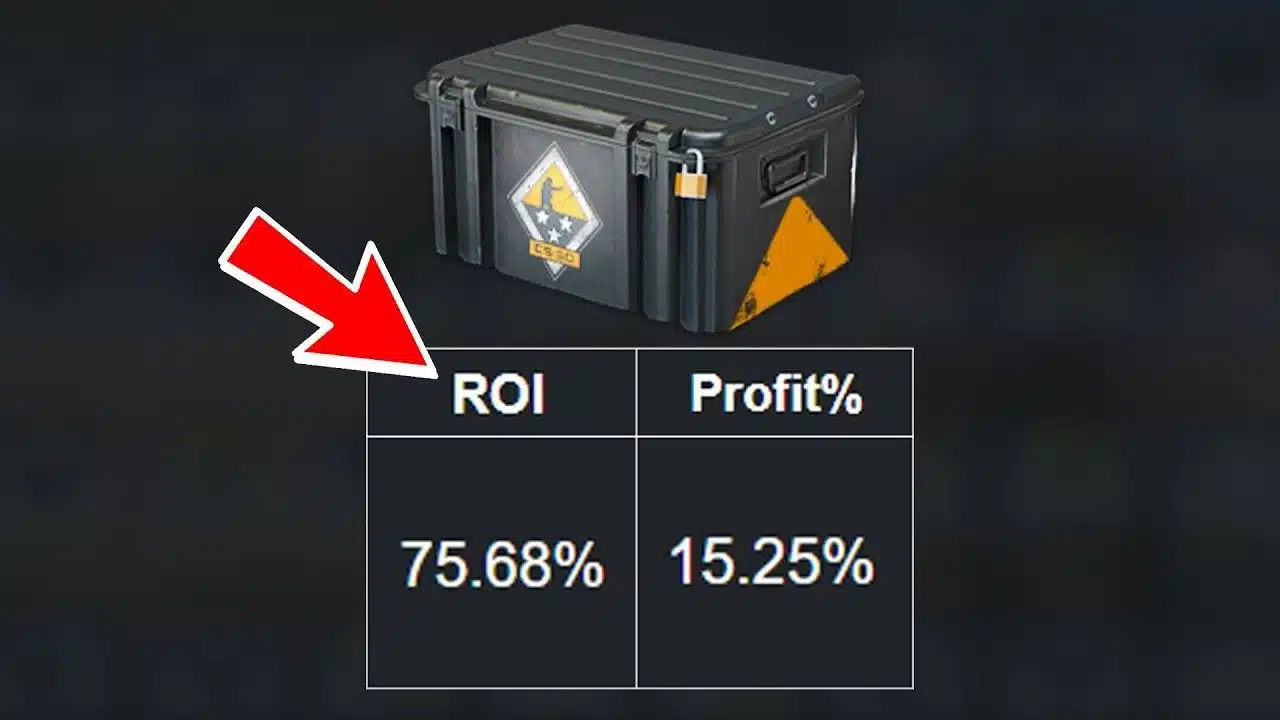
Opening a case feels electric until you pull your 12th blue mil-spec in a row and realize you’ve spent $30 to get back maybe $2 in skins. CS2 case ROIs are the reality check that every player spending real money on keys needs – but most people just vibe through their unboxings without ever doing the actual math.
This guide walks through how to track your returns the right way. No cope, just numbers. And if you’ve never thought about this before, by the end you’ll have a completely different view on every case you open going forward.
Why Most Players Never Look at Their CS2 Case ROIs
It’s honestly by design. The case opening animation, the rattle sound, the split-second suspense before the skin slides in – all of it is engineered to keep you from thinking straight. Most players run a fuzzy mental score: “I pulled a covert last month so it kind of balances out,” and leave it there.
But if you’re putting real money in, you need to treat CS2 case ROIs like any other spending decision:
- Total money in – key cost ($2.49 per key) plus case cost if you bought it off the market
- Total value out – Steam Market prices of every item you received at the time of opening
- Net return – value out minus total in, divided by total in, times 100
Open 10 cases, spend $25 all-in, get back $6 worth of blues and one purple? That’s a -76% ROI. Not a rough session – that’s literally what most sessions look like across hundreds of thousands of openings. The house always wins here, and the house is Valve.
The Numbers Behind CS2 Case ROIs
Here’s how drop rates break down across most standard cases:
| Rarity | Approx. Drop Rate | Avg. Market Value |
| Mil-Spec (Blue) | 79.92% | $0.03 – $0.40 |
| Restricted (Purple) | 15.98% | $0.10 – $2.00 |
| Classified (Pink) | 3.20% | $0.50 – $10.00 |
| Covert (Red) | 0.64% | $5.00 – $150.00 |
| Rare Special (Gold) | 0.26% | $50.00 – $700.00+ |
Run the expected value on those percentages and a typical case open comes out well below $2.49 – sometimes as low as $0.40 when the case has a weak skin pool. That gap between expected return and key cost is basically your guaranteed average loss per open, baked into the math before you even click the button.
The only real exceptions are old cases where the rare items carry serious value – things like Chroma or older Operation cases where a Fade or Doppler knife can push returns up significantly. But those cases usually cost more to buy off the market too, which means the math still doesn’t flip positive for most people. It’s a narrow window, and you need to get lucky to hit it.
Before you commit to bulk opening anything, it’s worth doing some research first. If you want a proper breakdown of how to measure the roi of the case you’re about to open specifically – not just in general – that kind of per-case analysis can save you a serious amount of money over time.
Variables That Mess With Your Calculations
Tracking CS2 case ROIs gets messier when you factor in:
- StatTrak™ versions – usually 3–5x the base price, can completely swing a session’s numbers
- Float values – the spread between Factory New and Battle-Scarred on a single skin can be a 10:1 value difference
- Timing – selling during hype week right after a new case drops vs. two weeks later is often a massive price gap
- Case price shifts – if you’re buying cases off the market rather than earning drops, that cost matters and fluctuates constantly
- Pattern index – on certain knives like Case Hardened, the pattern alone can turn a $50 skin into a $500 one
How to Actually Track Your Unboxings
You don’t need anything fancy. Here’s what actually works:
- Spreadsheet with three columns: date, item received, current market value
- Check prices a couple days after opening – not right away, let early volatility settle first
- Total key spend monthly, compared against the value of everything received
- Use platforms like CSFloat or Buff163 for more accurate price data, especially on float-sensitive skins
- Screenshot or export your Steam inventory history monthly so you have a clean record
Even doing this for just two sessions usually snaps people out of “I’ll get lucky eventually” mode. The data just doesn’t support it, and seeing the actual number in a cell is a lot harder to rationalize away than a vague feeling.
So Should You Even Open Cases?
Statistically, no. For almost every player, case opening is money-negative when you measure CS2 case ROIs honestly. The expected value is always below the key cost and the variance is brutal – you can open 50 cases and not hit a single meaningful item.
That said, this isn’t purely a financial question for most people. Plenty of players open cases for the experience: the rush, the chance of landing that one covert they’ve been chasing, the potential highlight clip. There’s nothing wrong with that as long as you know the odds going in.
Set a monthly budget for it, treat it like entertainment spending, and never chase a bad streak. Opening another 10 cases because you haven’t hit anything good yet is the fastest way to absolutely wreck your wallet. Know your numbers. Open with your eyes open.

This content is brought to you by the FingerLakes1.com Team. Support our mission by visiting www.patreon.com/fl1 or learn how you send us your local content here.