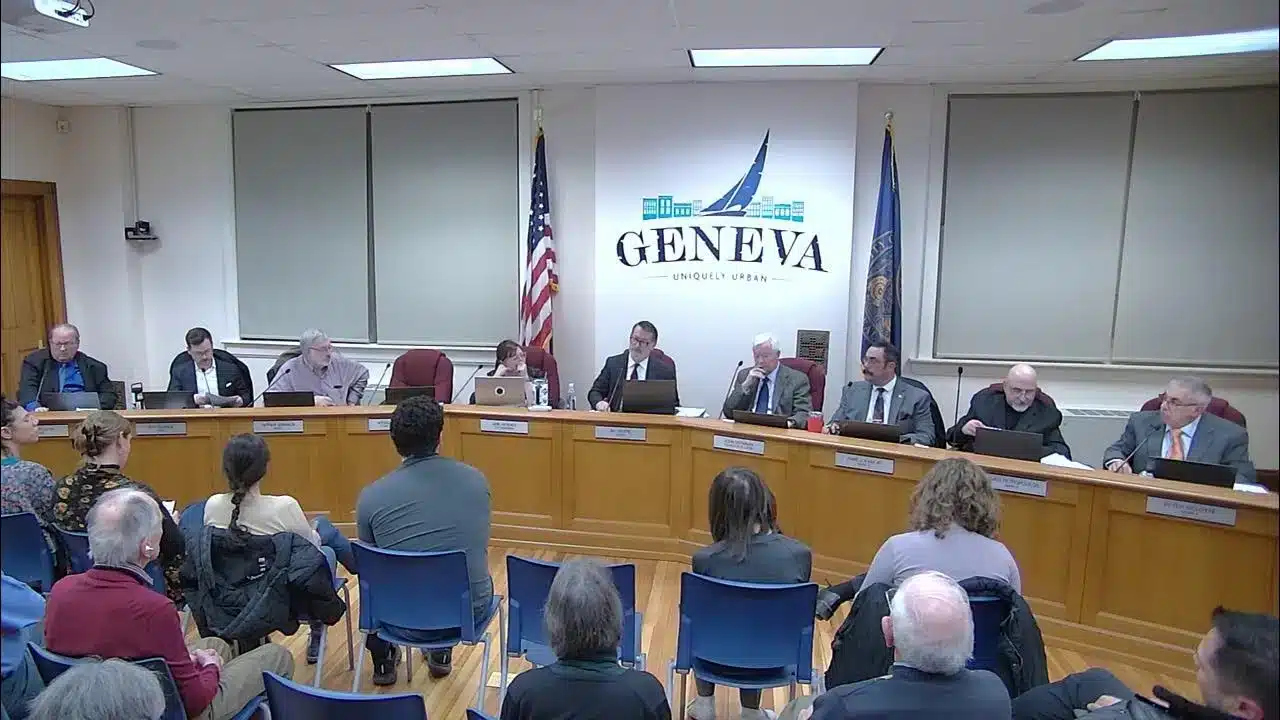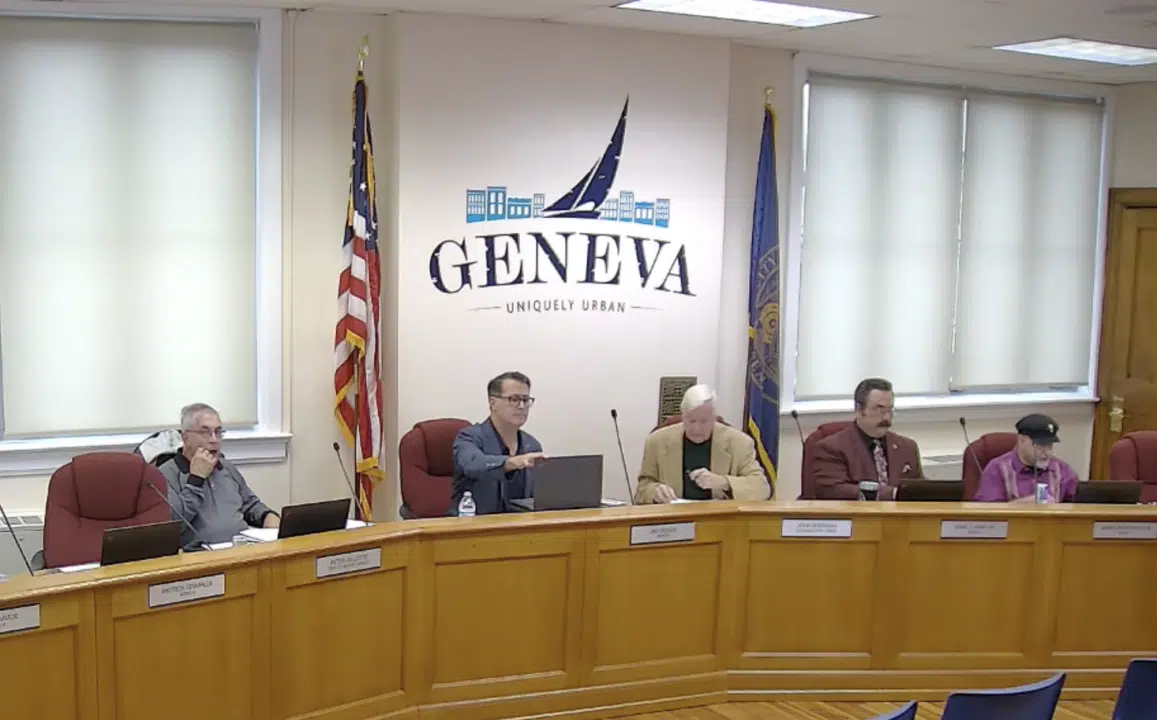
Geneva’s developing 2027 budget is now structurally balanced under a working plan that includes a 3% property tax levy increase, while City Council also adopted new rules for alternative motorized vehicles and continued debating changes aimed at slowing traffic and improving safety on South Main Street.
The wide-ranging council meeting also included discussion of a possible new approach to short-term rental occupancy taxes, action on a deteriorating building at 555 South Exchange St. and updates on several major capital projects underway across the city.

Proposed budget reaches balance with 3% levy increase

Acting City Manager Taylor Youngs told council the general, water and sewer funds are all balanced in the city’s latest working budget, marking a significant change from earlier projections that showed substantial gaps.
The figures remain preliminary ahead of the city manager’s proposed budget scheduled for Sept. 9.
The general fund model includes a 3% property tax levy increase. Staff said that allows the city to balance operations without another round of service reductions while also beginning to rebuild fund balance with roughly $121,000, equivalent to about 1%.
Under the current assumptions, the city tax rate would be approximately $10.95 per $1,000 of assessed value.
Because Geneva’s taxable property values increased, the tax rate itself would decline from its current level even as the total levy rises. Staff estimated the tax bill on an average residential assessment of $143,550 would increase about $45.80 for the year, or approximately $3.82 per month.
Council members stressed that individual results would vary depending on assessments, and staff agreed to provide additional information showing both average and median impacts.
The working plan exceeds the state’s 2% tax cap and would require council action to override it if the proposal remains above the cap when the budget is adopted.
Water and sewer balancing involves a broader combination of changes. Staff said the working model includes a direct customer increase of roughly 2.5%, adjustments to wholesale customer contributions and revisions to the city’s rate structure intended to better align charges with the actual cost of operating the systems.
More detailed water and sewer rate recommendations are expected as part of an ongoing rate study.
Council also continued weighing how quickly Geneva should reduce its reliance on borrowing.
A scenario designed to move the general fund’s debt-to-revenue ratio toward 60% over several years would significantly constrain the city’s capital program. Under the model presented to council, work on Pulteney Street could be delayed until 2030, the City Hall roof could move to 2028 and major lakefront investments could be stretched over a longer period beginning around 2029.
Staff cautioned that delaying those projects doesn’t eliminate the need for them. Some could ultimately require grants, phased construction or future borrowing.
Council has also authorized creation of a pay-as-you-go capital fund, with a longer-term goal of building several million dollars that could be used for projects without issuing additional debt.
E-bike and motorized vehicle ordinance adopted
Council approved a new ordinance regulating alternative motorized vehicles after a public hearing that included calls for more emphasis on education, particularly for younger riders.
Fourteen-year-old Elias Freeman told council he uses an electric bicycle to travel to school and work and described the safety equipment and precautions he uses, including a helmet, lights and compliance with traffic laws.
His mother, Angela Freeman, urged council to consider a safety certification system modeled on other youth activities where education and supervision are used to reduce risk. She suggested an approach that could combine age restrictions with training and parental involvement rather than relying primarily on enforcement.
Other residents raised concerns that overly broad enforcement could disproportionately affect young people and residents who rely on e-bikes or similar devices as inexpensive transportation.
Council members spent significant time discussing whether Geneva could create exceptions for responsible riders younger than 16.
Staff said Police Chief Michael Passalacqua had confirmed that state law doesn’t provide the city with discretion to create a local exemption allowing riders 15 and younger to legally operate e-bikes where state law prohibits them.
The discussion also clarified that electric bicycles must have operable pedals to qualify as e-bikes under state definitions.
Some council members said the ordinance could be amended later to create designated areas or refine local restrictions if legally permissible.
Council ultimately adopted the measure, giving Geneva police additional local enforcement mechanisms related to unsafe or prohibited operation.
Several members emphasized that enforcement should focus on dangerous and repeated behavior rather than riders responsibly using legal transportation.
South Main Street speed reduction moves forward
Council appeared broadly supportive of lowering the speed limit on South Main Street from 30 mph to 25 mph.
No final vote was taken because the item was before council for discussion, but the proposed ordinance is expected to return for a first reading at a future meeting.
Residents and council members repeatedly said a lower posted limit would only matter if the city enforces it.
Several residents who live along South Main Street said speeding has been a longstanding concern and questioned how frequently police issue traffic citations there.
Council members similarly said enforcement should begin immediately if the speed limit is ultimately lowered.
The discussion came as the city installs additional safety measures around crosswalks, including lighting intended to make pedestrian crossings more visible.
Parking proposal draws more resistance
Council showed considerably less agreement over a related proposal to remove parking from a portion of the east, or lake, side of South Main Street.
The area under discussion is limited to a section near the public benches and crosswalks, rather than the entirety of South Main Street.
Residents argued the parking serves visitors who stop to enjoy views of the lake and is particularly important for properties without off-street parking.
Council members also questioned whether removing spaces is necessary after the city already eliminated parking immediately around some crosswalks.
Alternatives discussed included constructing physical curb extensions or protected areas near crossings, enforcing existing no-parking zones more aggressively and allowing the newly installed crosswalk lighting and a possible 25 mph speed limit to take effect before making broader parking changes.
Several council members said they were reluctant to eliminate additional parking.
No action was taken, and the proposal could still be revised before returning to council.
Geneva considers larger role in short-term rental taxes
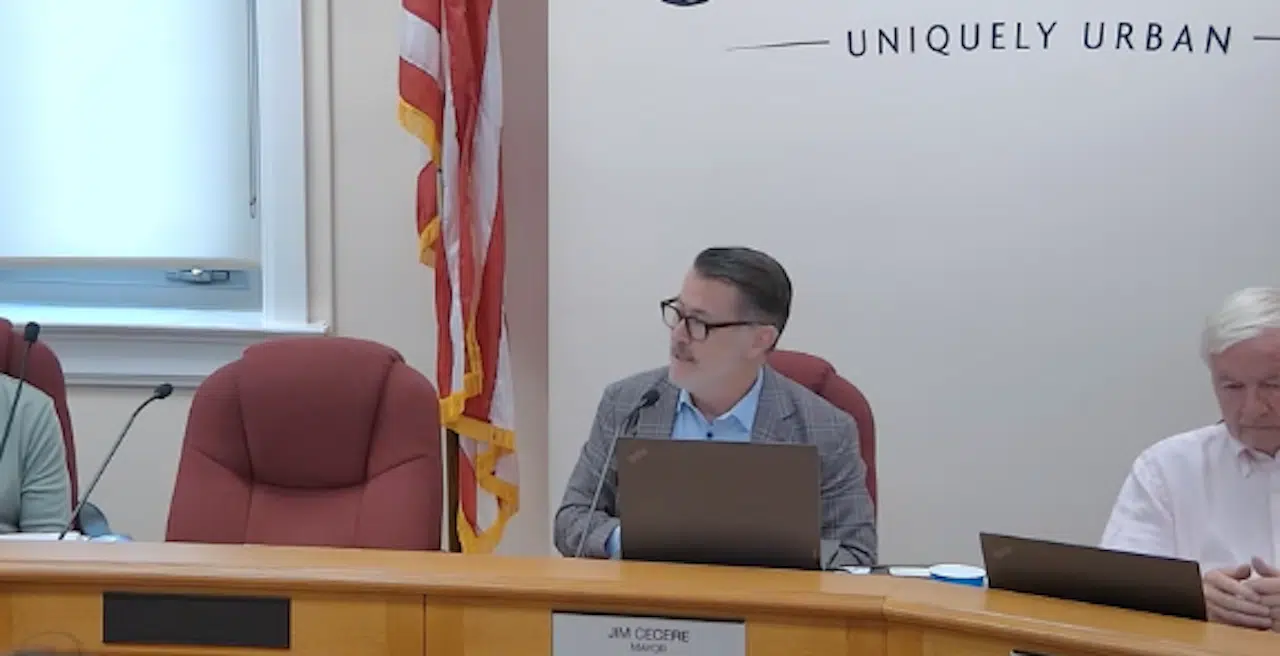
Mayor Jim Cecere also outlined a strategy for responding to Ontario County’s consideration of an occupancy tax on short-term rentals.
The county is considering expanding occupancy tax collections to short-term rentals and potentially changing how some of that revenue is used.
Cecere said Geneva generates significant tourism activity but also absorbs much of the cost of maintaining the roads, waterfront, public safety services and other infrastructure visitors use.
He proposed asking Ontario County to adopt a “municipality of source” model in which 50% of short-term rental occupancy tax revenue would return to the municipality where it was generated.
The balance could continue supporting countywide tourism efforts.
Council members expressed general support for pursuing that approach, though they said Geneva should retain flexibility in how returned revenue is used.
The city could also consider creating or expanding its own short-term rental occupancy tax authority, potentially working with the county and state Legislature on how those taxes are structured.
Cecere said he planned to raise the issue with the Ontario County Board of Supervisors.
City moves against unsafe South Exchange Street building
Council also approved a resolution designating 555 South Exchange St. as an unsafe structure and ordering repair or demolition under the city’s dangerous building provisions.
Cecere recused himself from that portion of the meeting.
Council members said the property has a lengthy history of code problems and is currently surrounded by barriers intended to protect pedestrians from falling debris.
Members also raised concerns about the building’s structural condition as development and construction occur nearby.
The action allows Geneva to continue the formal process available to municipalities for addressing abandoned, neglected or dangerous buildings.
City pursues funding for North Genesee demolition
Council held another public hearing connected to a potential Community Development Block Grant application for demolition work at 122 North Genesee St.
Youngs said the application would seek funding through the state’s 2026 Federal Community Development Block Grant Imminent Threat Program to demolish what has been referred to as GEDC Building C.
The vacant section is part of a larger property that also includes Department of Public Works operations and rental space.
No members of the public spoke during the hearing.
Capital projects continue across Geneva
Youngs also updated council on several ongoing infrastructure projects.
Castle Street reconstruction is more than 90% complete following paving work.
Construction on the Downtown Revitalization Initiative Long Pier Stabilization and Dock Replacements Project is expected to begin Aug. 31, with the contractor preparing to mobilize equipment to Geneva by water from Clayton through the canal system.
New York’s secretary of state is expected to visit Geneva Sept. 9 in connection with that project and other DRI investments.
Crystal Street reconstruction is out to bid, with bids due Sept. 3.
Work on the city’s major wastewater treatment project is also advancing, with the tank portion approximately 90% complete, although the overall project still has several years remaining.
The Police Department conducted 429 traffic enforcement actions in July, including 83 speeding citations, while handling more than 4,400 calls for service during the month.
City staff are also discussing a partnership with Geneva 2030 on summer youth programming, including possible joint grant applications and ways to address transportation barriers that can prevent children from participating.
Those operational and capital projects will continue while staff finalize the Sept. 9 budget proposal, which will then move into the council’s formal review and adoption process.

FingerLakes1.com is the region’s leading all-digital news publication. The company was founded in 1998 and has been keeping residents informed for more than two decades. Have a lead? Send it to news@fingerlakes1.com.