

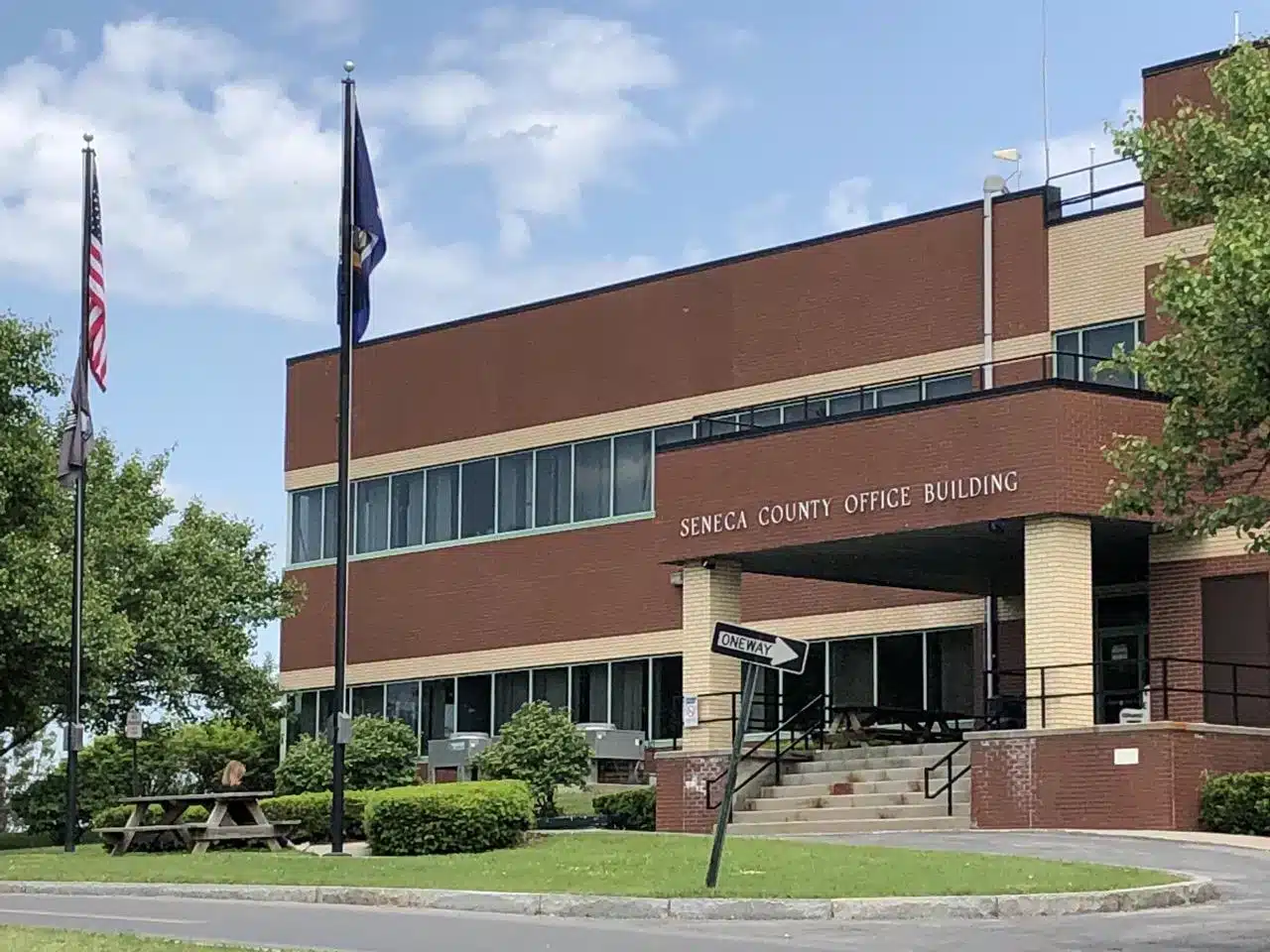
Seneca County officials are preparing for a difficult 2027 budget that could require supervisors to exceed the state property tax cap as personnel expenses, operating costs and demand for county services continue to climb.
The warning came Tuesday during the Board of Supervisors’ regular July meeting, where lawmakers also reviewed the county’s tourism performance, expanded Code Enforcement responsibilities, accepted funding for local history projects and approved several public health and infrastructure measures.

Budget pressures emerge early
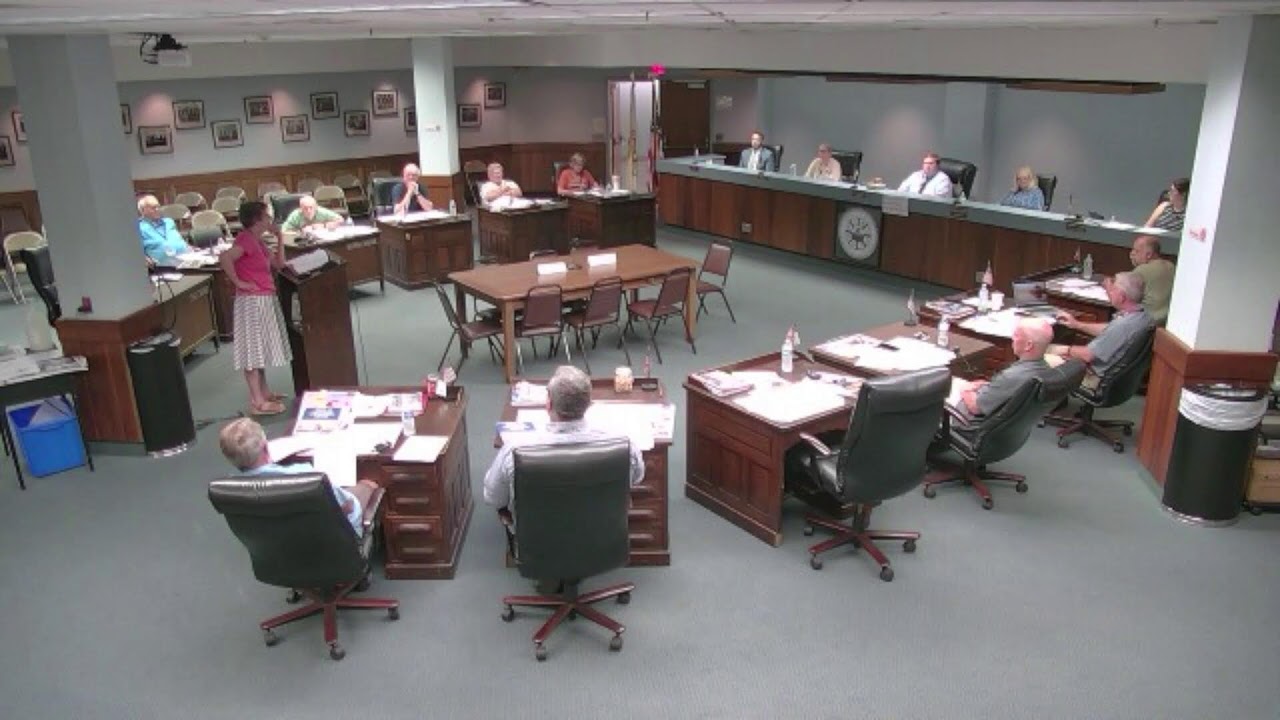
Ways and Means Committee Chair Elizabeth Partee said the county’s budget task force has been meeting with department heads nearly every week as officials begin building the 2027 spending plan.
Partee said the county is facing significant inflationary pressure, substantial increases in personnel and fringe benefit costs, higher fuel and operating expenses and growing demand for county services.
Based on the information available now, she said the county may need to exceed the tax levy limit to produce a balanced budget.
The Ways and Means Committee is expected to consider a local law overriding the tax cap at its next meeting. Partee emphasized that adopting the law would not commit supervisors to exceeding the cap. It would preserve the board’s ability to do so later if the final budget requires it.
Supervisors also amended the 2026 county budget to account for updated state highway funding.
The county received nearly $2.87 million through the Consolidated Local Street and Highway Improvement Program and related state programs. The board increased highway construction revenue and spending by more than $1.37 million to reflect the additional funding.
Tourism report points to millions in visitor spending
Jeff Shipley, president and CEO of Discover Seneca and the Seneca County Chamber of Commerce, told supervisors that tourism promotion should be viewed as a broader economic development strategy rather than simply an effort to attract short-term visitors.
Shipley said destination marketing affects how potential residents, employees, businesses and investors view Seneca County. The same campaign that encourages someone to visit, he said, can also help that person imagine living, working or investing in the community.
Discover Seneca worked with StreetSense Consulting and Texas A&M University to study the performance of an email marketing program reaching nearly 29,000 active subscribers.
Shipley said about 73% of the subscribers studied ultimately visited Seneca County. Roughly 31% identified the tourism email as the primary influence that put the county into their travel plans.
Those visits generated more than $6 million in estimated direct economic activity, according to the report. Discover Seneca calculated a return of approximately $227 for every dollar spent on the email campaign.
Shipley cautioned supervisors against comparing the county’s entire tourism investment with the results of a single marketing channel. Discover Seneca manages about 15 channels, including email, its website, social media platforms, search engine marketing and digital advertising.
He said the organization spent about $26,000 on the email program and conversion study.
The report also highlighted Brave Women Week, a series of events and promotions built around Women’s History Month and Seneca County’s role in the women’s rights movement. The campaign was designed to bring visitors into the county during March, which is traditionally a slower tourism period.
County sales tax collections increased nearly 24% from March 2025 to March 2026, the second-highest increase in the Finger Lakes region. Shipley acknowledged that tourism marketing was only one of several factors that may have contributed to the gain.
Discover Seneca also partnered with Wheel the World to document accessibility features at 25 tourism properties. The information was added to an international travel platform serving people with physical, visual, hearing and cognitive disabilities.
Shipley highlighted the town of Seneca Falls’ adaptive kayak launch as an example of an accessibility investment that benefits visitors and residents.
The organization recently launched a redesigned Discover Seneca website and expects to release a delayed mobile application by the end of July. Construction is also continuing on the new Seneca County Welcome Center, although utility connections could delay the organization’s move into the building until around January.
County expands Code Enforcement duties
Supervisors approved the reclassification of two Code Enforcement Officer I positions as senior code enforcement officers as the department takes on additional responsibilities.
The department will administer floodplain management requirements for participating municipalities and expand its capacity to handle commercial code enforcement.
During the board’s discussion, a Code Enforcement Department representative said the county developed the arrangement to avoid requiring each municipality to hire its own employee to administer new federal floodplain regulations.
One of the senior officers will oversee floodplain reports and county requirements, while another has already assumed greater responsibility for commercial code enforcement.
The department representative said the office is short-staffed after losing a senior employee to the state and is attempting to hire another officer. New employees require extensive state training and can take about a year to become fully effective in the field.
The reclassifications will increase one employee’s annual salary from about $58,122 to $61,721. The second employee’s salary will increase from about $71,061 to $73,115.
Supervisors also approved an agreement allowing County Code Enforcement to act as the town of Varick’s local floodplain administrator through Dec. 31, 2030.
Under the agreement, county staff will administer and enforce the floodplain management provisions required under Varick’s local law and the National Flood Insurance Program.
History grant will support projects across the county
The board accepted a $15,000 grant from New York’s 250th Commemoration Commission for history programs, student engagement, cemetery restoration and community events.
The Waterloo Library and Historical Society will receive $3,200 for research, presentations, student textbooks and other educational programming.
The Seneca Falls Historical Society will receive $3,000 for guest appearances and the digitization of archival documents, while the Lodi Historical Society Bicentennial Commemoration Committee will receive $3,500 for insurance, rentals and advertising connected to Lodi’s 200th anniversary.
Another $3,900 will support work at Traver Cemetery in Tyre. The cemetery contains the grave of Revolutionary War veteran Johann Nicholas Traver and what county documents describe as Seneca County’s oldest Civil War monument.
The funding will help pay for landscaping and restoration supplies. Officials said the cemetery’s location on private property has required coordination with the property owner and county attorneys.
The remaining $1,400 will support restoration work at the historic Stone Church in Fayette.
Supervisors also adopted a proclamation recognizing the town of Lodi’s bicentennial. Lodi was established by the state Legislature in January 1826 and held its first official town meeting in March of that year.
Public health, infrastructure and mental health projects advance
The board accepted a $52,099 Public Health Emergency Preparedness Grant from the state Department of Health.
The funding will support Public Health Department salaries, fringe benefits and program expenses from July 2026 through June 2027.
Supervisors also authorized the Highway Department to trade a large roller purchased in 2023 for two smaller rollers better suited to the department’s needs. The trade with Milton CAT will come at no additional cost to the county.
The board approved a three-year agreement with VRC Companies LLC for shredding services at the County Office Building, Law Enforcement Center and Health and Human Services Building. The contract will cost no more than $11,520 annually, or $34,560 over three years.
Supervisors authorized the county to seek state grant funding and financing for improvements at the Willard Wastewater Treatment Plant in Sewer District No. 1.
The board also adopted Seneca County’s Local Solid Waste Management Plan after the state Department of Environmental Conservation deemed the plan approvable in April.
In personnel action, supervisors authorized the county to hire a human resources assistant above the normal starting rate. The position, which has been vacant since December, carries an annual salary of $75,706.
The board approved a consulting contract of up to $28,910 as the Mental Health Department prepares to select and implement a new electronic health record system. Opioid abatement funds will cover the work.
The project will include an assessment of the department’s current operations, the design of future workflows and implementation planning intended to improve access to care and clinic operations.
Supervisors also approved $2,500 in tourism promotion funding for a July Fourth fireworks display at Seneca Lake Resorts.
Students receive Brightest Star Awards
The board recognized four middle school students through the Seneca County Youth Bureau and Youth Board’s 2026 Brightest Star Awards.
The honorees were Haylee Warshel of Seneca Falls Middle School, Averie Murray of Romulus Central School, Tyler Patton of Waterloo Middle School and Kora Hopkins of South Seneca Middle School.
The awards recognize students who demonstrate academic achievement, involvement in school or community activities, responsibility, respect and compassion.

FingerLakes1.com is the region’s leading all-digital news publication. The company was founded in 1998 and has been keeping residents informed for more than two decades. Have a lead? Send it to news@fingerlakes1.com.