


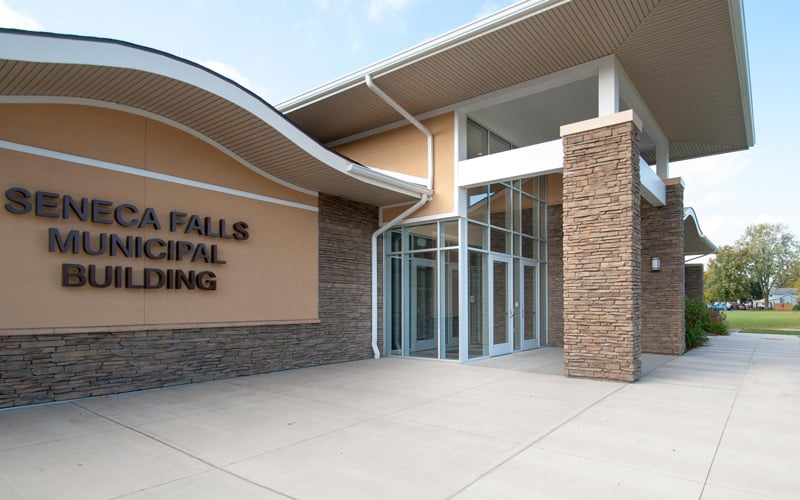
A sharp rebuke from a local business leader set the tone for a contentious Seneca Falls Town Board meeting, where questions about accuracy, accountability, and decision-making spilled into multiple discussions throughout the night.
Mark Pitifer, representing Waterloo Container, used the public comment period to directly challenge statements made by Councilor Wendy Crane at a previous meeting, calling them “uneducated, unprovoked and ultimately inaccurate” and accusing officials of failing to verify claims before putting them on the public record.

Pitifer said Crane had implied that a meeting between Waterloo Container representatives and Gov. Kathy Hochul may have influenced the timing of a Department of Environmental Conservation letter to the town regarding oversight of the Seneca Meadows landfill. He pushed back on that suggestion, stating that the Albany trip was part of the Seneca County Farm Bureau’s annual Lobby Days and focused on economic development tied to agriculture and the state’s wine and craft beverage industries, not political activity or regulatory influence.
He also emphasized that Waterloo Container had no involvement in the DEC’s correspondence with the town, calling any suggestion otherwise unfounded and easily disproven with basic due diligence. Pitifer added that neither he nor the company had made contributions to Hochul’s reelection campaign.
The statement went further, drawing attention to political dynamics tied to Seneca Meadows and its parent company, Waste Connections. Pitifer argued that a political action committee funded largely by Waste Connections — Responsible Solutions for NY — had run advertisements supporting local candidates, including Crane and Councilor Dawn Dyson, while reiterating that Waterloo Container had not participated in similar political activity.
Crane did not respond during the meeting but later issued a statement reported by the Finger Lakes Times acknowledging her comments were based on her interpretation of publicly available information, including social media posts and the timing of related correspondence. She said that if her assumptions were incorrect, she sincerely apologized, adding that her intent was to ask questions and stay informed on behalf of residents.
The exchange underscored a broader theme that carried through the meeting: tension over how decisions are made and communicated. Earlier in the session, residents and organizers presented proposals ranging from a canal-side event aimed at activating underused space to requests for zoning changes that would allow nonprofit bingo games to support civic organizations.
Later, that same divide played out among board members during a prolonged debate over hiring a town manager. Some officials questioned whether the role was necessary at all, arguing the town’s more pressing need is financial oversight and accounting expertise. Others defended the position as a potential cost-saving measure that could reduce reliance on outside consultants. The board ultimately tabled the decision, citing the need for additional information and review.
Even routine matters reflected a push for clearer process and oversight. Board members discussed enforcement timelines for ongoing code issues, raised concerns about communication gaps, and emphasized the need for better follow-through on longstanding problems.
By the end of the meeting, no single issue had been fully resolved, but the through line was clear: whether discussing economic development, staffing, or local regulations, officials are facing growing pressure to back up decisions — and public statements — with transparency and verifiable facts.

FingerLakes1.com is the region’s leading all-digital news publication. The company was founded in 1998 and has been keeping residents informed for more than two decades. Have a lead? Send it to news@fingerlakes1.com.