


The Canandaigua Environmental Committee on Monday moved forward with a proposal to engage legal representation to explore potential compensation related to per- and polyfluoroalkyl substances (PFAS) contamination. The committee also heard a presentation from the New York State Department of Health regarding swimming regulations that impact public waterfront access.
Attorney Jerry King of the Law Office of Robert King, PLLC, presented the city with an opportunity to participate in a nationwide settlement against manufacturers of PFAS chemicals, also known as “forever chemicals,” due to their long-lasting environmental impact. King’s firm, in partnership with Stag Liuzza, LLC, has represented several municipalities in similar cases.
Canandaigua’s water supply, drawn from Canandaigua Lake, has tested below the Environmental Protection Agency’s advisory threshold of four parts per trillion for PFAS. However, King explained that even minimal detections of these substances could make the city eligible for settlement funds. The firm offered to conduct the necessary legal work on a contingency basis, taking one-third of any settlement funds recovered.

City legal counsel reviewed the proposed contract and found it to be standard. Committee members expressed support, noting that the arrangement posed no financial risk to the city. The motion to advance the agreement to the full City Council for formal authorization passed unanimously.
Waterfront Access Regulations Under Review
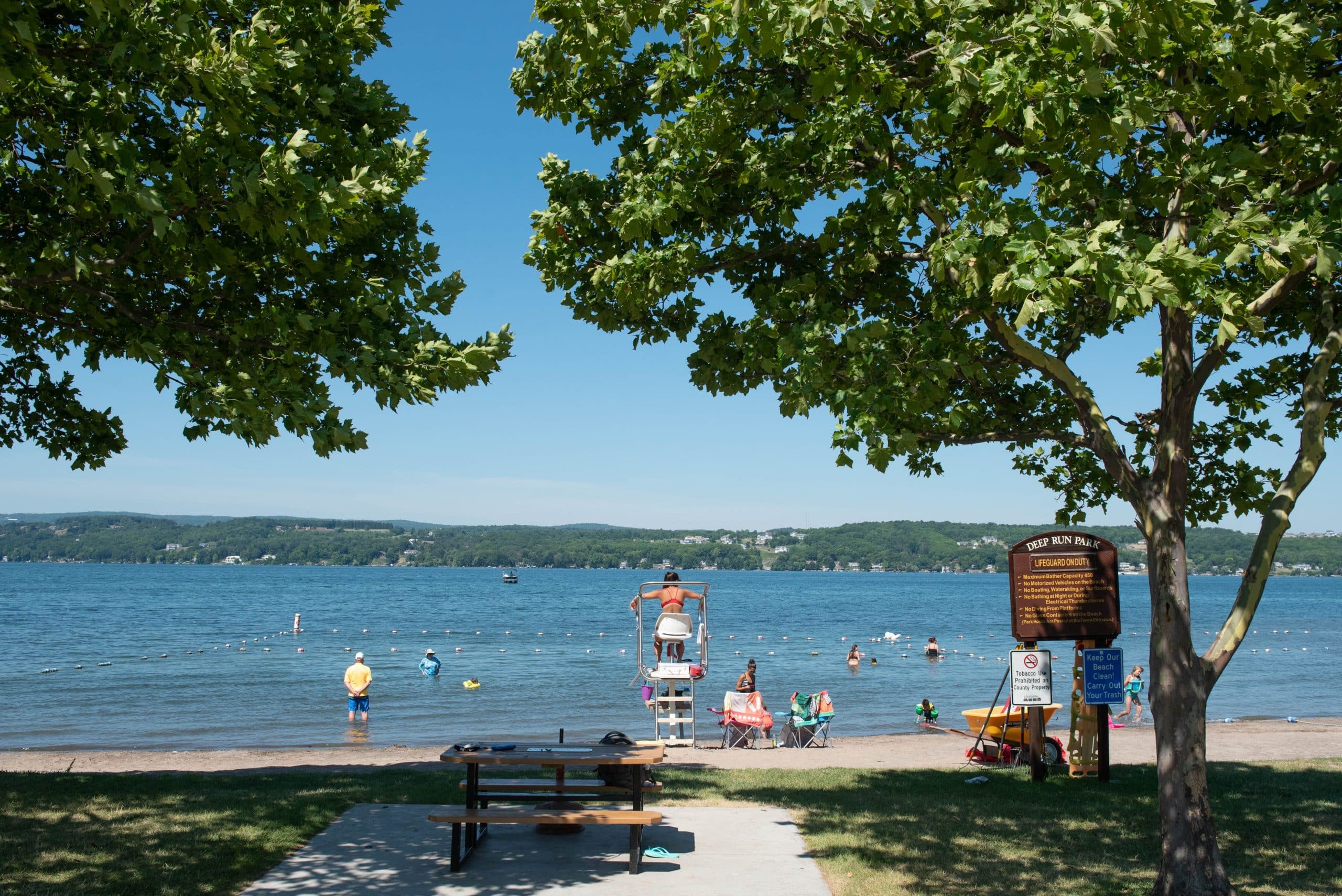
The committee also reviewed regulations governing water access at Kershaw Park and other city-owned waterfront properties. Representatives from the NYSDOH explained that state regulations prohibit swimming, wading, or bathing outside of designated, permitted beach areas.
The discussion arose following public inquiries, including interest from residents who engage in cold-water plunging for health benefits. The NYSDOH clarified that municipal responsibility extends beyond officially designated beaches to encompass any adjacent waterfront areas under city jurisdiction.
Some committee members raised concerns about the enforceability of these rules, given that various informal recreational activities—such as triathlon training, paddleboarding, and dog swimming—regularly occur outside of permitted areas. The committee agreed to seek further guidance on enforcement and possible revisions to local policy before making recommendations.
Additional Business
- The Ghost of Roseland sculpture project was discussed, with committee members reviewing plans for an unveiling ceremony and proposed safety signage discouraging climbing on the structure.
- A sewer pump agreement for the Canandaigua Lady, a historic paddleboat attraction, was advanced. Under the tentative agreement, the boat’s operators will assume responsibility for replacing and maintaining the pump station while also covering water and sewer charges.
- The committee heard an update on the city’s Stormwater Management Program (SWMP), which must align with recent changes to state and federal environmental regulations.
The full Canandaigua City Council is expected to review the PFAS legal services proposal and other committee recommendations at its March 31 meeting.

FingerLakes1.com is the region’s leading all-digital news publication. The company was founded in 1998 and has been keeping residents informed for more than two decades. Have a lead? Send it to news@fingerlakes1.com.