

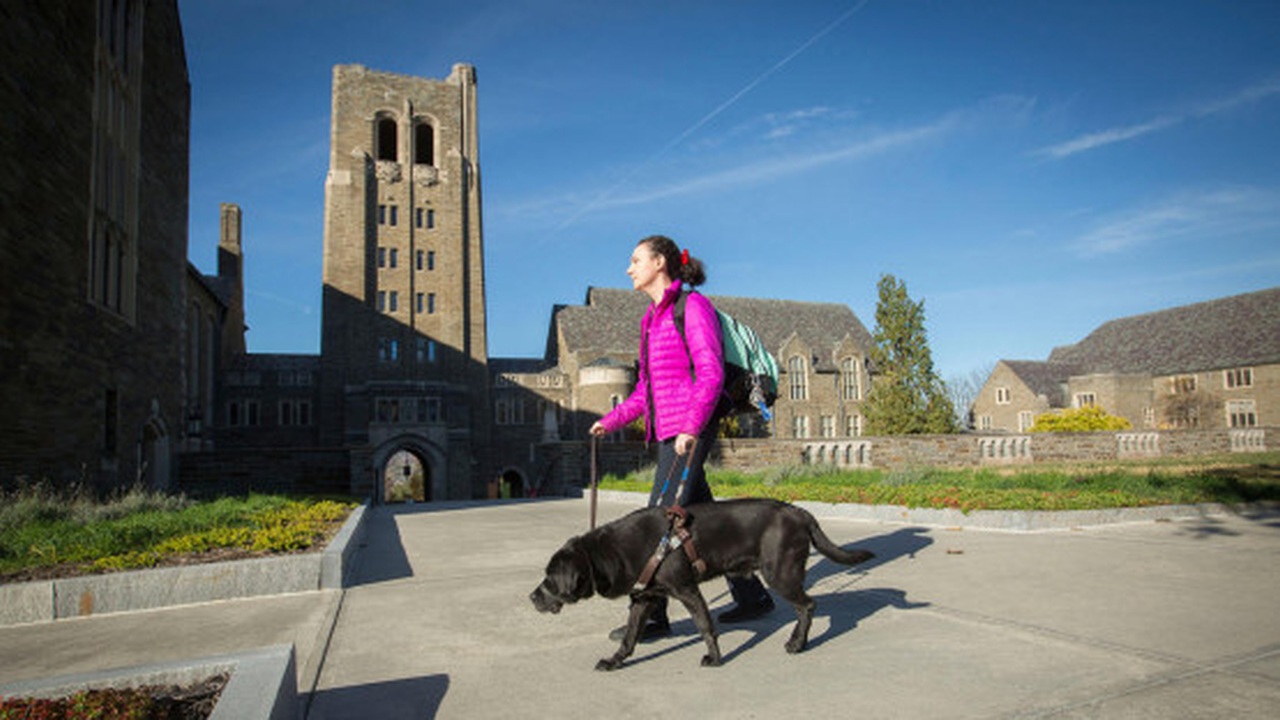
Cornell employees are encouraging managers and colleagues to focus on people's strengths, listen to requests for support and make it easier to discuss disability at work as the university concludes its October awareness campaign.
The Diversity Includes Disability campaign featured four employees during National Disability Employment Awareness Month, highlighting both workplace accommodations and the day-to-day culture that affects whether employees feel comfortable seeking help, according to Cornell.
Asking for help can be difficult
Heidi Jo Gunn, an S04 lead in Sage Hall, described managing an invisible disability for years before her condition became harder to manage. She said asking for help meant overcoming concerns about appearing weak or losing independence.
Andrea Haenlin-Mott, the ADA coordinator in Cornell's Office of the University Architect, said colleagues do not need to understand every aspect of a disability to trust employees' accounts of what they need.
D Kramer, a social sciences research and instruction librarian in Catherwood Library, urged managers to recognize employees' contributions and learn when to connect them with Cornell's Office of Civil Rights and other resources.
“Focus on what people bring, as opposed to what their disability might be,” Kramer said.
Inclusion involves everyday workplace choices
Angela Freeman, a sponsored financial analyst in Cornell's Division of Financial Services, said a lack of inclusion can harm employees and the teams around them.
Freeman encouraged managers and coworkers to be open to different ways of working, recognize individual strengths and make it clear that employees can speak honestly about disability without becoming isolated.
- Edwards Vacuum completes $319 million Genesee County plant with capacity for 600 jobs
- Blakeman opposes minimum wage increase, drawing criticism from Democrats
- Cornell researcher leads new survey of planetary science workforce
- Nearly 40% of New York home care workers live in or near poverty, Cornell report says
Cornell's Disability Colleague Network Group offers monthly coffee hours, topic-based discussions and peer support. Haenlin-Mott, who co-leads the group, said respectful treatment and awareness matter even when colleagues do not understand every detail of another person's experience.
The university also points employees toward recorded discussions and learning resources on access, ableism, intersectionality and inclusive design. The campaign's message is that disability inclusion continues beyond October through listening, connecting employees with resources and recognizing what they contribute.
Make FL1 part of your day.
Local reporting. Useful updates. More ways to stay close to your community.
Go ad-free
Support independent local reporting and enjoy FL1 without display ads.
$4.99 / month
Become a member →Cancel anytime. Third-party media players may contain ads.Get the daily briefing
Start your morning with the headlines that matter across the Finger Lakes.
Find more FL1 on Google
Choose FingerLakes1.com as a preferred source to see more of our reporting in your Google news results.

FingerLakes1.com is the region’s leading all-digital news publication. The company was founded in 1998 and has been keeping residents informed for more than two decades. Have a lead? Send it to news@fingerlakes1.com.