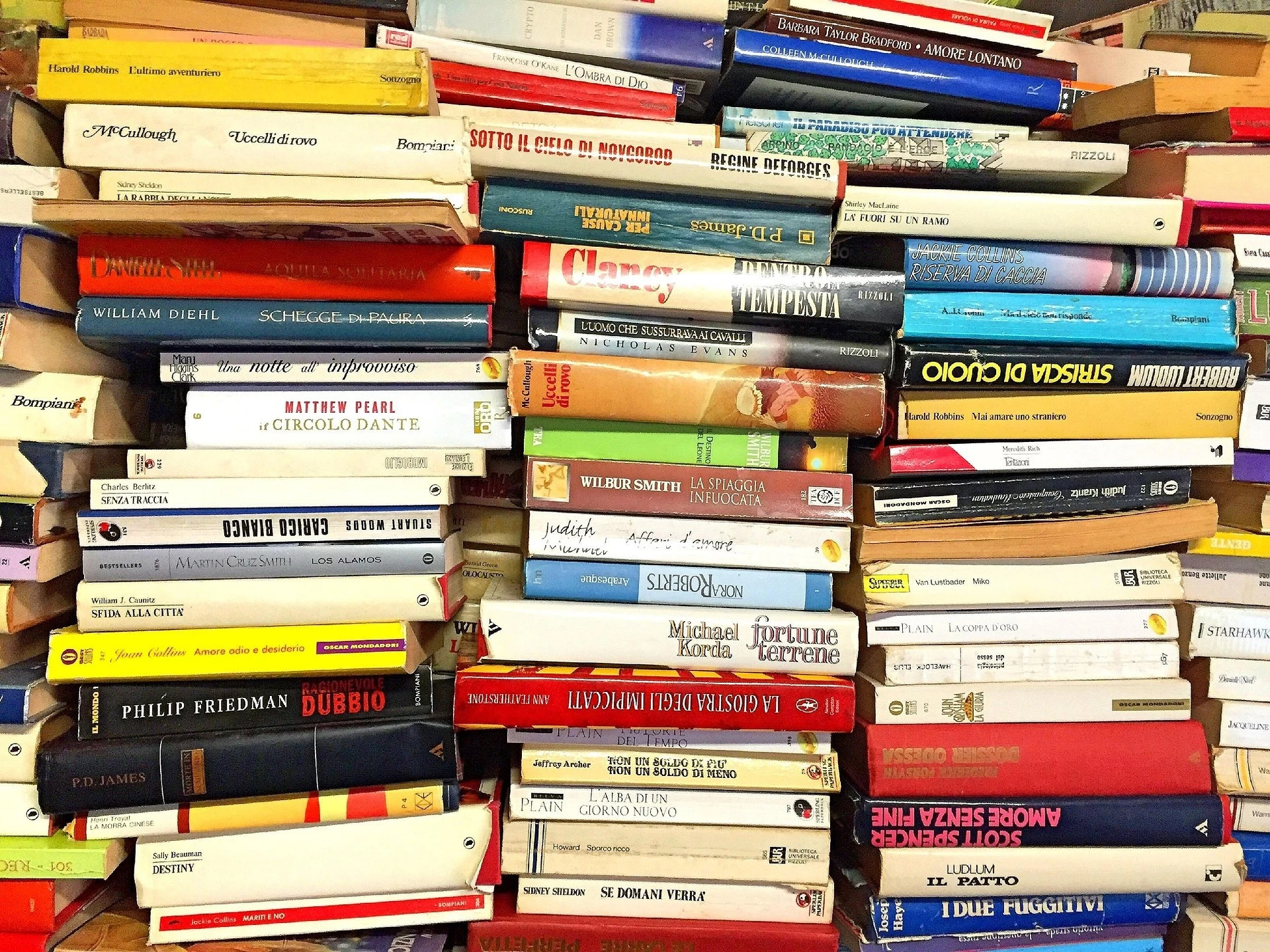
Buying a book has changed as much as the book itself. Ownership didn’t evoke any second thoughts. We went to, say, Barnes & Noble, paid for a book, carried it home, read it (maybe) and put it on a shelf. The bookstore could close ten years later and nobody came knocking to take away your copy. Digital books don’t really subscribe to this type of transaction. Sometimes what looks like a purchase to you is legally a license to keep accessing the book under somebody else’s rules.
There are restrictions, rules, fine print and misunderstandings, so let’s get to it.
DRM (Digital Rights Management) has a central role to play here.
- You can store, back up and move a DRM-free EPUB downloaded as an ordinary file.
- If a fixed-page copy is more useful for printing or a PDF-based workflow, Convertio’s epub to pdf converter can change the format in the browser, and you can do that legally with no trouble.
- Readers who want to see the tool itself can click here through Convertio rather than installing separate conversion software.
- The important word in that scenario is “DRM-free.” Converting a file you legitimately possess is very different from bypassing the restrictions surrounding a protected book.
That difference is now getting legislative attention in New York.
New York Is Asking What the “Buy” Button Means
Assembly Bill A8471, active in the 2025-2026 legislative session, addresses how sellers describe transactions involving digital goods. E-books are explicitly included.
The proposal would prevent sellers from using terms like “buy” or “purchase” that communicate that the customer may have a green light to own the product, while in fact they buy a license to use it, not own it. Alternatively, a seller may get an acknowledgment stating that the transaction is a license, include all of its limitations and provide information about when access might be denied. Another route would be a clear notice stating that the “purchase” is a license and directing the customer to the full terms.
The bill doesn’t seek to eliminate digital licensing. It looks to bridge the mismatch between the meaning of a familiar word and the transaction itself.
Amazon’s Kindle Store terms currently state directly that Kindle content is “licensed, not sold.” Users are given non-exclusive rights of use and access to it for their private purposes, through the use of kindle software or in different modes as allowed by the service. Kobo also uses the term “license” to refer to digital-book transactions.
EPUB itself has nothing to do with the license
There is some confusion between file format and digital rights management (DRM), but these are separate issues.
- EPUB is an open format for publishing.
- The majority of normal EPUB books are reflowable, which implies that the text can reorganize itself to fit the screen size, font size, and size of the reader’s screen.
- That is why EPUB is a great option for phones and dedicated e-readers.
- PDF behaves differently. It is mostly a fixed page design: the page layout remains unchanged.
- This may be cumbersome on a small screen but helpful if you need an exact number of pages, print, or a consistent page layout.
- A DRM-free EPUB file can thus be extremely portable.
- If a user needs another format later, a service such as Convertio can turn the EPUB into PDF without changing the basic fact that the user started with an accessible file.
- DRM changes the equation because it controls how that content can be accessed or copied.
Amazon itself made that contrast considerably clearer in 2026. Effective January 20, verified purchasers were allowed to download EPUB and PDF versions of Kindle books that publishers have confirmed are DRM-free. These options (Download EPUB and PDF) do not exist for DRM-protected Kindle books.
Older titles have a crucial detail. Amazon does not automatically enable EPUB/PDF downloads for books published prior to December 9th, 2025 that do not have DRM. The DRM-free option is to be confirmed by the publisher(s). After that, verified purchasers will be able to download the files. Kindle Unlimited borrowers and other readers who merely borrowed the book do not get the same download option.
Amazon also states that if a reader downloads an EPUB or PDF of a book that is not DRM-protected by the publisher, and the publisher later comes to add DRM, the reader’s copy will not be taken away.
That’s quite a concrete version of access versus possession.
The Old Bookshelf Had One Major Advantage
The use of e-books has many practical benefits. A reader can read hundreds at a time, find any word in a whole book in seconds, enlarge the font size and utilize built-in dictionaries or accessibility features.
But a paper book’s preservation system is so much easier, isn’t it? Digital preservation is trickier and we’re still adjusting.
- Is there a downloadable file?
- What format is it in?
- Is DRM attached?
- Does the file require a particular account or application?
- Can the reader make a backup?
- Can it be opened elsewhere if today’s software disappears?
For DRM-free EPUBs, the answer can be to keep a local copy. Back it up. Use compatible software. Convert it with Convertio later if another for format.
For books that exist only through a vendor-controlled license, the reader possesses an access governed partly by an ecosystem that remains outside their control.
That is why New York’s proposed disclosure rules aren’t really about whether digital books are good or bad. They are about whether the familiar language of ownership still describes what happens when money changes hands.
A physical book can outlive the bookstore that sold it.
With an e-book, it is worth knowing whether you bought the book, or permission to keep opening it.

This content is brought to you by the FingerLakes1.com Team. Support our mission by visiting www.patreon.com/fl1 or learn how you send us your local content here.