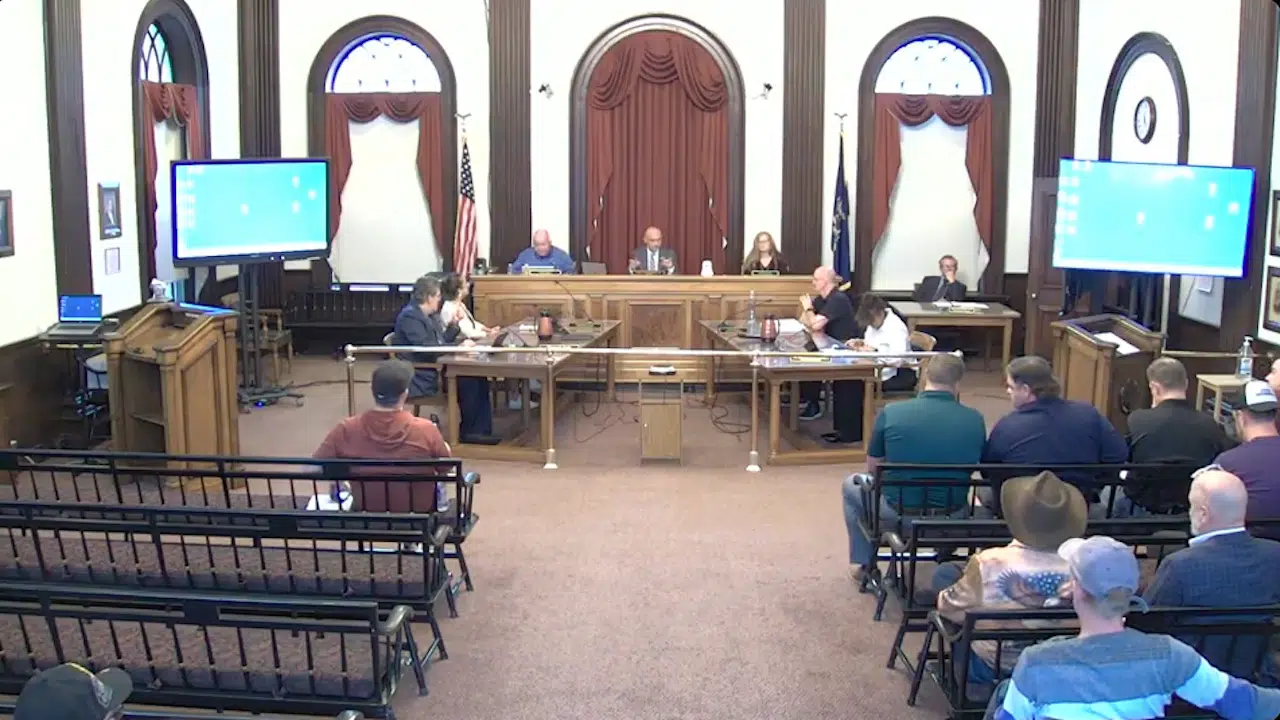
Auburn City Councilor Rhoda Overstreet-Wilson called Thursday for a community housing committee with measurable goals and regular reports after residents described unsafe apartments, rising rents and fears that seeking repairs could cost them their homes.
The proposal followed an extended public comment period where residents pressed officials to strengthen landlord accountability, improve access to property records, and explain what action would follow their complaints. Council did not vote to establish the committee or adopt new housing enforcement measures.
Overstreet-Wilson suggested connecting the proposed committee to the city’s Human Rights Commission. She asked interested residents to develop a proposal identifying its responsibilities, the support it would need from the city, a meeting schedule and a location.
Her remarks also drew on her own family’s experience. She said an aunt needed to leave an apartment that week because of its condition, following repeated conversations with the landlord and a water shutoff.
“We need to have tangible change,” Overstreet-Wilson said.
Residents challenge inspections, records and tax collection

James Udall of Osborne Street opened the housing discussion with a repeated declaration: “Auburn has a slumlord problem.”
In his remarks and accompanying written statement, Udall accused some property owners of neglecting repairs, entering apartments without notice and using water shutoffs to trigger condemnations that force tenants to leave. He argued that tenants can become the people displaced by enforcement while owners escape meaningful consequences.
Udall also criticized move-in charges, alleging that some landlords disregard security deposit limits and impose improper additional fees. He said tenants fear retaliation if they complain to the city.
His criticism extended to property tax collection. Udall said one owner owed $196,000 on properties held personally, with additional properties held through other entities. He argued that unpaid taxes shift pressure onto other homeowners and make it harder to fund police, fire and ambulance services.
Those figures were presented as Udall’s claims. Council did not establish a tax balance or make findings about individual landlords during the public session.
Udall questioned occupancy inspection requirements for single-family rentals and the city’s ability to identify multifamily properties with expired certificates. His written statement said building records were only partially entered into the Municity electronic system and that code enforcement remained dependent on paper records.
He called the department understaffed and inadequately equipped, arguing that owners who comply with city requirements face a different experience from those who repeatedly ignore them.
The concerns have been building for weeks. We previously reported on Udall’s September calls for a searchable landlord database, stronger inspection requirements and protections for tenants displaced by code violations.
Former tenant describes years of unresolved problems
A former tenant who identified herself as Amanda told council she had lived at 28 Seminary Street for about 11 years. She described mice, bees and repairs she said remained unfinished despite repeated requests.
She said her rent increased by $100 each year and that fear of losing the apartment discouraged her from pursuing complaints. After buying a home and beginning to move, she said the water at the rental was shut off and code enforcement required her to leave before she could finish.
Another speaker urged the city to help compile a database of landlords and property violations so prospective tenants could better evaluate where they were moving.
Landlord Brett Tracy, who had been criticized during the discussion, disputed comments directed at him. He said speakers were misinformed, objected to using public comment for personal accusations and said he would participate in a housing workshop.
Tracy said he paid bills as quickly as he could and had missed no mortgage payments. He also said he would not support shutting off a tenant’s water to force a move and denied knowing the specifics of the Seminary Street account.
Other residents urged council to move beyond disputes between individual landlords and tenants.
Nigel Green described family members struggling to afford rent and maintain stable housing. He asked officials to identify solutions rather than simply continue hearing the same complaints.
Rebecca Brown, who identified herself as Udall’s tenant, said a phone call questioning her household’s rent payments had made her elderly mother uncomfortable. She urged residents to work together to make housing safe without drawing families into personal conflicts.
City points residents to existing property database
City Manager Jenny Haines highlighted BuildingBlocks, a property tracking website she said has been available through the city for several years.
The map-based tool covers about 9,400 parcels and combines records maintained in different systems across city departments. Haines said it includes information from code enforcement, police and fire, along with other properties associated with an owner.
Residents can search an address or select a parcel on the map. Haines said staff are working to add tax and water and sewer information.
She directed residents to the Nuisance Abatement Committee section under the city website’s government menu and said staff would arrange another council presentation explaining the system.
Overstreet-Wilson called BuildingBlocks a useful starting point but said residents also need an accessible way to review a prospective landlord’s history, including violations, complaints and unpaid taxes.
Committee proposal would need goals and progress reports
Overstreet-Wilson said a housing committee should do more than hold meetings. She envisioned a group that could assess concerns, maintain records and report through the Human Rights Commission to council.
She asked residents to identify specific goals and milestones so the community could evaluate whether the effort was producing results.
The committee’s authority, membership and operating structure remain proposals. Council approved no resolution establishing those powers Thursday.
Overstreet-Wilson said officials recognize the seriousness of the complaints and want residents to continue bringing attention to them. The next step she requested was a written community proposal explaining what the committee would do and what support it would need.

FingerLakes1.com is the region’s leading all-digital news publication. The company was founded in 1998 and has been keeping residents informed for more than two decades. Have a lead? Send it to news@fingerlakes1.com.