

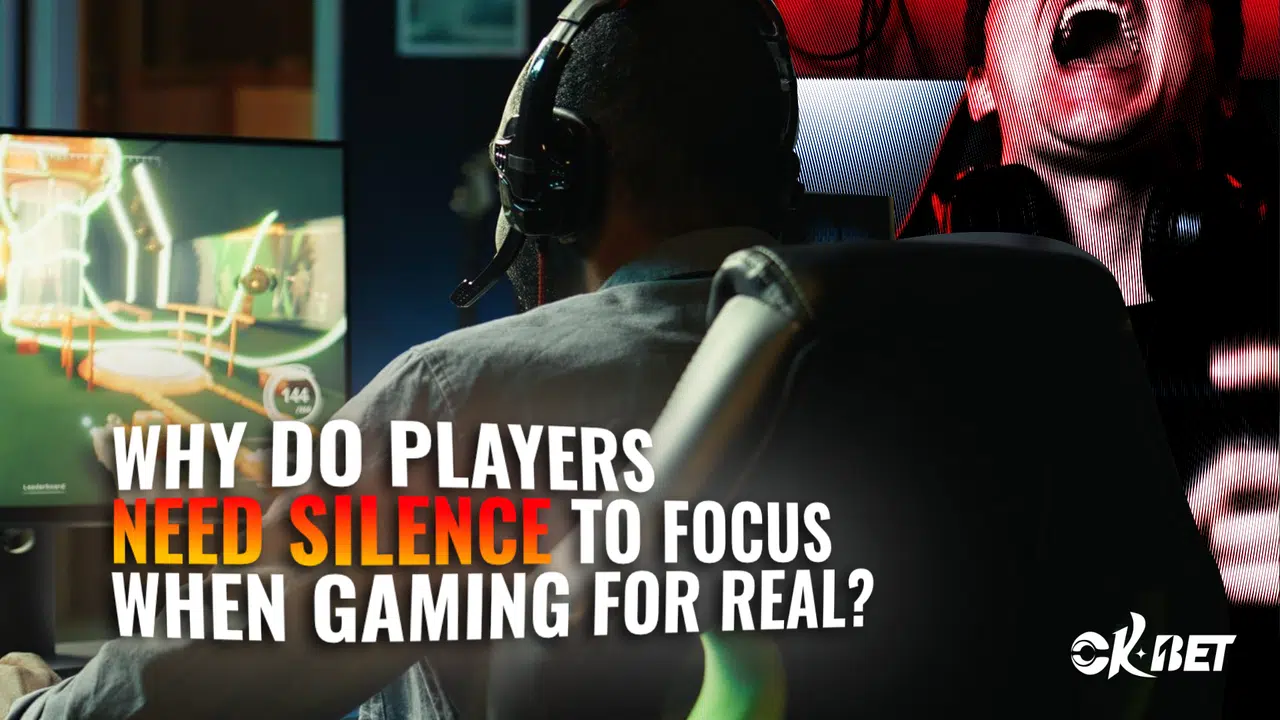
If you observe any serious player just before a major game, you’ll be able to observe the difference. The room goes quiet, background noise is muted and headphones are activated. It’s the same tendency when people are holding a mobile gaming device, sitting at a keyboard, or holding a controller. Silence is not an uncommon characteristic. When concentration is most important, the brain truly needs it.

Why It’s So Hard to Focus When Playing Video Games
There are a lot of demands on the brain when playing a video game. Players are following movement, predicting what their opponents are doing, reacting to unexpected situations and making decisions in that split second. All these activities occur in a limited mind. Adding outside noise further isolates that small area, diverting the player’s attention. The little area becomes even more separated when outside noise is added, drawing the player’s focus away from the game without them even realizing it.
What Happen When Brain Playing Noisy Games
Sound Battles Same Focus
The brain uses common thinking resources for both sound and vision. Even if the sound is unrelated to the game, a tiny portion of the brain immediately investigates everything that produces noise in the vicinity. This is a minor distraction, which delays reaction time.
Unexpected Slowdown in Reaction Time
When this slowness occurs, most players are unaware of it. It is perfectly normal to be a little slow in the beginning, and it could mean the difference between a close call and a clear victory. Silence takes away this hidden latency as the brain cannot split its focus.
Making Decisions Becomes More Difficult
Quick decision-making is crucial in fast-paced games. In the presence of constant background noise, it becomes more difficult to think clearly. Sometimes even a television set in another room can be a distraction during a critical time.
Why Silence Is So Important to Competitive Players
High-Stakes Situations: Every Second Counts
In a competitive situation, minor mistakes can have significant consequences. A distracting noise might cause a half-second delay, which can result in losing track of an opponent’s location, missing a shot, or timing a move incorrectly. For this reason, competitive gamers frequently minimize anything that could divert their attention and treat their gaming area like a controlled environment.
Headphones in Blocking Out Sound
Headphones assist players in detecting tiny in-game audio cues, such as footsteps or distant activity, in addition to shutting out outside noise. These small elements stand out more clearly when there is no background noise, and can directly affect the results of games that rely on sound as a major element of strategy.
Even Story-Based Games Require Effort
Even in non-competitive games, quiet settings are beneficial. Players must pay attention to details, follow dialogue, and maintain an emotional connection to what is happening on screen to play story-heavy games. As background noise can affect a fast-paced action, it can also be distracting when it comes to all of these smaller moments.
Solve Puzzles and Win in Strategy Games
Problem-solving games require sustained concentration and not quick responses. These games demand a lot of thought; noise will affect the ability to plan ahead or see patterns that may not be obvious in a quiet setting.
Why This Is More Obvious When Playing Mobile Games
Compared to playing at home, playing on the road frequently requires putting up with a lot more background noise. Competition for attention exists with busy households, busyness in public transport and loud activity in the outdoors. This is one of the reasons why, even for light-hearted games that don’t seem to need much concentration, so many players automatically grab headphones as soon as they begin a session on a mobile gaming device.

Silence’s Function in Developing Muscle Memory
Repetition Demands Cognitive Clarity
Repetition is crucial for both learning new mechanics and enhancing reaction time. In many ways, practice runs will run smoother in a quiet place than a noisy place, because noise can make it harder to create the mental pathway that allows you to develop muscle memory.
Controlled Conditions Ensure Consistency
Players that perform well on a regular basis frequently practice in comparable, predictable environments. Rather than constantly adapting to sudden noises, players can focus solely on refining their skills in a quiet environment, removing an unpredictable factor.
Difference Between Music and Silence Matters
Not every sound has a detrimental effect on concentration. Low, well-known background music can actually assist some players in unwinding and getting comfortable during a session. The issue is really unpredictable or abrupt noise that is far more disruptive than continuous consistent noise.
The Key Is Predictability
Music that follows a pattern is accepted reasonably well by the brain. It has more trouble with sporadic, unexpected noises, such as a nearby shout or a ringing phone. It is a phenomenon which is the reason why many players tolerate music while many others find the sudden interruptions problematic.
Indications That Your Gameplay Is Being Affected by Noise
Mistakes of a Minor Kind Start to Grow
Background noise may be subtly impacting concentration more than it appears if basic tasks suddenly become more difficult to perform.
Reaction Time Seems Unpredictable
Unpredictable noise interfering with attention can occasionally be the cause of performing well one moment and poorly the next, with no apparent explanation.
Faster Onset of Mental Fatigue
It takes a lot of brainpower to constantly sift through the noise. In longer sessions this quiet strategy could result in reduced concentration or fatigue compared to expected.
Fostering an Optimal Setting for Concentration
Little changes can make a big difference. Some ways to minimize unnecessary distractions include using headphones, playing at a different time, or designating a special space. Just a small adjustment, like muting notifications while playing, can help keep the concentration to play fast-paced or precise games.
The Reason Why Privacy Is More Than Just a Preference
Silence is about optimizing the brain, not being a grump or being unpopular. A calm setting facilitates the mind’s work without needless distractions, whether one is pursuing a competitive advantage, relishing a leisurely tale, or tackling a challenging task. Silence is typically just a technique that makes it possible to focus, which has always been a fundamental demand in gaming.

This content is brought to you by the FingerLakes1.com Team. Support our mission by visiting www.patreon.com/fl1 or learn how you send us your local content here.