

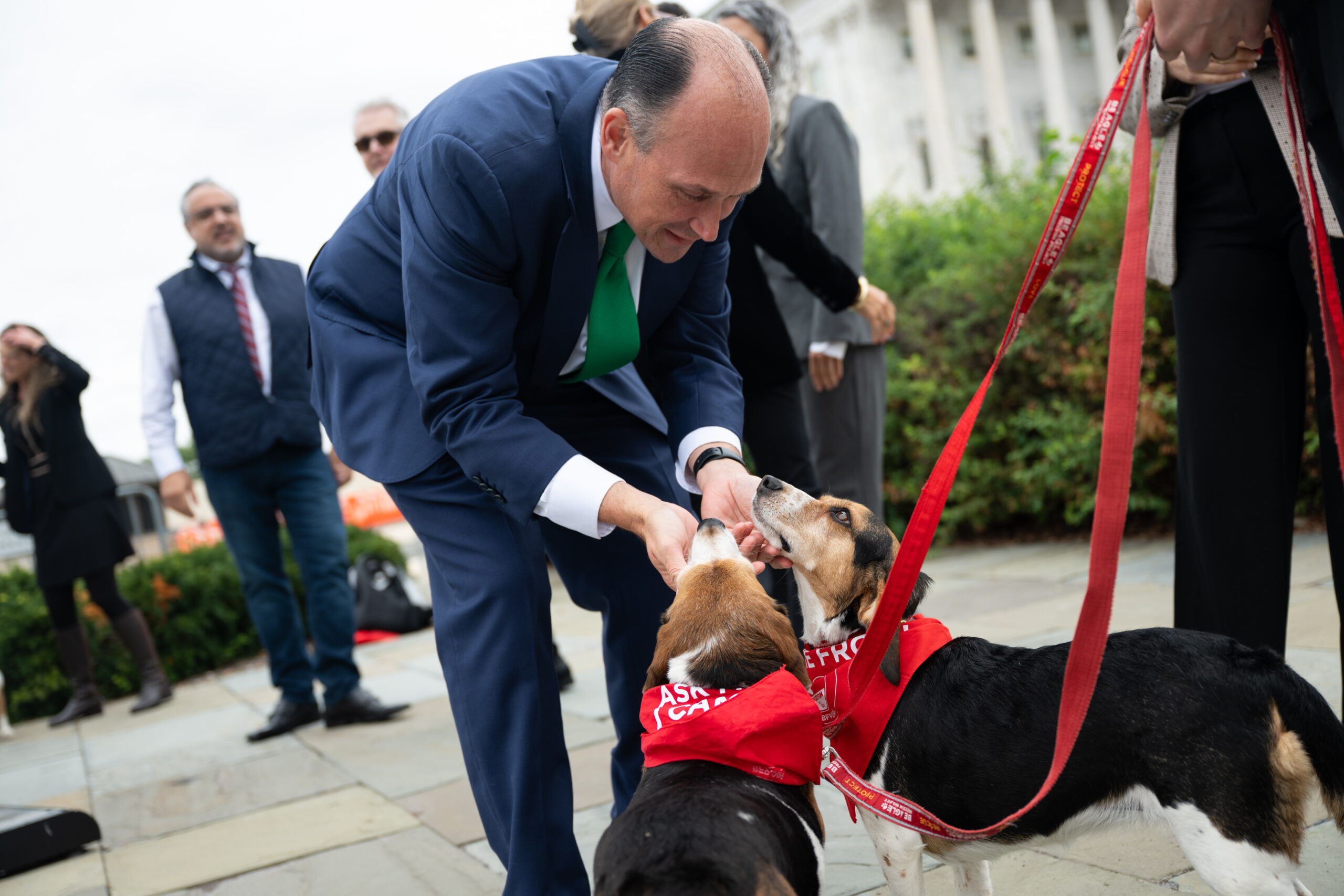
Rep. Nick Langworthy of New York and Rep. Mark Pocan of Wisconsin introduced a bipartisan bill Wednesday that would bar federal public-health research funds from supporting biomedical experiments involving live dogs and cats.
The proposed Companion Animal Protection Against Cruel Testing Act, or COMPACT Act, would apply to money administered by the Department of Health and Human Services and relevant subagencies, according to Langworthy's office. Its scope would include grants, contracts, cooperative agreements, fellowships and training awards. The bill has been introduced, not enacted.

Funding limits and a transition for laboratories
The proposal would require protections and rehoming for dogs and cats already used in biomedical testing. It also calls for compliance and oversight measures, transition provisions for research institutions and flexibility for what the sponsors describe as genuine national emergencies. The release did not specify the proposed emergency standard or how rehoming would be administered.
HHS would issue an annual report, and the Government Accountability Office would review the law three years after enactment, according to the release. Those requirements would take effect only if Congress passed the bill and it became law.
The sponsors said advances in cell-based systems, computational modeling and other non-animal methods offer alternatives to some traditional research practices. Their release did not provide a cost estimate, a bill number or a timetable for congressional consideration.
Sponsors point to beagles and research practices
Langworthy and Pocan announced the measure at a Washington news conference with animal advocacy organizations and beagles released from Ridglan Farms in Wisconsin. Pocan said conditions at the facility helped spur public attention to the issue. Langworthy also cited concerns about beagles at Marshall Bioresources.
“Dogs and cats are companion animals and part of the family for millions of Americans,” Langworthy said, arguing that taxpayers should not support the experiments when other research methods are available. Pocan said the bill would build on federal agencies' efforts to reduce animal testing.
Animal Wellness Action, White Coat Waste Project, Physicians Committee for Responsible Medicine, Humane World for Animals, Humane World Action Fund, Animal Legal Defense Fund, Beagle Freedom Project, PETA and Save the Dogs are among the groups endorsing the bill, according to the release.
Shannon Keith of Beagle Freedom Project said her organization would be prepared to place animals removed from research facilities in homes. The release did not include a response from HHS, research institutions or groups opposing the measure.

FingerLakes1.com is the region’s leading all-digital news publication. The company was founded in 1998 and has been keeping residents informed for more than two decades. Have a lead? Send it to news@fingerlakes1.com.