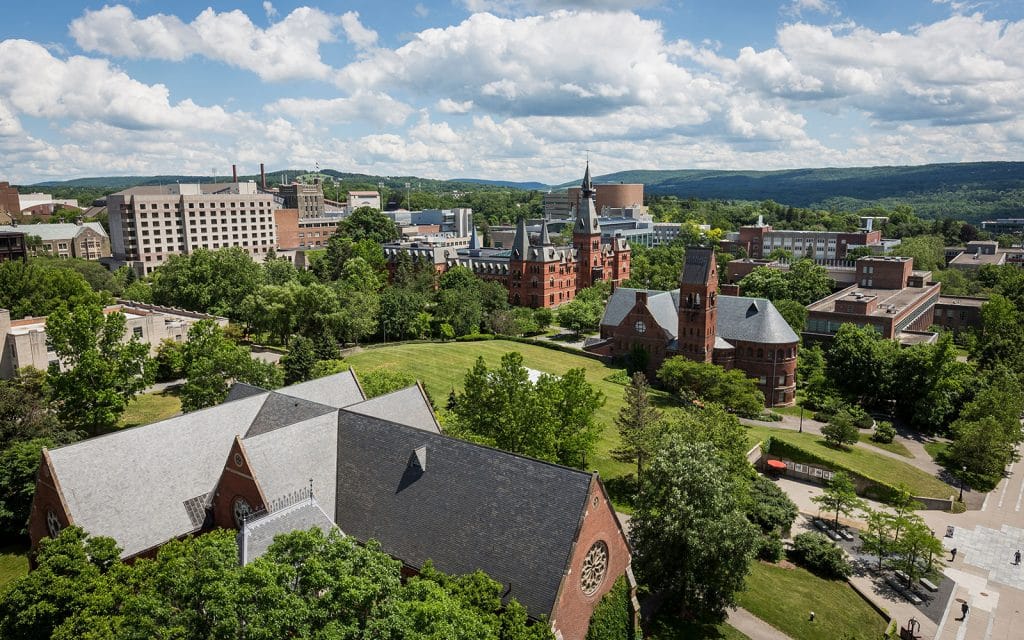
A Cornell University doctoral student's research is examining how city development and historic segregation may shape insect diversity and the health of urban green spaces.
Sylvana Ross spent the summer leading the Cincinnati Urban Ecology Study, working with 15 teens and young adults to collect pollinator and ant data in seven green spaces across three types of neighborhoods.
The project is designed to show what makes urban habitats resilient and to give young residents experience studying the ecosystems around them. Participants will help interpret the data and present findings this fall to organizations that oversee the sites.
Ross said insects can provide information about pollution, air quality, soil quality and ecosystem function. Pollinators also support community gardens and other food-growing spaces.
Earlier research on heat and segregation
Before starting the Cincinnati project, Ross studied ants across neighborhoods in Baltimore and Philadelphia. She found that ants in some parts of those cities showed greater tolerance for heat.
Ross overlaid maps of ant types with federal redlining maps from the 1930s. She found that neighborhoods with primarily Black residents during that period are now hotter and have less tree cover and higher pollution burdens.
The work does not by itself prove that historic lending policy caused particular insect patterns. It is intended to examine how the physical and social structure of cities relates to present-day biodiversity.
Corrie Moreau, Ross' adviser and a Cornell professor of arthropod biosystematics and biodiversity, said the research differs from studies that simply compare urban and natural areas. Moreau said diverse ecological communities tend to be more resilient to disruption, including climate change.
Community scientists gather data
Ross formed the Cincinnati Urban Ecology Study with the Queen City Pollinator Project, an organization she previously worked with to install rooftop beehives. The youth researchers classified pollinator diversity and gathered information about ant foraging.
The observations could inform decisions about planting native species, protecting undisturbed soil used by ground-nesting bees and removing invasive plants. Organizers said the data can also help communities describe the ecological value of green spaces beyond their tree cover or bird populations.
The group observed ants, bees and wasps feeding on honeydew produced by invasive spotted lanternflies. Research assistant Jo Ruther said the interaction could be changing how species behave in the city's ecosystem.
Damselflies found at one study site offered another indicator of environmental conditions because the insects begin life underwater before emerging as adults. The project also builds on a pilot study in Syracuse that examined ant foraging preferences in urban green space.
Ross first became interested in urban insects while teaching health in Cincinnati public schools. With limited resources for field trips, she took students outside and found bees, butterflies, wasps, hoverflies and other insects in ordinary lawns and lots.
She later noticed greater insect variety in some littered lots than in manicured parks, prompting questions that led her to graduate study. Ross said she wants participants in the Cincinnati project to feel connected to nature and confident advocating for local ecosystems.

FingerLakes1.com is the region’s leading all-digital news publication. The company was founded in 1998 and has been keeping residents informed for more than two decades. Have a lead? Send it to news@fingerlakes1.com.