

The Ultimate Guide to Window Graphics Installation NYC: Perforated Vinyl, Surface Prep, and One-Way Vision Mastery
Stand on any commercial block in Midtown Manhattan just after sunrise and you’ll see it: a fleet of glass storefronts, some alive with crisp logos and privacy films, others blank expanses that disappear into the streetscape. For the CFO walking that pavement, the difference is not aesthetic alone. It is a capital decision. A leasehold improvement that can shift foot traffic, lower HVAC loads, and protect interior assets—if executed correctly. Yet too many businesses treat window graphics as an afterthought, only to watch peeling edges and bubbled adhesive erode the brand within months. This guide is for the finance lead who wants to move from guesswork to mastery. We’ll explore the full landscape of window graphics installation NYC, with a deep focus on the category that delivers both privacy and outward visibility: perforated window film. You’ll come away with a framework to evaluate installation quality, cost, and long-term value, not just a list of steps.
New York City operates on a different physics. High humidity in August, freeze-thaw cycles in February, and relentless UV exposure on south-facing avenues all punish poorly applied films. Add to that the logistical reality: a boom lift rental on a congested sidewalk, Board of Standards and Appeals sign regulations, and commercial lease clauses that treat glass as common area. It’s no wonder that many CFOs, after a failed DIY attempt or a low-bid disaster, seek a partner who treats window decal installation as an engineered process rather than a sticker job. Whether you’re considering clear vinyl for a white-glove law firm lobby or a full perforated window vinyl install across a SoHo flagship, the principles of surface preparation, film selection, and professional application determine whether the investment lasts three years or ten.
The NYC Storefront Reality: Why Window Graphics Are a Strategic Asset
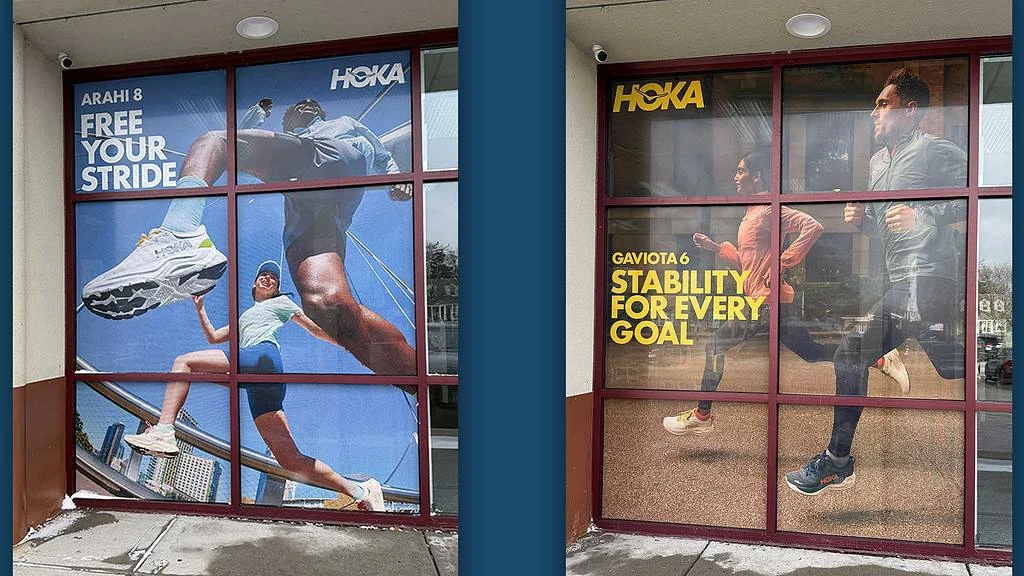
Walk west on 34th Street and you’ll see national retailers who have turned ordinary tempered glass into high-definition brand canvases. Look closer and you’ll notice that the sharpest installations are rarely just opaque decals. Many use micro-perforated film that appears as a solid image from the street while preserving near-perfect outward visibility from inside. This is the one-way vision effect, and it is fast becoming the standard for B2B spaces—from coworking hubs to health-tech clinics—that need natural light without sacrificing confidentiality.
For the CFO, window graphics installation is not a maintenance line item. It is a marketing asset that works around the clock, a privacy shield that protects sensitive client conversations, and a solar control layer that can reduce peak cooling costs by deflecting up to 30% of solar heat gain. And in NYC’s competitive leasing market, a well-branded storefront can increase property value perception, often justifying slightly higher sublease rents. The challenge is that the quality of the result depends less on the film itself and more on the surface preparation and the installer’s understanding of New York’s micro-environments. A film that thrives in a shaded Chelsea side street may deteriorate rapidly on a wind-scoured Williamsburg waterfront. That’s why an increasing number of companies are moving away from generic online kits and toward professional sign installation company NYC specialists who can diagnose the glass before the first squeegee touches it.
Decoding Window Graphics: Trends and Installation Approaches
The window graphics market has matured well beyond “stick a logo on the door.” Today’s solutions fall into three broad categories that a CFO should understand to align budget with business need.
Window Decal Installation for High-Impact Branding
Clear or opaque vinyl decals remain the workhorse for directional signage, operating hours, and brand marks that don’t require full-glass coverage. The real skill in vinyl window decal installation lies in precision weeding, transfer-tape alignment on oversized panes, and edge sealing against moisture ingress. For a financial services firm on Park Avenue, a set of impeccably installed frosted logos communicates stability and attention to detail. Cost-wise, simple decal placement is the most accessible entry point, but it still demands professional-grade surface cleaning. Any residue of silicone, window film cleaner, or construction dust—common in newly built-out offices—will create micro-channels for air and water, eventually causing delamination.
Perforated Window Vinyl Install: The One-Way Vision Revolution
Perforated window film, often called window perf, is the material that drives the majority of large-scale commercial inquiries in NYC today. It consists of a PVC film with a dense grid of tiny holes, typically in a 50/50 or 70/30 print-to-hole ratio. The outward-facing side carries a full-color digitally printed image—perfect for a flagship’s seasonal campaign or a tech company’s mission statement across a three-story glass stairwell—while the inside surface is black, allowing occupants to see out with minimal obstruction. The term window perf installation covers a sequence that is radically different from applying a solid decal. Because the film has an open structure, moisture can migrate through the holes if edges aren’t properly sealed, especially in a city where window washers frequently use high-pressure spray. A rigorous perforated window vinyl install includes edge welding or a clear laminate border, and often a micro-channeled adhesive technology that lets air escape during application to eliminate bubbles without compromising bond. For the CFO, this translates into a measurable reduction in rework and replacement costs over the lease term.
Installing Perforated Window Graphics at Scale
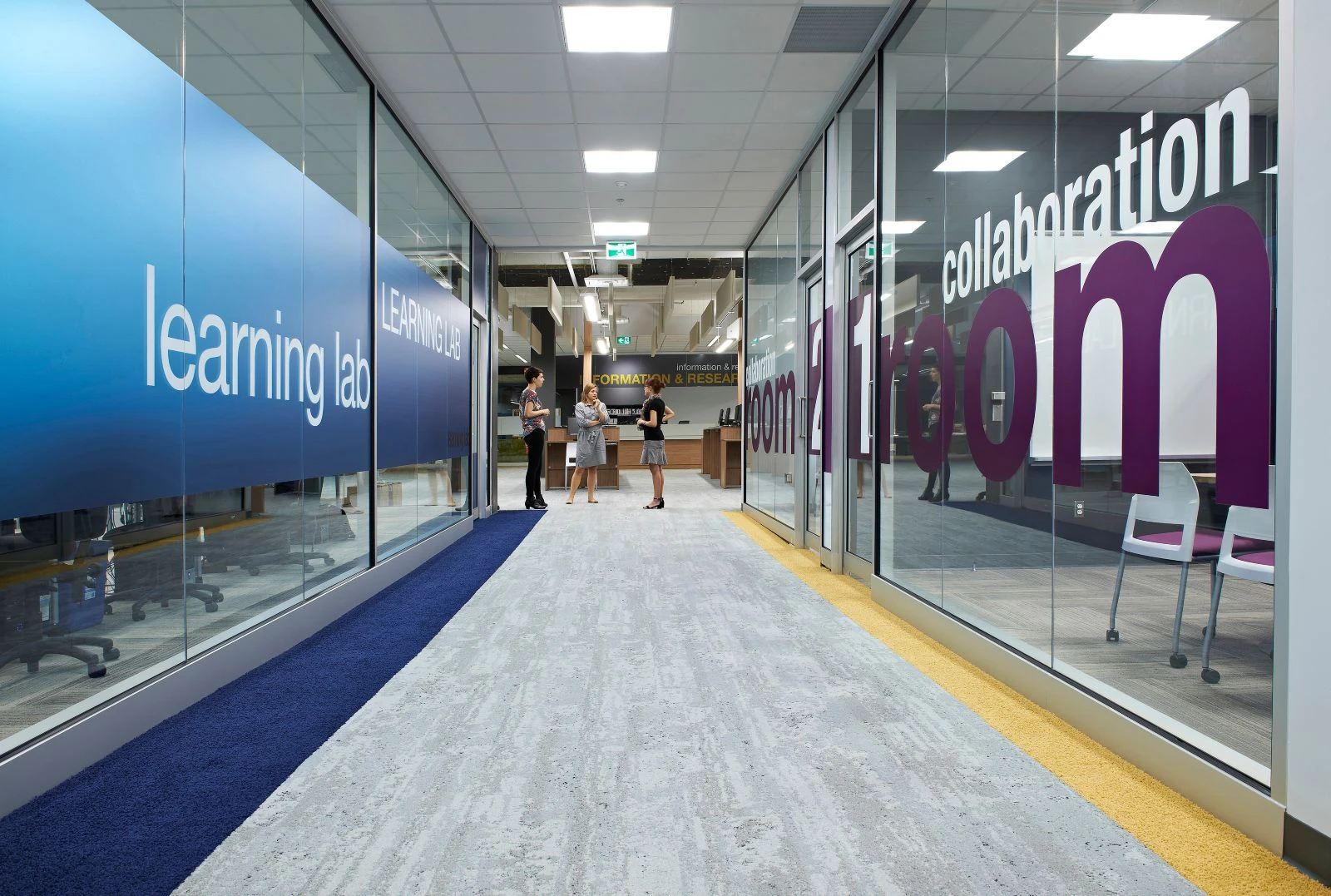
When you move beyond a single door into a full curtain wall, installing perforated window graphics becomes an exercise in panel registration, overlap management, and scaffold logistics. Skyscraper-level jobs often require the graphic to be split into panels, each aligned within a millimeter so the image reads seamlessly from the street. The technique here—sometimes called installing window perf in overlapping shingle fashion—prevents wind lift while allowing for thermal expansion of the glass. In New York, where a 40-foot pane on the 30th floor can flex noticeably under wind load, a rigid, fully butted seam will fail within weeks. Specialists in perforated window film installation understand this dynamic and use flexible overlaps that breathe with the building.
Full-Surface and Specialty Films
Beyond perf, some spaces require total opacity for rear-projection screens or whiteboard functionality. Installing vinyl window decals in full-coverage formats on interior glass partitions is common in co-working and agile office fit-outs. Here, the priority is dry-apply adhesion and fire-rating compliance, matters that a facilities-focused CFO appreciates instantly when reviewing insurance and fire code checklists.
The Economics of Window Graphics Installation in New York
Per-square-foot pricing is a starting point, not a final cost. Labor rates for insured, union-signatory crews in NYC are significantly higher than the national average, and a job that requires night work to avoid disrupting retail traffic will carry a premium. The table below distills typical installed ranges for professional, warranty-backed work—not bottom-tier freelancers—based on project data from recent NYC commercial installations.
A CFO evaluating these numbers should immediately ask: what is the total cost of ownership per year? A high-quality perforated window vinyl install that lasts six to eight years with proper edge maintenance may deliver a lower annualized cost than a budget option that fades and peels after two seasons, requiring repeated disruptions and potential lease violation notices from the landlord.
How a CFO Should Evaluate a Window Graphics Investment
Think of window graphics not as a purchase order but as a fixed-asset decision. Three factors should anchor your evaluation.
First, prioritize adhesion science over price. The difference between a flawless job and a failure often resides in the first 30 minutes: the surface prep. Professional installers in NYC use multi-stage cleaning protocols—isopropyl alcohol decontamination, followed by a tack-cloth pass for microfines—before any film touches the glass. This is non-negotiable whether you’re applying window decals on a lobby transom or installing perforated window vinyl across a sun-drenched Nolita corner. Ask a prospective partner to walk you through their prep checklist. If “windshield cleaner and a paper towel” is the answer, walk away.
Second, weigh the full economic impact beyond the visual. Perforated window film reduces glare and solar load; many NYC buildings participating in Local Law 97 carbon reduction targets see auxiliary benefit from solar-control films. That may tip a borderline capital request into an approved energy initiative. In retail environments, one-way vision graphics that maintain natural light often lead to longer dwell times and higher sales per square foot—metrics the CFO can quantify.
Third, choose an installation partner who understands New York’s regulatory texture. Certain landmarked districts require Landmarks Preservation Commission approval for any applied signage. Full-building wraps may trigger DOB sign permits, particularly if the graphic exceeds a certain percentage of the glazing area. A seasoned sign installation company NYC operation will have an in-house permit expediter and can advise on code-compliant designs before you commit a deposit. A company unfamiliar with these rules can leave you with a stop-work order and an embarrassed relationship with the landlord.
From Spreadsheet to Storefront
Consider a rapidly scaling fintech firm that leased a 4,200-square-foot second-floor space in Hudson Yards. The perimeter conference rooms featured floor-to-ceiling glass overlooking the High Line, a stunning but deeply distracting view. The CFO needed to preserve the daylight and the brand feel—minimalist, trustworthy—while giving teams the privacy to review sensitive M&A data. After exploring frosted film (too opaque, killed the airy vibe) and motorized shades (prohibitively expensive, maintenance-heavy), the firm opted for a high-definition 70/30 perforated window vinyl install across 340 square feet of glass.
The crew spent a full day on surface preparation, removing invisible silicone residues from the glass supplier and restoring a neutral bonding surface. Panels were printed in-house and allowed to out-gas for 24 hours to prevent solvent popping. Installation occurred over a single weekend to avoid business disruption; overlapping seams were aligned with the mullion grid so they disappeared into the building’s architecture. A clear edge-seal laminate locked out moisture from daily cleaning. The total cost came to just under $6,200, including a five-year warranty on film and labor. The CFO classified the spend as a leasehold improvement, depreciated it over the lease term, and attributed a measurable reduction in tenant improvement requests for blinds—plus an uptick in employee satisfaction scores tied to workspace comfort. The project’s internal memo simply noted, “Visibility without exposure. No ongoing maintenance. ROI clear by month eight.”
This outcome is not unusual. It is the result of treating window graphics installation NYC as a precise, measured service rather than a commodity buy.
The Role of a Professional Sign Installation Partner
Finding a partner that understands the full life cycle of a window graphic—from surface diagnosis to permit navigation—changes both the budget conversation and the result. EasyWay Install, a sign installation company NYC with deep experience across commercial, retail, and institutional projects, has built its reputation on this comprehensive approach. Their teams routinely handle everything from straightforward window decal installation in Brooklyn brownstone conversions to complex, multi-story window perf installation for Manhattan headquarters, always starting with a site survey that captures glass type, sun orientation, and access constraints. By operating with full insurance and a documented chain of custody for materials, they give CFOs the documentation needed for audits, insurance renewals, and REIT lease compliance. When you align with such a partner, the discussion moves from “how cheap can we get this” to “what is the smartest allocation of capital for the asset’s life.”
The Clarity That Lasts
A window graphic is among the few capital improvements that work every day for marketing, privacy, and energy performance simultaneously. In a city where square footage is expensive and first impressions are instantaneous, getting it right matters. The difference between a peeling decal and an immaculate perforated window vinyl install is not luck. It is preparation, material selection, and professional execution informed by New York’s specific demands. For the CFO, that means a lower total cost of ownership, a stronger brand presence, and a facility asset that genuinely performs. Take the time to evaluate your glass as carefully as you would any other infrastructure investment, and partner with a team that can guide you from the first surface test to the final squeegee pull.

This content is brought to you by the FingerLakes1.com Team. Support our mission by visiting www.patreon.com/fl1 or learn how you send us your local content here.