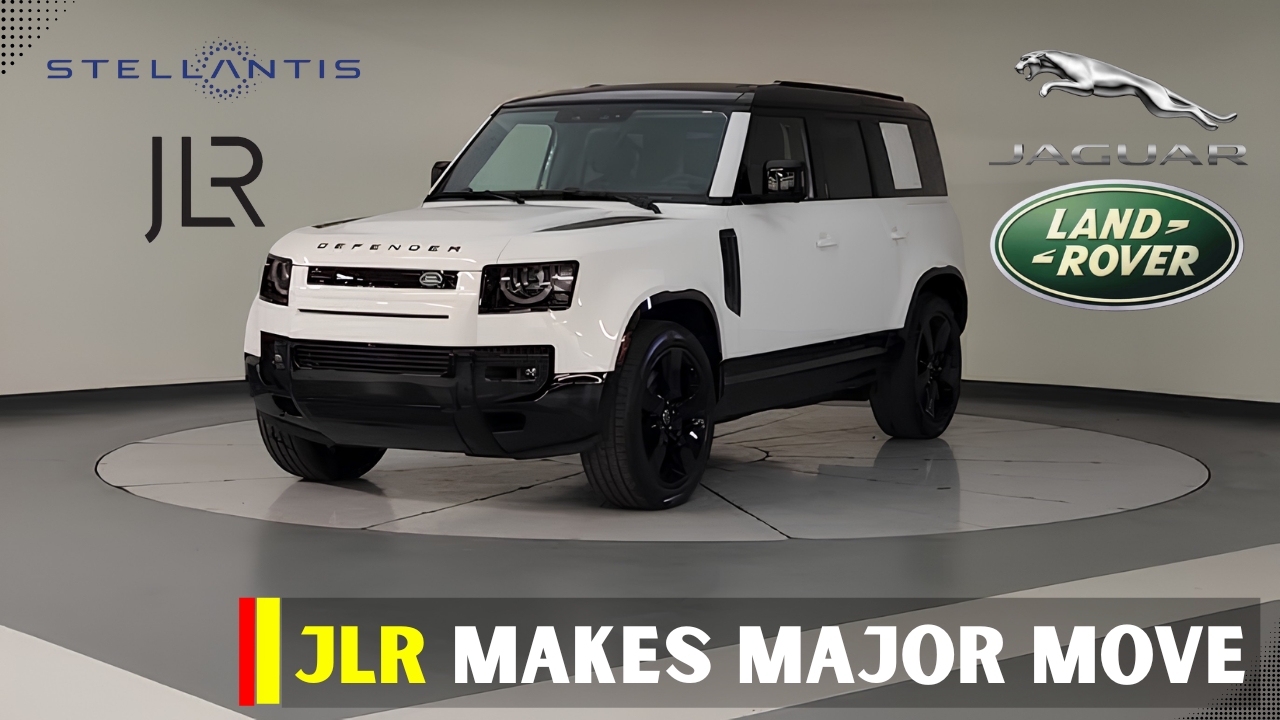
The world’s auto industry is heading toward smarter, more local ways to produce cars. As part of that, Jaguar Land Rover has struck a non-binding agreement with Stellantis to study the possibility of building Defender models that are specifically for the U.S. market. The idea is to build these vehicles in North America rather than importing them entirely. This step is to save costs, avoid import taxes and, simplify production. Given that the U.S. is one of JLR’s biggest markets, this move could greatly support its future growth.
Why is JLR focusing on U.S. production for the Defender?
The U.S. is a critical market for Jaguar Land Rover and accounts for almost 30% of its global sales. But tariffs and rising logistics costs have made selling imported vehicles in the U.S. more expensive. At the same time, would require a massive investment of both time and money.
JLR’s taking the more pragmatic route to avoid these hurdles. The company can leverage existing factories and manufacturing systems in North America through the partnership with Stellantis. Such an approach helps to reduce costs and save time and get production started sooner without having to build everything from scratch.
How will Stellantis help in this plan?
Stellantis will contribute its existing production facilities, its supply-chain network and its manufacturing experience. This means JLR won’t need to invest heavily in new infrastructure and can instead capitalize on what Stellantis already has in place. But it can capitalize on the infrastructure that Stellantis already has.
The aim is to develop Defender models that are better suited to U.S. customers. Those vehicles might highlight off-road capability, comfort, and the modern features American buyers like. The idea is to build a product that feels more local and reflects real driving conditions in the U.S. market.
Will this strategy help JLR grow in the U.S?
This tie-up could help Jaguar Land Rover to boost its growth in the American SUV market. Local production of vehicles can reduce shipping costs and bypass import tariffs. It can also increase competitiveness and improve pricing.
It also means JLR can focus more on design and brand development, while Stellantis efficiently handles production. The approach underpins JLR’s long-term Reimagine strategy, including future development of electric and advanced vehicles.
Final Thoughts
The alliance between Jaguar Land Rover and Stellantis is a sign of a palpable change in the mindset of international carmakers. Many now prefer to collaborate to save time and money rather than handling everything themselves, to save time and costs. If this plan is successful, the American-built Defender could be a major step forward for JLR, helping it to become more established in the U.S. market and remain competitive going forward.