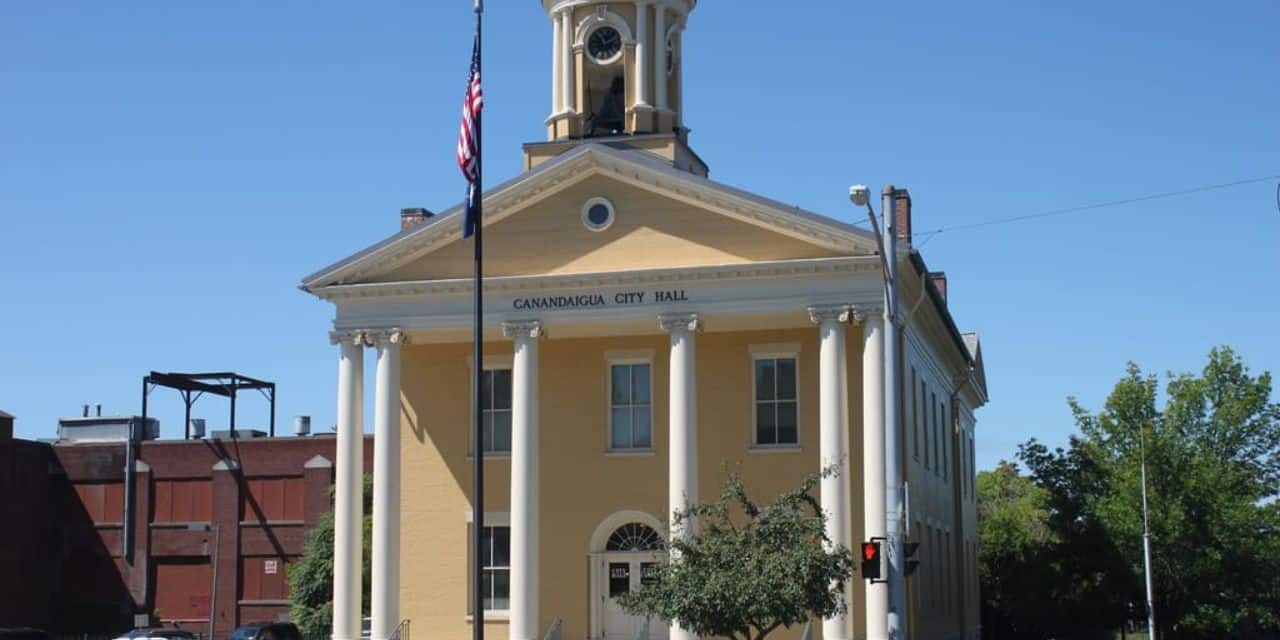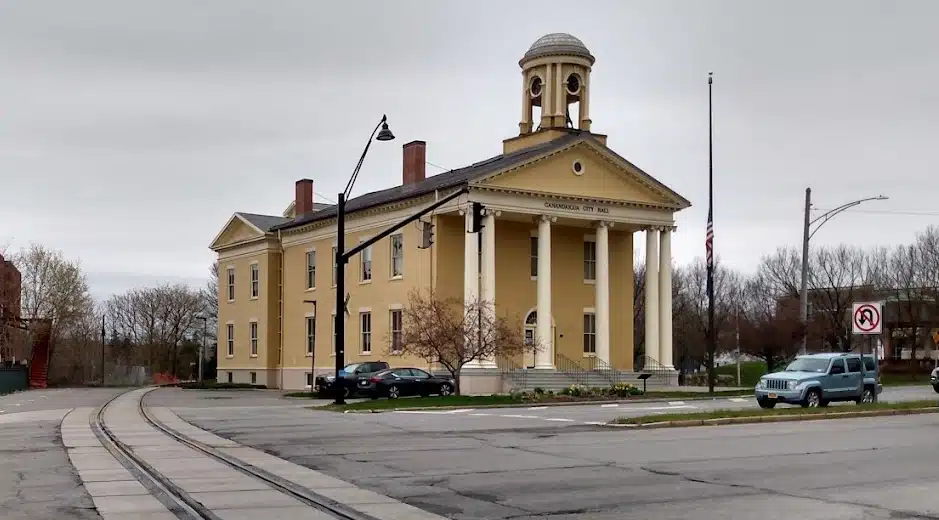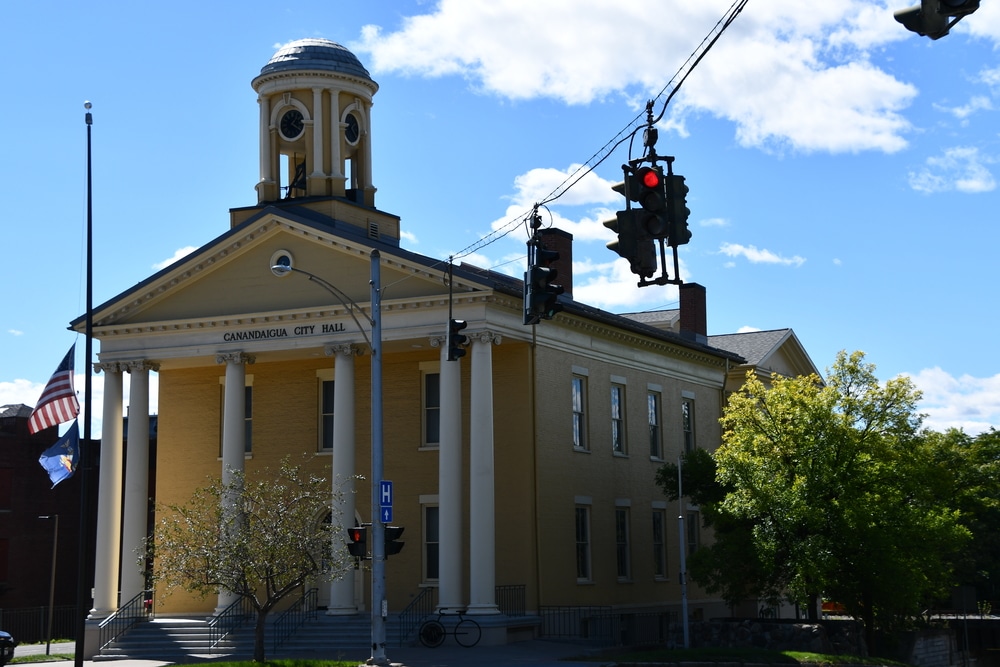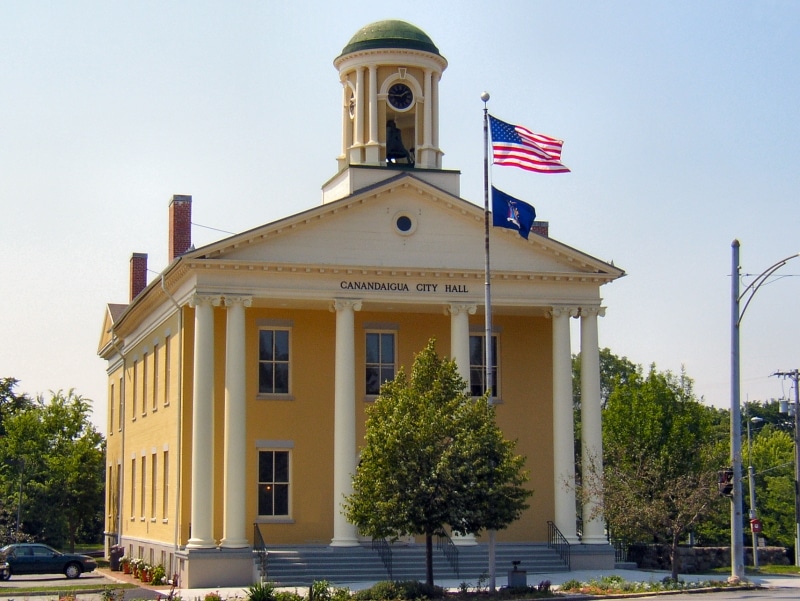
Downtown revitalization projects, emergency medical service funding concerns, and future housing development efforts dominated discussion during a brief meeting of the Canandaigua City Council’s Planning Committee on Monday.
The committee began with the Canandaigua Emergency Squad’s annual report, where Chief Matt Sproul outlined the organization’s operations and growing financial challenges. The nonprofit agency, which serves more than half of Ontario County and provides advanced life support services throughout the county, operates without tax revenue and relies primarily on ambulance billing and community donations.
Sproul reported that the organization responded to more than 9,200 calls in 2025 and now operates 14 ambulances, three advanced life support vehicles, and a specialized medical trailer used at large events such as CMAC concerts. He said the squad recently added a dedicated transport ambulance and crew to handle non-emergency hospital transfers, a move made in response to recommendations from the city’s public safety study.
EMS leaders warn of growing financial pressures
Much of the discussion focused on the financial strain facing emergency medical providers.
Sproul said rising health insurance costs, vehicle insurance premiums, workers’ compensation expenses, and inflation continue to outpace reimbursement rates from Medicare, Medicaid, and private insurance companies. He expressed particular concern about anticipated Medicaid reductions and their potential impact on EMS agencies.
The squad currently operates on an annual budget of roughly $5 million, a figure Sproul said could climb to as much as $5.5 million as costs continue rising.

Council Member Gwen VanLaeken questioned Sproul extensively about workforce retention, employee benefits, and long-term sustainability. Sproul said EMS agencies increasingly struggle to compete for workers, noting that some emergency medical technicians can earn wages comparable to jobs requiring far less training and responsibility.
Mayor Thomas Lyon said he and City Manager John Goodwin are participating in a New York Conference of Mayors task force advocating for emergency medical services to be designated as an essential service under state law.
Downtown revitalization projects move toward implementation
Goodwin also provided an update on Canandaigua’s $10 million Downtown Revitalization Initiative award.
The city recently learned which projects will receive funding through the state program. Among the largest public investments are improvements to Coach Street and Phoenix Street, upgrades to City Hall, public restroom facilities, and enhancements to the Central on Main development.
Several private projects also received funding, including upper-story housing renovations at multiple downtown properties and an expansion project at Peacemaker Brewing Company.
Goodwin said one of the most anticipated components of the program is a $600,000 small-project grant fund that could provide grants of up to $75,000 for smaller projects, public art, and business improvements. However, he cautioned that contracts with the state have not yet been finalized and no application process is currently available.
The downtown housing projects are expected to create approximately nine new residential units in upper-story spaces along Main Street.
Housing committee narrows its focus
The committee also received an update from Council Member Guy Trichetti on the Housing and Design Ad Hoc Committee.
The committee was tasked with examining opportunities identified in the city’s comprehensive plan, particularly along Eastern Boulevard and near Jefferson Park.
After its initial review, members concluded that meaningful changes along Eastern Boulevard would be difficult because the corridor is a state highway. Instead, planning officials will shift discussion of design standards for the corridor to the Planning Commission while the ad hoc committee concentrates its efforts on the Jefferson Park area.
Committee members plan to review zoning regulations, design standards, housing opportunities, and recommendations contained in the city’s comprehensive plan as they continue evaluating future development possibilities.
Finance committee confronts long-term budget outlook
Following adjournment of the planning meeting, council members transitioned into a Finance Committee session where Goodwin presented updated long-range budget projections.
Officials discussed the city’s decision not to pursue a federal SAFER grant this year and reviewed projections showing significant financial pressure over the next five years from inflation, pension costs, health insurance increases, and other rising expenses.
Goodwin said preliminary projections indicate the city could face property tax levy increases exceeding 20% in 2027 under current assumptions, even without adding new services. Council members emphasized that the projections represent a status quo budget and reflect growing fiscal challenges facing municipalities across New York.
The Finance Committee also postponed discussion of a proposed solar charging project after staff identified issues with a vendor quote that require additional review.

FingerLakes1.com is the region’s leading all-digital news publication. The company was founded in 1998 and has been keeping residents informed for more than two decades. Have a lead? Send it to news@fingerlakes1.com.