

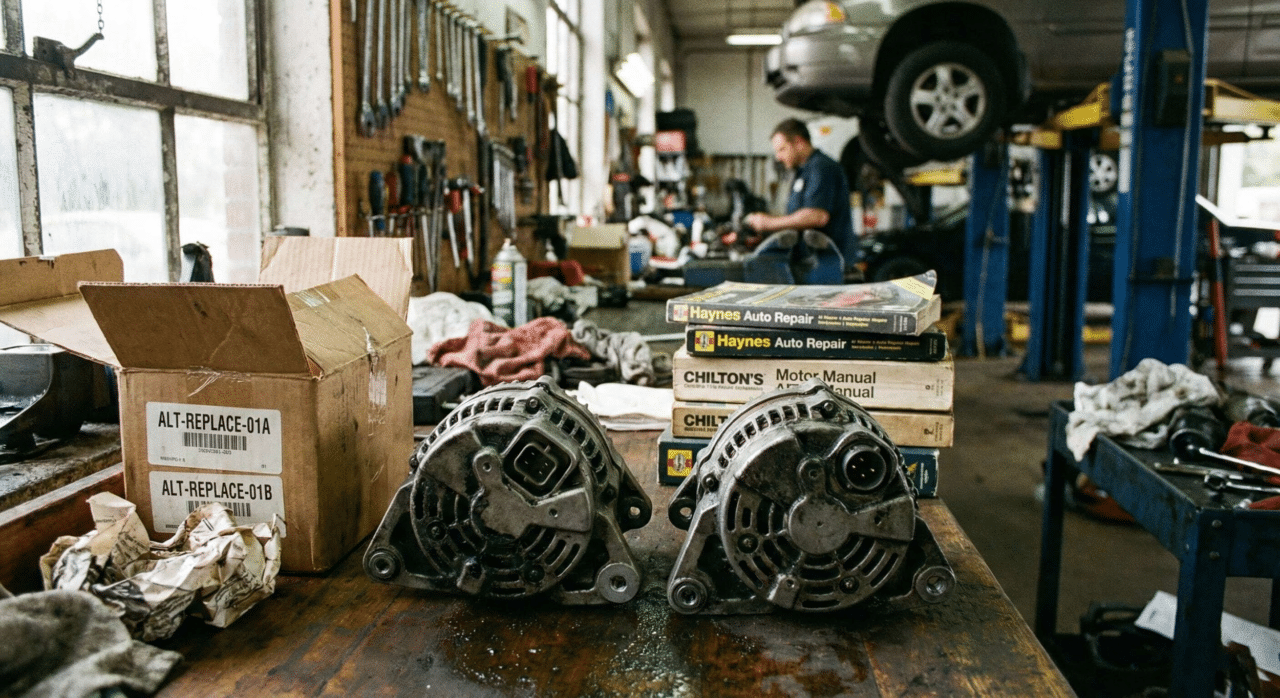
Statistics from the National Rail Federation (2022), clearly demonstrated that auto parts have one of the highest return rates in e-commerce (19.4%). The main reason for this is that one car model can include dozens of modifications with different engines, regional specifications (US-spec vs EU-spec), and production changes. A simple selection “by car model” ignores these differences, leading to part incompatibility.
An AUTODOC survey among buyers showed specific return reasons: 37% of drivers ordered the wrong part due to selection errors and 34% received a part that physically didn’t fit their vehicle. This isn’t a shipping or defect problem, it’s a systematic compatibility issue relevant for consumers all over the world.
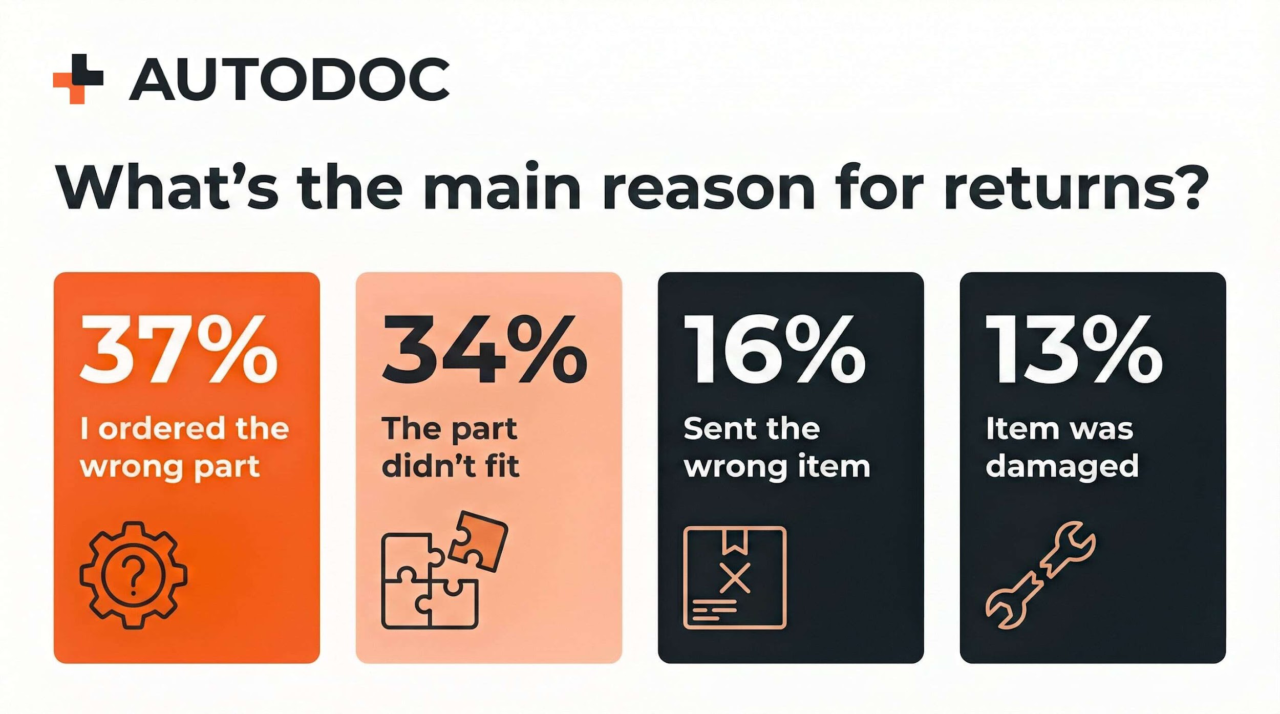
Real scale of the problem in numbers for USA and Europe
The used car market is growing faster than the new market. In the USA, the average vehicle age reached 12.8 years in 2025 (S&P Global Mobility). According to the Society of Motor Manufacturers and Traders, over 7.64 million used cars were sold in the UK in 2024 (+5.5% vs 2023). The older the vehicle fleet, the more different modifications circulate between countries.
Alexandru Lazariuc, Technical Specialist in Auto Parts Selection, describes a typical situation for customers:
“A workshop in Krakow ordered a starter for a 2015 Golf VII. The ‘right’ part arrived, the article number matched, model matched. Didn’t fit. It turned out this Golf had an EA211 engine with a different mounting, but they’d picked the part for the EA888. Same car, same year, 12 different starter options.”
This problem is occurring more frequently: “This used to happen twice a year. Now it’s weekly.” The market now includes a mixture of “Golfs from the German market, Polish market, and Japanese re-exports”.
Three technical reasons for part incompatibility
Firstly, regional specifications create different model versions for US and European markets. One model for USA and Europe = similar vehicles with technical differences.
Examples for New York:
- EPA and CARB environmental requirements apply
- A 2020 Honda Civic for New York requires CARB-certified exhaust system parts
- These parts may appear compatible (physically) but parts not meeting the legal efficiency standards may trigger a firmware error or fail a technical inspection
Examples for Europe:
- A BMW from Germany has different electronics to one from the USA
- Exhaust sensors and ECU firmware differ
- It may be harder to source certain parts in the UK after Brexit, causing people to seek short cuts (i.e. incompatible parts)
Secondly, multiple engine variants within the same car model cause confusion.
Problem scale:
- Volkswagen Golf 2020: 8 engine variants for Europe + 3 for the USA
- Each engine may require different oil filters, belts, and spark plugs/coils, for example
VIN code limitations:
- VIN helps but doesn’t always reveal the full specification
- Re-exported vehicles often have invalid database entries
- European cars imported to the USA create confusion
Lastly, there are mid-cycle facelifts and production changes without model number updates.
What happens:
- Manufacturers change mounts mid-cycle without changing the model number
- Electronic updates, new sensors, modified connectors
- Catalogues don’t keep up with changes
Result: a part for “the same model” doesn’t actually fit.
How modern parts selection systems solve the compatibility problem
The AUTODOC website uses this system: make → model → engine (specific type: displacement, power, engine code). This narrows down 12 starter variants for one Golf to the single correct one.
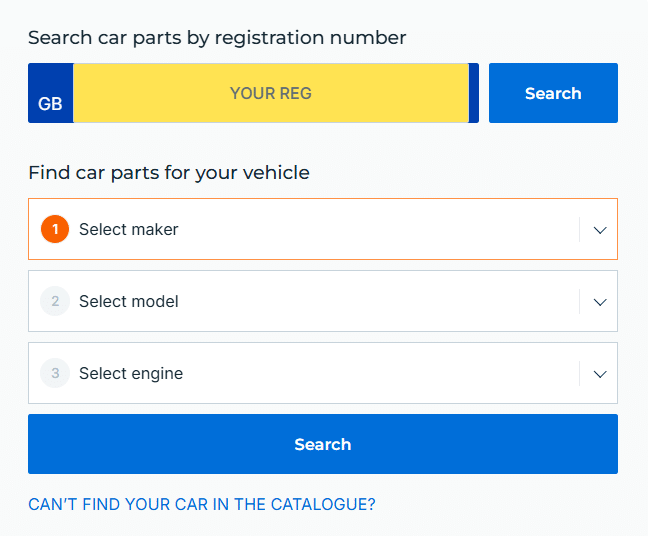
Alternative selection methods:
- You can search by the vehicle registration number (licence plate, not VIN)
- You can contact support with your VIN code (for non-typical cases)
Why this works in 2026:
- Accounts for regional differences: US-spec vs EU-spec
- Eliminates guesswork when ordering online
- Reduces the risk of a return before the item is even delivered
USA and UK market specifics in 2026
New York and USA:
- CARB requirements create modifications not found in other states
- Aftermarket parts are popular but don’t always account for regional specifications
United Kingdom:
- Used electric vehicle sales +57.4% (188,382 units in 2024)
- Electrification creates new incompatibility type: different battery generations
European example: a 2016 Nissan Leaf looks identical to a 2015 model, but often carries a 30 kWh battery instead of the standard 24 kWh. They require different battery management systems (BMS), yet the exterior gives no clue – a nightmare for dismantlers and parts sites.
Practical conclusions for buyers in 2026
To reduce the risk of incompatibility, more specific details are necessary due to the sheer number of variants.
What to check (mandatory):
- Make + model + specific engine type (not just “diesel”)
- Regional specifications: US-spec, EU-spec, or UK-spec
- VIN code for final compatibility verification
Tools to minimise errors:
- Three-level selection systems (make-model-engine)
- Search by registration number where available
- Support with VIN/OE part number verification for complex cases
This basic checklist ensures success for people repairing used vehicles all over the world.
Sources: AUTODOC surveys, National Rail Federation, S&P Global, UK SMMT, Alexandru Lazariuc.

This content is brought to you by the FingerLakes1.com Team. Support our mission by visiting www.patreon.com/fl1 or learn how you send us your local content here.