Republican proposals to slash federal food assistance could push billions in new costs onto state budgets.
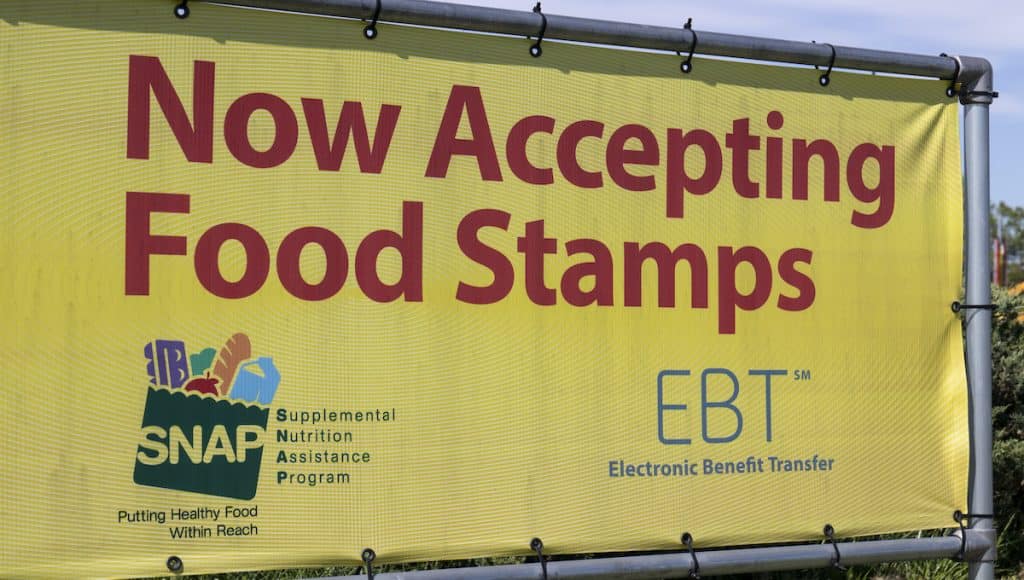
If passed, states would be forced to fund 5% to 25% of Supplemental Nutrition Assistance Program (SNAP) benefits — a cost shift that would gut anti-hunger efforts and put healthcare and education funding at risk.
What would each state pay?
According to the Center on Budget and Policy Priorities, the costs from FY2026 to FY2034 would be staggering:

- New York: $6.97B at 10%, $17.43B at 25%
- California: $11.74B at 10%, $29.34B at 25%
- Texas: $6.84B at 10%, $17.09B at 25%
- Florida: $6.26B at 10%, $15.66B at 25%
- Pennsylvania: $4.05B at 10%, $10.12B at 25%
- Ohio: $3.01B at 10%, $7.53B at 25%
- Michigan: $2.90B at 10%, $7.26B at 25%
- Georgia: $3.10B at 10%, $7.75B at 25%
- North Carolina: $2.79B at 10%, $6.97B at 25%
- Illinois: $4.24B at 10%, $10.60B at 25%
New unfunded mandates could slash services
- Under a 10% cost-share, states would collectively owe nearly $89 billion by 2034
- A 25% match would shift over $222 billion in SNAP benefit costs to states
- Even a 5% match would burden states with $44.5 billion in new costs
Low-income and high-poverty states would be hit hardest, often without the fiscal capacity to absorb new expenses. During recessions, costs would spike just as revenues fall.
What it means for residents
If states can’t fully fund their share, they could:
- Slash SNAP eligibility
- Reduce benefit amounts
- Create new barriers to enrollment
- Force counties and cities to fill budget gaps
- Undermine SNAP’s economic stimulus role
In New York, the cost is billions
New York issued $7.3 billion in SNAP benefits in FY2024. Under a 10% cost-share:
- The state would owe $731 million annually
- That’s more than its annual spending on youth programs and mental health services combined
- Local governments could face pressure to backfill shortfalls or cut other services
MORE:
- SNAP news from FL1
- Medicaid news from FL1
- CBPP SNAP Report Full Data
- Related reading: Medicaid, SNAP cuts threaten Finger Lakes region

This content is brought to you by the FingerLakes1.com Team. Support our mission by visiting www.patreon.com/fl1 or learn how you send us your local content here.