


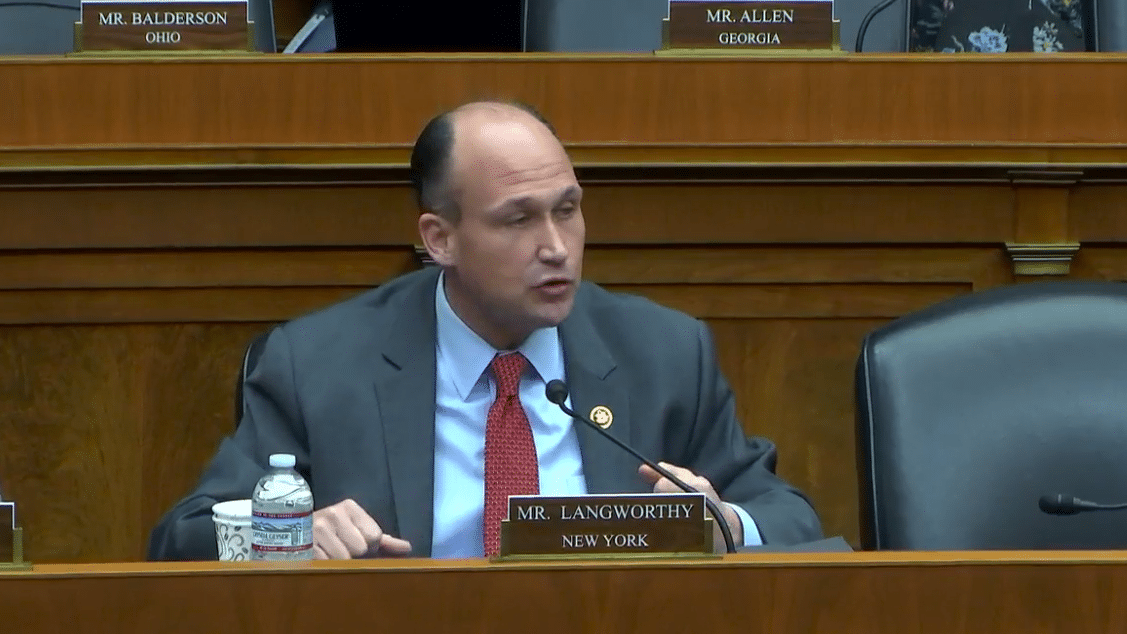
Congressman Nick Langworthy (NY-23) is calling for a federal investigation into what he describes as harmful labor practices affecting New York State corrections officers. The plea follows a weeks-long wildcat strike among corrections officers who are protesting poor working conditions, excessive mandatory overtime, and increased violence in state prisons.
In a letter sent to Acting Labor Secretary Lori Chavez-DeRemer, Langworthy urged the Department of Labor (DOL) to investigate whether New York State is complying with federal labor protections and workplace safety regulations. Specifically, Langworthy pointed to the suspension of health insurance benefits for corrections officers and the excessive overtime demands as key issues that warrant federal scrutiny.

Langworthy also sent a separate letter to Governor Kathy Hochul, asking her to take meaningful action to improve the working conditions for corrections officers. He expressed concern that the state’s failure to address the issues is exacerbating an already dangerous environment for officers. The Congressman placed particular blame on the state’s HALT Act, a controversial law aimed at curbing solitary confinement, which Langworthy believes has led to an increase in violence against corrections officers.
“The men and women who risk their safety every day to maintain order in the most violent environments deserve better than what they’re being offered,” Langworthy said. “Instead of addressing their legitimate concerns, Governor Hochul is having them arrested and taking away their health insurance. It’s unconscionable.”
The strike, fueled by frustrations over staffing shortages, overtime, and safety concerns, has drawn attention to what many officers see as the state’s disregard for their well-being. Langworthy vowed to stand alongside the corrections officers in their fight for safer working conditions, and promised to use every tool at his disposal to push for meaningful reforms.

Langworthy’s request for a federal investigation and his calls for policy changes come at a time when corrections officers across the state are demanding that their voices be heard and their safety be prioritized.

FingerLakes1.com is the region’s leading all-digital news publication. The company was founded in 1998 and has been keeping residents informed for more than two decades. Have a lead? Send it to news@fingerlakes1.com.